

FaultyCar.co.uk may earn a commission if you buy through links on this page. Vehicle history reports are provided and sold by carVertical. This doesn’t affect the price you pay.
Buying a used car is exciting, but it can also be stressful – especially if something goes wrong. The good news is that UK law gives you strong protections when you buy from a dealer. This guide covers everything you need to know about your legal rights, what to do when things go wrong, and how to protect yourself before you buy. The law behind it all is explained in our guide to the Consumer Rights Act 2015 and cars.
The Consumer Rights Act 2015
The Consumer Rights Act 2015 replaced the old Sale of Goods Act and is now your primary protection when buying any goods from a business. For a detailed comparison of how these laws differ, see our guide on Consumer Rights Act vs Sale of Goods Act.
When you buy a car from a dealer, the law requires that it meets three fundamental standards. First, it must be of satisfactory quality – meaning it should be free from defects, safe, durable, and acceptable in appearance, taking into account its age, mileage, and the price you paid. Second, it must be fit for purpose – a car should be roadworthy and capable of being driven safely. Third, it must match its description – if the dealer said it had full service history, low mileage, or was accident-free, those claims must be true.
What counts as "satisfactory quality" depends heavily on context. A £2,000 car with 150,000 miles won't be held to the same standard as a £20,000 car with 30,000 miles. The courts consider what a reasonable person would expect given all the circumstances. However, even older, cheaper cars must still be roadworthy and free from serious defects that weren't disclosed. For a deeper understanding, read our guide on what satisfactory quality actually means.
Not sure which window you are in? Put in your reg and find out, free.
The 30-Day Right to Reject
This is your most powerful protection. If you discover any fault within 30 days of taking delivery, you have an absolute right to reject the car and receive a full refund. The dealer cannot insist on attempting a repair first – the choice is entirely yours.
The 30-day clock starts ticking from the moment you take physical possession of the car, not from when you paid or signed the paperwork. So if you paid a deposit on the 1st, signed finance documents on the 5th, but didn't collect the car until the 10th, your 30 days runs from the 10th.
During this window, you don't need to prove where the fault came from or how serious it is. If the car has any defect that means it isn't of satisfactory quality, fit for purpose, or as described, you can reject it. This covers mechanical problems like engine faults, gearbox issues, and brake failures, as well as electrical faults and warning lights that won't clear. It also includes undisclosed accident damage or write-off status, clocked mileage or fake service history, and outstanding finance that wasn't disclosed.
To exercise your right to reject, you need to inform the dealer clearly and in writing. State that you're rejecting the car under the Consumer Rights Act 2015, describe the fault, and request a full refund. Our guide on how to write a rejection letter includes templates you can adapt.
Once you've rejected, the dealer must collect the car at their own expense and refund you within 14 days. If they're dragging their feet on collection, you have options to force the issue.
Your Rights Between 30 Days and 6 Months
If you discover a fault after the 30-day window but within 6 months of purchase, your rights change but remain strong. You can no longer demand an immediate refund – instead, you must give the dealer one opportunity to repair or replace the vehicle.
The crucial advantage during this period is that the burden of proof falls on the dealer, not you. The law assumes that any fault discovered within 6 months was present at the time of sale. If the dealer disagrees, they must prove the fault developed after you bought the car – which is often difficult for them to do.
If the repair fails, or if they refuse to attempt one, you can then reject the car. At this stage, the dealer may be entitled to make a deduction from your refund to account for the use you've had from the vehicle. However, these fair use deductions must be reasonable and can't be used punitively.
What counts as a failed repair? If the same fault recurs, the repair has clearly failed. If a repair takes an unreasonably long time, or causes significant inconvenience, you may also be entitled to reject. The dealer gets one proper attempt – not multiple goes at fixing the same problem.
Your Rights After 6 Months
Between 6 months and 6 years from purchase, you still have rights under the Consumer Rights Act, but now the burden of proof shifts to you. You'll need to demonstrate that the fault existed, or was developing, at the time of sale.
This usually means obtaining an independent inspection from a qualified engineer who can provide a professional opinion on when the fault originated. While this costs money (typically £150-£300), it's often essential for building a successful claim.
Many faults can be shown to have existed at purchase even months later. Timing chain wear, developing gearbox issues, corrosion, and electrical problems often leave evidence of their origins. An experienced engineer will know what to look for.
Quick Reference: Your Rights Timeline
| Time Period | Your Rights | Who Must Prove Fault? | Refund Amount |
|---|---|---|---|
| 0-30 days | Reject outright for any fault | Dealer | Full refund, no deductions |
| 31 days - 6 months | One repair attempt, then reject | Dealer | Full refund, small deduction possible |
| 6 months - 6 years | Repair/replace, then reject | You | Refund minus fair use deduction |
Buying on Finance: Your Extra Protections
If you bought your car using finance – whether that's Hire Purchase (HP), PCP, or even partly on a credit card – you have additional protections that many buyers don't realise exist.
If you bought on HP or PCP, the finance company – not the dealer – is the legal supplier of the car. That makes them directly responsible for its quality under the Consumer Rights Act 2015, so you can claim against the finance company instead of (or as well as) the dealer. If you paid any part of the price – even a small deposit – by credit card, Section 75 of the Consumer Credit Act 1974 also gives you a claim against the card issuer for the full purchase price, provided the car's cash price was over £100 and up to £30,000. Read our full guide on finance company liability.
This is particularly valuable when dealers are being difficult, have gone bust, or are ignoring your complaints. Finance companies are regulated by the Financial Conduct Authority and generally take complaints more seriously. They also have commercial leverage over dealers and can often resolve disputes more quickly.
If the finance company rejects your claim, you can escalate to the Financial Ombudsman Service, which is free to use and has the power to order compensation of up to £430,000.
Dealer vs Private Sale: Know the Difference
These protections only apply when you buy from a trader – someone who sells cars as a business. This includes franchised dealers, independent garages, car supermarkets, and anyone who regularly sells cars for profit, even if they operate from home.
When you buy from a genuine private seller – an individual selling their own car – the Consumer Rights Act doesn't apply. You only have protection under the older Misrepresentation Act 1967, which requires you to prove the seller actively lied about the car. The principle of "buyer beware" largely applies.
This is why buying from a dealer, even at a slightly higher price, is generally safer. However, be wary of traders posing as private sellers – this is illegal, and if you can prove someone is actually a trader, full consumer protections apply.
| Protection | Dealer Sale | Private Sale |
|---|---|---|
| Satisfactory quality required | Yes | No |
| Fit for purpose required | Yes | No |
| 30-day rejection right | Yes | No |
| Finance company liability | Yes | No |
| Must be as described | Yes | Yes |
| Misrepresentation claims | Yes | Yes |
Common Dealer Excuses (And Why They're Wrong)
When you try to exercise your rights, some dealers will push back with various excuses. Knowing how to counter these can make all the difference.
"Sold as seen" or "Trade sale" – These phrases are legally meaningless when you buy from a business. Section 31 of the Consumer Rights Act specifically prevents traders from excluding your statutory rights through contract terms. A dealer cannot sign away your protections, no matter what their invoice says. See our detailed guide on sold as seen and trade sale myths.
"It's just wear and tear" – While genuine wear and tear isn't grounds for rejection, dealers often misuse this excuse. A timing chain that fails at 60,000 miles isn't wear and tear – it's a defect. Worn brake pads are wear and tear; a brake calliper that seizes isn't. If a component fails earlier than a reasonable buyer would expect, it's likely a fault. Read more about dealer wear and tear claims.
"You should have spotted it before buying" – The duty is on the dealer to sell you a car of satisfactory quality, not on you to be a mechanic. While obvious defects you could see at purchase (a visible dent, for example) might not be grounds for rejection, hidden mechanical faults certainly are.
"Our warranty covers it" – A dealer warranty doesn't replace your statutory rights – it's in addition to them. If you're within 30 days, you can reject regardless of what their warranty says. Warranties also often have exclusions and limits that your legal rights don't have. See our guide on warranty vs consumer rights.
"We'll repair it" – Within 30 days, you don't have to accept a repair. The choice is yours. After 30 days, you must give them one chance, but if that repair fails, you can reject.
What Evidence Should You Gather?
Building a strong case requires documentation. If you suspect a problem, start collecting evidence immediately. Photos and videos are essential – capture warning lights, visible damage, leaks, or anything unusual, and video any strange noises with timestamps. Correspondence matters too – keep every email, text message, and letter, and if you phone the dealer, follow up in writing to confirm what was discussed. Diagnostic reports from main dealers or independent garages can read fault codes and provide printed evidence that carries significant weight. Check the MOT history online for free – it can reveal previous issues, mileage discrepancies, or advisories that contradict what you were told. For significant disputes, an independent inspection from a qualified automotive engineer provides professional evidence that's difficult to dismiss.
For more on building your case, see our guides on evidence needed to reject a car and keeping records of your complaint.
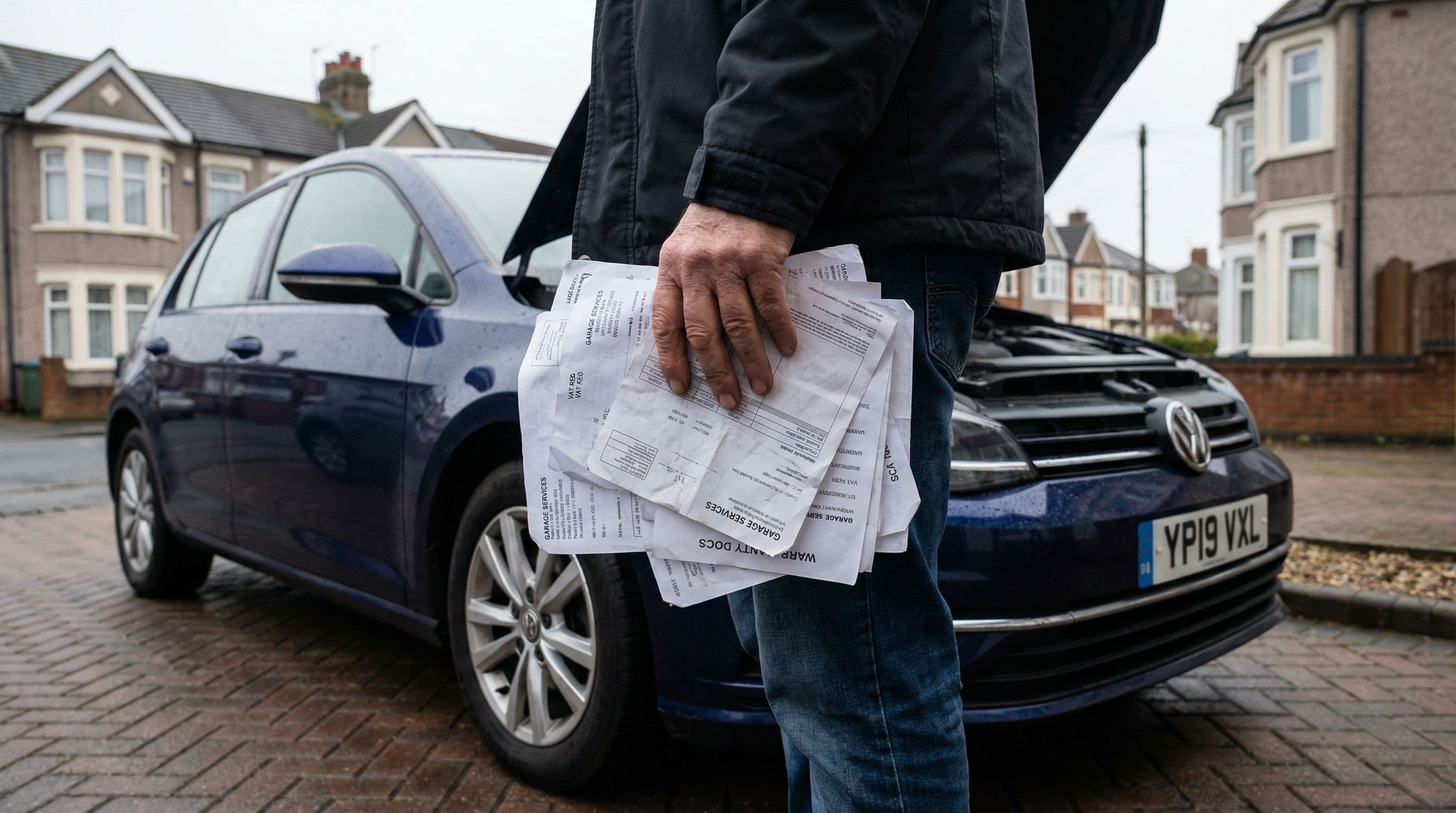

What If the Dealer Refuses to Help?
Unfortunately, some dealers will ignore your letters, refuse to accept rejection, or make the process as difficult as possible. If this happens, you have several escalation routes. A finance company claim is often the most effective – if you bought on HP or PCP, the finance company legally supplied the car, so make a formal complaint directly to them; they're often more cooperative than dealers and have more to lose from complaints. You can also report the dealer to Trading Standards via Citizens Advice Consumer Service on 0808 223 1133, who can investigate and take enforcement action. If the dealer is a member of a scheme like the Motor Ombudsman, you can raise a formal dispute through Alternative Dispute Resolution. Finally, the Small Claims Court is accessible and affordable – you don't need a lawyer, fees are modest (£35–£455), and many dealers settle once they receive court papers. You'll need to send a formal Letter Before Action first.
For a complete walkthrough of what to do when dealers won't cooperate, see our guide on what to do if the dealer ignores your rejection.
Protecting Yourself Before You Buy
Prevention is always better than cure. While your legal rights protect you after things go wrong, a few simple checks before purchase can help you avoid problems entirely.
Before viewing, run a vehicle history check (HPI, Experian, or AA) to reveal outstanding finance, write-off status, stolen markers, and mileage discrepancies – it costs just £10–£20. Also check the free MOT history online, which shows mileage readings, advisories, and failures. Mileage should increase steadily; any drops suggest clocking.
At the viewing, inspect the service history carefully – are stamps consistent? Do mileages progress logically? Consider calling garages to verify. Watch for red flags like pressure to decide quickly, cash-only demands, or reluctance to provide documentation. For higher-value cars, a pre-purchase inspection (£100–£200) is well worth the investment. And be extra careful when buying from auctions – different rules apply.
Where you buy matters. Car supermarkets give you the same rights as other dealers, but complaints can be harder to resolve. It's worth understanding the differences between franchised and independent dealers, and watching for common issues with ex-fleet and rental cars.
The Bottom Line
When you buy a used car from a dealer in the UK, you're protected by robust consumer rights. The key is knowing what those rights are, documenting everything, and being prepared to enforce them if necessary.
If you've bought a faulty car and you're within 30 days, act fast – this is your strongest window. Don't accept a repair if you'd rather reject. Put everything in writing. And if the dealer won't cooperate, remember you have escalation options.
For the complete timeline of your rights and when they apply, see our detailed guide on how long you have to reject a faulty car.
Need help rejecting a faulty car? Check your car — free, and we handle the whole process for you.