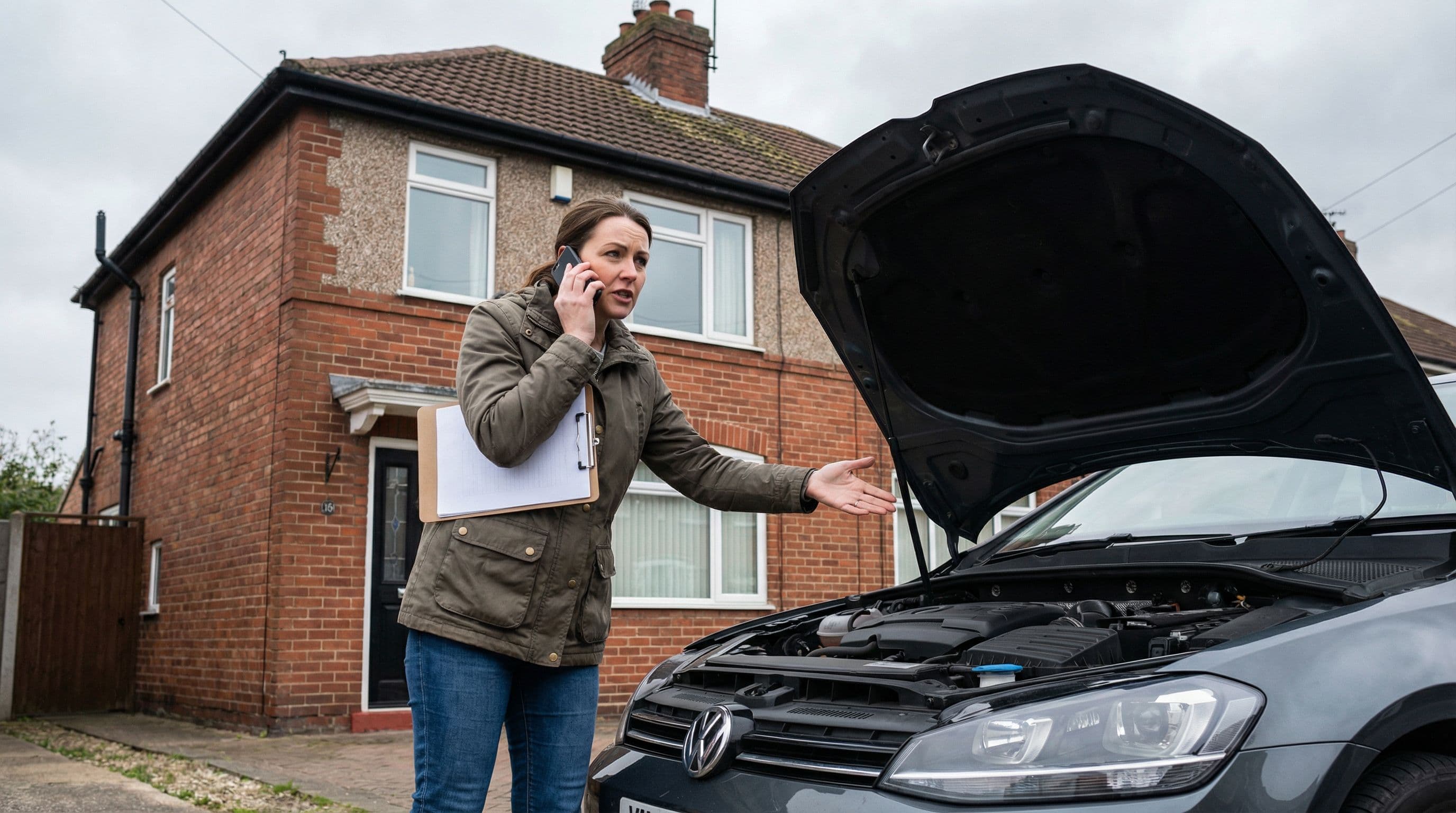

Sometimes, despite your best efforts, a dealer simply won't do the right thing. When that happens, Small Claims Court can be a powerful and accessible way to get your money back.
Is Small Claims Court Right for Your Case?
When to Consider It
Small claims is worth pursuing when the dealer refuses to offer a refund or adequate compensation, negotiation and complaints to the Motor Ombudsman have failed, you have evidence supporting your claim, and you're prepared to invest some time and a small amount of money.
When to Think Twice
Court might not be the right route if you have no evidence of the fault, the dealer has a legitimate defence, the amount is very small (under £300) making the effort disproportionate, or you can't attend hearings if required.
Understanding the Limits
Claim Value Limits
In England & Wales, the small claims track covers claims up to £10,000. In Scotland, the Simple Procedure covers claims up to £5,000, and in Northern Ireland the limit is £3,000. Claims above these amounts go to a higher track with more complexity and costs.
What You Can Claim For
You can claim a refund of the purchase price (full or partial), repair costs you've already incurred, consequential losses such as hire car fees and recovery charges, and court fees which are added on top of your claim amount.

See if you can reject your car. Free, in 2 minutes.
- Enter your reg
- Get your verdict
- Reject your faulty car
Free · No card · About 2 minutes
Not sure which window you are in? Put in your reg and find out, free.
Step-by-Step: Making Your Claim
Step 1: Send a Letter Before Action
Before filing, you must send a "Letter Before Action" to the dealer. See our complete Letter Before Action guide for templates and requirements. This letter sets out your complaint and evidence, states what you want, gives the dealer 14 days to respond, and warns that you'll take court action if they don't comply. This isn't optional – courts expect you to try to resolve disputes first.
Step 2: Gather Your Evidence
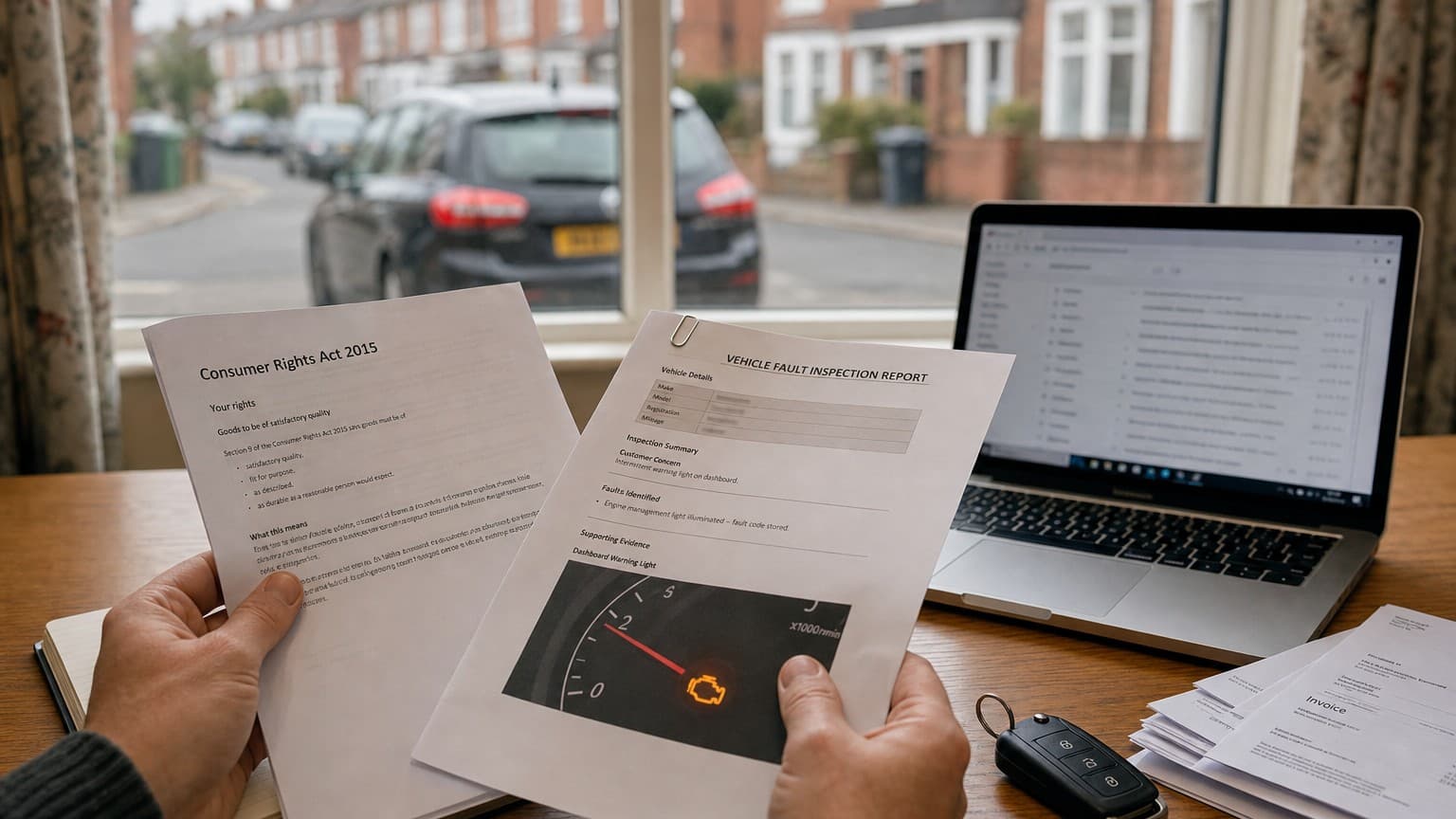
You'll need to prove your case. Collect your purchase documents including the invoice, receipt, and any finance agreement. Gather evidence of the fault through photos, videos, and diagnostic reports. Get expert evidence – an independent inspection report is highly recommended and often the deciding factor. Compile all communication with the dealer including emails, letters, and texts. Finally, gather receipts for any financial losses such as repairs, hire cars, or recovery charges.
Step 3: Issue the Claim Online
In England & Wales, use Money Claims Online (www.moneyclaims.service.gov.uk). You'll need your details and the defendant's (the dealer), a clear statement of your claim setting out what happened and why you're owed money, the amount you're claiming, and payment of the court fee.
Step 4: The Defendant Responds
The dealer has 14-28 days to respond. They can admit the claim, in which case you win by default. They can defend the claim, meaning the dispute continues to the next stage. They can make a counterclaim (rare, but possible). Or they can ignore it entirely – in which case you apply for judgment in default, and you'll usually win automatically.
Step 5: Directions Questionnaire
Both parties complete a questionnaire about how they want the case handled. You'll state whether you want a hearing (in person or by video) or a paper-based decision where the judge decides on documents alone.
Step 6: Mediation Offer
The court will offer free mediation. This is often worth trying – it's quicker and less stressful than a hearing, and surprisingly effective.
Step 7: Hearing (If Needed)
If mediation fails or either party declines, the case goes to a hearing. Small claims hearings are informal – there are no wigs or formal courtroom procedures. They usually last 1-2 hours, take place in a private room rather than a courtroom, and are conducted by a district judge. You can represent yourself, and most people do in small claims.
What Happens at the Hearing?
The Format
The judge introduces themselves and explains the process. You (the claimant) present your case first, then the defendant (the dealer) presents theirs. The judge may ask questions of either side. Both parties get a chance to sum up, and the judge then gives a decision – sometimes immediately, sometimes in writing a few days later.
Tips for Success
Be organised – bring everything in a clear, indexed bundle so the judge can follow along. Be concise and stick to the facts rather than rambling about how the experience made you feel. Stay calm – getting emotional or aggressive never helps. Focus on evidence and what you can actually prove. And know the law – referencing the Consumer Rights Act 2015 specifically shows the judge you understand your legal position.
How Much Does It Cost?
Court Fees (Current Rates)
| Claim amount | Fee |
|---|---|
| Up to £300 | £35 |
| £300.01–£500 | £50 |
| £500.01–£1,000 | £70 |
| £1,000.01–£1,500 | £80 |
| £1,500.01–£3,000 | £115 |
| £3,000.01–£5,000 | £205 |
| £5,000.01–£10,000 | £455 |
Other Costs
Beyond the court fee, you should budget for an expert report (£200-£400, but often crucial for proving your case), travel to court if there's a hearing, and the time spent preparing documents and attending.
What About Legal Costs?
In small claims, each party usually pays their own costs regardless of outcome. You can't recover solicitor fees. This makes it accessible – you won't face a huge bill if you lose.
If You Win
The judge can order the dealer to pay you the claimed amount plus court fees on top, usually within 14-28 days.
If They Don't Pay
You can enforce the judgment through several routes. A warrant of execution sends bailiffs to seize the dealer's assets. An attachment of earnings takes money directly from their wages. A charging order places a charge against their property, meaning they can't sell it without paying you first.
If You Lose
You'll be out the court fees and your own costs (expert report, etc.). You generally won't have to pay the dealer's costs in small claims – so the risk is limited.
You may be able to appeal, but only on limited grounds (legal error, not just disagreement with the decision).
Tips for Maximising Your Chances
Get an independent inspection – this is often the single deciding factor in car disputes. Keep contemporaneous records because notes made at the time carry more weight than recollections months later. Be reasonable – courts respond well to claimants who've tried to resolve things fairly. Follow procedures by meeting every deadline and completing forms properly. And prepare thoroughly – know your case inside out before you walk through the door.
On the flip side, never exaggerate because it destroys your credibility on everything else. Don't get emotional – stick to facts. Never ignore correspondence from the court or the other party. Don't miss deadlines as cases can be struck out entirely. And never wing it – preparation wins cases, not passion.
Real Example: A Successful Claim
James bought a Mercedes for £12,000. Within 3 weeks, the gearbox failed. The dealer refused to help, claiming it was "wear and tear".
James sent a Letter Before Action giving the dealer 14 days to respond. When they didn't, he got an independent report (£280) confirming the fault pre-existed the sale, then filed a claim for £12,000 plus costs. The dealer defended, claiming the fault developed after sale.
At the hearing, the judge preferred the independent expert's evidence over the dealer's assertion. James won the full amount plus his court fee and inspection cost.
Total recovered: £12,735. Total spent: £735 (fee + report). Net gain: £12,000.
The Bottom Line
Small Claims Court is designed to be accessible. You don't need a lawyer, the fees are modest, and the process is relatively straightforward.
The key is preparation – gather strong evidence, know your legal rights, and present your case clearly.
Dealers often settle before the hearing once they see you're serious. Just issuing the claim can break the deadlock.
Not sure if your case is strong enough? Check your car – free, and we'll tell you honestly if court is the right path.
Related topics