

Key takeaways
- Satisfactory quality is what a reasonable buyer would expect for the age, mileage and price
- Safety, working properly and being as described are the same for every car
- Appearance, minor defects and durability scale with the car
- Sold as seen, it passed its MOT and wear and tear are not answers
When you buy a car from a dealer, it must be of "satisfactory quality" under the Consumer Rights Act 2015. But this term causes more confusion than almost any other in consumer law. Let's clear it up.
The legal definition
The Consumer Rights Act 2015 says goods are of satisfactory quality if they meet the standard that a "reasonable person" would consider satisfactory, taking into account any description of the goods, the price paid, and all other relevant circumstances.
For used cars specifically, the relevant circumstances include the age of the vehicle, the mileage at the time of sale, the price compared to similar vehicles, the description given by the seller, and the vehicle history (if disclosed).
What satisfactory quality includes
The law specifies several aspects that fall under satisfactory quality. Three of them are the same for every car; three are scaled to the car you bought.
Safety
Brakes, steering, airbags, tyres: the car must be safe to drive.
The same for every car, at any price
Works properly
It starts, drives, steers and stops. A car that stops working within weeks was not durable.
The same for every car, at any price
As described
The advert, the history and what the dealer said all have to be true.
The same for every car, at any price
Appearance and finish
The bodywork and interior match what the age, mileage and price would lead you to expect.
Scaled to age, mileage and price
Minor defects
Small faults count if a reasonable buyer would not expect them on this car.
Scaled to age, mileage and price
Durability
It should stay in that condition for a reasonable time, judged against its age and mileage.
Scaled to age, mileage and price
1. Fitness for all common purposes
A car must be safe, roadworthy, and capable of being driven. It should start reliably, steer properly, and stop when you brake.
2. Appearance and finish
The bodywork, interior, and general presentation should match what you'd expect for a car of that age, mileage, and price.
3. Freedom from minor defects
Even small faults can make a car unsatisfactory if a reasonable buyer wouldn't expect them given the car's profile.
4. Safety
This is non-negotiable regardless of price or age. A car must be safe to drive.
5. Durability
The car should remain in satisfactory condition for a reasonable time. Something that breaks within days or weeks probably wasn't satisfactory to begin with.
Not sure which window you are in? Put in your reg and find out, free.
How age, mileage, and price affect the standard
This is where it gets nuanced.
A £3,000 car vs a £30,000 car
A reasonable person would expect different things from these vehicles. The £30,000 car should be in better condition, with fewer issues and better cosmetics – and ex-demo or nearly-new cars carry particularly high expectations. The £3,000 car can have more wear – but it still must be fundamentally sound.
A 15-year-old car vs a 3-year-old car
Older cars naturally have more wear. Some components may be past their best. But "old" doesn't mean "anything goes." Even an old car must be safe, roadworthy, free from major mechanical faults, and properly described.
High mileage considerations
A car with 120,000 miles will have more wear than one with 30,000. But high mileage doesn't excuse undisclosed faults, safety issues, or the recent development of serious problems.
What is not acceptable at any price
Certain faults make a car unsatisfactory regardless of its age, mileage, or price. Safety defects like faulty brakes, dangerous steering, or airbag issues are never acceptable. Engine or gearbox failure shortly after purchase indicates the car wasn't durable. Undisclosed damage including accident damage, flood damage, or write-off history not revealed means the car wasn't as described. Clocked mileage makes the car fundamentally not as described. Outstanding finance means you can't get clear title to something that isn't the seller's to sell. And persistent warning lights indicate underlying faults that should have been resolved before sale.
What might be acceptable, depending on the car
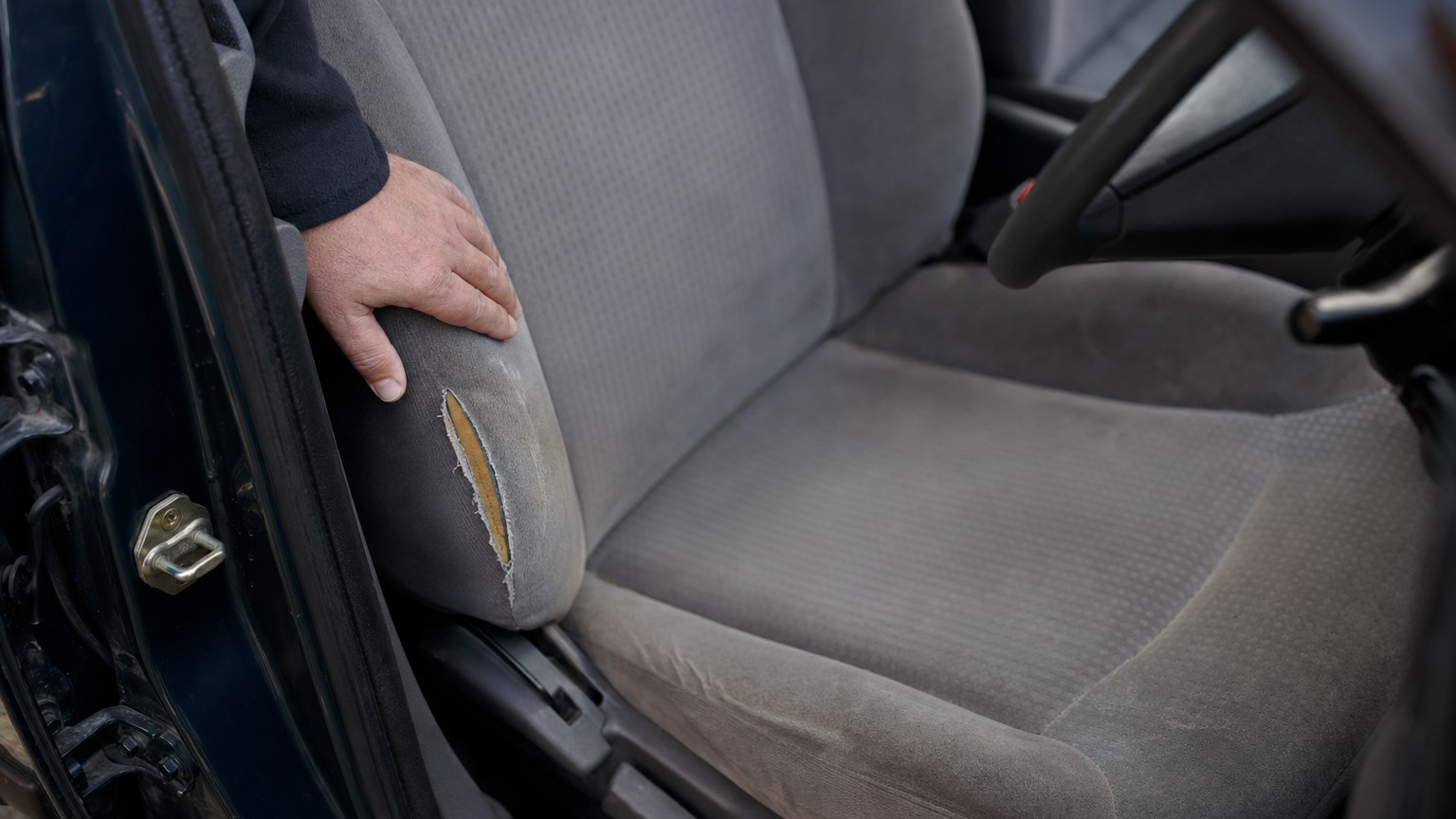
These could go either way depending on the car's profile. Minor wear to seats and carpets is expected on older or higher mileage cars. Small scratches or stone chips are normal for used vehicles. Tyres with legal but limited tread are common, though borderline. Components approaching service intervals may be acceptable if the price reflected this. And cosmetic imperfections can be reasonable given the car's age and price point.
The reasonable person test
Courts apply a "reasonable person" standard. This hypothetical reasonable person knows the car's age, mileage, and price, has reasonable expectations for a used vehicle, doesn't expect perfection from a used car, but does expect it to work properly and safely.
Ask yourself: "Would a reasonable person who knew everything about this car still have bought it?"
If the answer is no, the car probably wasn't of satisfactory quality.
Common dealer arguments, and why they're wrong
"It's sold as seen"
This has no legal meaning when buying from a dealer. Your statutory rights can't be excluded. See our guide on sold as seen and trade sale myths.
"It's old, what do you expect?"
Age doesn't remove the right to satisfactory quality. It just adjusts what's satisfactory.
"It passed its MOT"
An MOT is a minimum safety check at one point in time. It doesn't mean the car is of satisfactory quality.
"You should have checked before buying"
The duty is on the seller to provide satisfactory goods, not on you to be an expert inspector.
"That's wear and tear"
Normal wear and tear shouldn't cause the car to fail. Mechanical breakdowns aren't "wear and tear". Learn more about countering the wear and tear excuse.

Or have the letter written from your answers.
- Enter your reg
- Get your verdict
- Reject your faulty car
Free · No card · About 2 minutes
Real world examples
Passes
An 8-year-old BMW with 90,000 miles, sold for £8,000, with minor interior wear and some stone chips. It drives well, has no warning lights, and comes with a full service history. Passes. This meets the standard for its profile.
Fails
A 3-year-old Audi with 25,000 miles, sold for £25,000. A gearbox warning light appears after 2 weeks. The dealer claims it's "just a sensor." Fails. A major component issue on a relatively new, expensive car.
Fails
A 12-year-old Ford with 100,000 miles, sold for £2,500. The engine fails completely after 3 weeks. The dealer says "what do you expect for £2,500?" Fails. Fundamental functionality must be present regardless of price.


Your rights if the car isn't satisfactory
First 30 days
Short-term right to reject
Your strongest right. Reject outright and demand a full refund with no deduction. The dealer cannot insist on repairing it first, and the refund is due within 14 days.
30 days – 6 months
One repair, then reject
Allow one repair or replacement. If it fails (or they refuse), you gain the final right to reject. The fault is presumed present at purchase, so the burden is on the dealer.
6 months – 6 years
Rights continue — you prove it
You must show the fault was present or developing at sale, usually via an independent inspection. Claims run up to 6 years in England & Wales (5 in Scotland).
Within 30 days
Full refund. You can reject outright without allowing repair attempts.
Within 6 months
Repair, replacement, or refund. The dealer gets one chance to fix it. If that fails, you can reject.
After 6 months
You must prove the fault existed at sale. Usually requires an independent inspection. But rights extend up to 6 years.
The bottom line
"Satisfactory quality" doesn't mean perfect. It means reasonably fit for purpose given what you paid and what you were told.
Even cheap, old, high-mileage cars must work. Age and price lower expectations but don't remove your rights.
When in doubt, ask: would a reasonable person have expected this car to have this problem? If the answer is no, you likely have a valid claim.
Car not living up to the standard? Check your car — free, and we'll assess exactly where your case stands.
Frequently asked questions
The standard a reasonable person would find acceptable for that particular car, taking into account its age, its mileage, the price paid and how it was described. It covers safety, working properly, being as described, appearance and finish, freedom from minor defects and durability. The first three do not move with the price. The last three do.
Yes. Age and price lower what you can expect in condition and finish, but they never remove the requirement that the car is safe, works, and is what the dealer said it was. A £2,500 car whose engine fails three weeks after purchase was not of satisfactory quality, whatever the dealer says about the price.
No. An MOT is a minimum safety check on one day. A car can pass and still have a gearbox on its way out, a misdescribed history or a fault that makes it unsatisfactory for its age and price. The MOT is evidence of roadworthiness on that date, nothing more.
Normal wear is not a fault, but wear is judged against what is normal for the car. Worn seats on a 12-year-old car are expected; a clutch or gearbox that fails a month after purchase is not wear, it is a lack of durability. The question is always whether a reasonable buyer would have expected it on this car at this price.
Sometimes. Freedom from minor defects is part of satisfactory quality, and the test is whether a reasonable buyer would expect them on that car. A scuffed bumper on a cheap older car is expected. A rattle, a sticking window and a warning light on a three-year-old car sold at a premium are not, and together they can make the car unsatisfactory.
Related topics