
FaultyCar.co.uk may earn a commission if you buy through links on this page. Vehicle history reports are provided and sold by carVertical. This doesn’t affect the price you pay.
Car auctions can be fantastic places to find bargains – sometimes thousands of pounds below what you'd pay at a dealer forecourt. But the rules are different from buying at a dealership, and many buyers don't realise just how different until something goes wrong. Understanding your rights before you raise that paddle could save you a lot of stress and money.
Types of Car Auctions
The UK auction market has changed significantly in recent years, with online platforms joining the traditional auction houses. Here's what you'll encounter.
Traditional physical auctions like BCA (British Car Auctions) and Manheim hold regular sales at auction houses nationwide. You view the car beforehand, bid in person or online, and collect if you win. These remain the most common route and give you the best opportunity to physically inspect before committing.
Online-only auctions have grown rapidly. Platforms like Motorway and various dealer-only sites run entirely online, where you bid based on photos, descriptions, and condition reports. The convenience is obvious, but the inability to inspect in person adds risk.
Some auctions are trade-only (restricted to registered dealers buying stock), while others are open to the public. This distinction matters because your rights depend partly on who's selling. There are also government and fleet auctions where police, council, and company cars are sold – these are often well-documented with clear service histories, but still typically sold "as seen".
Not sure which window you are in? Put in your reg and find out, free.
Your Rights at Auction: The Key Distinction
The single most important thing to understand about buying at auction is that your rights depend entirely on who is selling, not where you're buying.
Buying from a Trade Seller at Auction
If the car is being sold by a business (not a private individual), the Consumer Rights Act 2015 applies in full. The car must be of satisfactory quality, fit for purpose, and match its description. You also have rejection rights if faults emerge after purchase. This applies even though it's an auction – the "sold as seen" signs don't override your statutory rights when a trader is selling.
Buying from a Private Seller at Auction
If the seller is a private individual, your protection is far more limited. The car must match its description and the seller must have the legal right to sell it, but there's no requirement for satisfactory quality or fitness for purpose. It's essentially "buyer beware" – which is why preparation matters so much at auction.
The Grey Area: Dealers Pretending to Be Private
Some traders sell through auctions as if they're private sellers to avoid liability. Red flags include multiple cars listed by the same seller, trade plates, business addresses, and unusually professional descriptions. If the seller is actually operating as a business, full consumer rights apply regardless of how they've presented themselves – and pretending to be a private seller is illegal.
What the Auction House Isn't Liable For
This catches many buyers off guard. Auction houses like BCA are typically acting as agents – they're facilitating the sale between you and the vehicle's owner, not selling the car themselves.
In practice, this means the auction house isn't liable for faults in the vehicle, misdescriptions made by the seller, mechanical failures, or outstanding finance. Your complaint is against the actual seller, not the auction house. However, the auction house is responsible for its own statements – so if BCA's condition report described the car inaccurately, or they failed to follow their own sale procedures, you may have a claim against them directly.
This distinction is why it's so important to identify who the actual seller is before you bid, and to keep records of any descriptions the auction house provided.
Common Auction Terms and What They Mean
"Sold as Seen"
You'll see this phrase plastered on signs, catalogues, and screens at every auction. For private sales, it means what it says – you're accepting the risk. But for trade sales, "sold as seen" doesn't override your statutory rights. A trader cannot exclude the Consumer Rights Act 2015 simply by using this phrase, no matter how prominently they display it.
"No Warranty"
Similarly, "no warranty" is fine for private sales but meaningless for trade sales. Your statutory rights exist independently of any warranty, so a trader saying "no warranty given" doesn't remove their obligations under consumer law.
"Runner" vs "Non-Runner"
A "runner" means the engine starts and the car drives under its own power. A "non-runner" doesn't start or drive and is sold for spares or repair. If a car is listed as a runner, it should at least be capable of basic operation – if it breaks down before you leave the auction site, that's a misdescription.
Grade Ratings and Buyer's Premium
Many auctions grade cars on a scale (Grade 1-5 or similar), with higher grades indicating better condition. These grades help set expectations but don't eliminate your rights over undisclosed faults. Also watch out for the buyer's premium – an additional fee of typically 5-10% charged on top of the hammer price. A £5,000 winning bid can quickly become £5,500 or more once premium and admin fees are added, so always factor this into your maximum bid.
Before You Bid: Essential Checks
Run a History Check First
Before you even think about bidding, run an HPI or provenance check on any car you're interested in. This will flag outstanding finance, write-off status, stolen markers, and mileage discrepancies. Many auction houses offer this service on-site for a small fee, but you can also run your own beforehand if the registration is listed in the catalogue.
Inspect the Car in Person
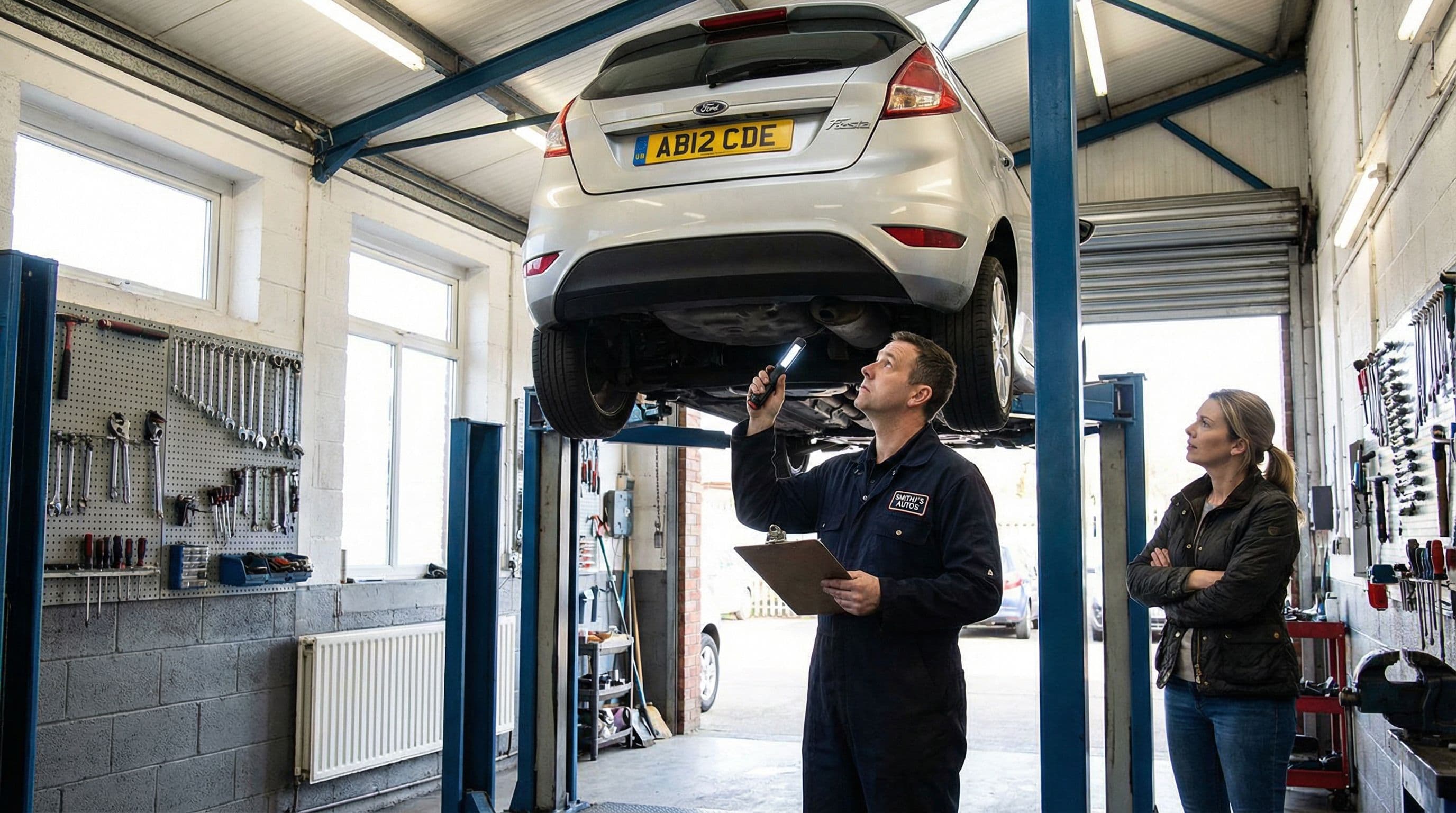
Most auctions allow viewing before the sale starts – arrive early and use this time properly. Start the engine if you can (some auctions allow this, others don't), check for warning lights on the dashboard, look underneath for oil leaks or rust, and inspect the interior for excessive wear that might suggest higher mileage than claimed. If the car comes with service history, check it matches the mileage on the clock. A pre-purchase inspection isn't usually practical at auction given the pace, so your own thorough look is your best defence.
Read the Description Carefully
The auction description forms part of the contract. Pay close attention to the stated mileage, any condition claims, disclosed faults, and service history references. If the car doesn't match what was described, you have grounds for complaint – so photograph or screenshot the listing before bidding.
Know Your Limits
Auction fever is real, and it's cost many a buyer dearly. Before bidding, calculate your absolute maximum – including buyer's premium, admin fees, and transport costs – and stick to it. Each auction house has its own conditions of sale covering payment deadlines, collection windows, and dispute procedures, so read these before you bid rather than after.
If Something Goes Wrong
Start with the Auction's Own Dispute Process
Many auction houses have their own arbitration and dispute procedures, and these can be quicker than pursuing statutory rights. BCA, for example, has a formal arbitration process for misdescriptions, and some auctions allow returns within a short window for undisclosed major faults. Check the conditions of sale – you may have contractual remedies even where statutory rights are limited.
Claiming Against a Trade Seller
If the seller was a business, you have full Consumer Rights Act protection. The first step is identifying the seller from the auction records – the auction house should provide this. Then write to them formally citing the Consumer Rights Act 2015 and demanding a remedy (repair, replacement, or refund depending on your circumstances). If they ignore you, escalate to Trading Standards or pursue through small claims court. The practical challenge is often tracing the seller, especially smaller dealers who may have changed trading names.
Claiming Against a Private Seller
Your options are much more limited here. If the description was inaccurate, you may be able to claim for misrepresentation. If the seller didn't actually own the car (or it had outstanding finance), you have a claim for breach of title. Beyond these specific situations, there's very little recourse.
Claiming Against the Auction House
You can only claim against the auction house if they were the ones who made the misrepresentation – for example, if their own condition report was inaccurate, they failed to follow their stated procedures, or they acted negligently in how they conducted the sale.
Tips for Auction Success
If you're new to auctions, the best thing you can do is attend one as a spectator first. Watch how the bidding works, see the pace, and get comfortable with the process before you put any money at risk.
When you do bid, preparation is everything. Research the specific model you're after – know the common faults, the fair market value, and the red flags to look for. Arrive early enough to inspect properly, and if possible, bring someone with mechanical knowledge who can spot issues you might miss.
Budget realistically. The hammer price is just the starting point – add the buyer's premium (typically 5-10%), any admin fees, and transport costs if you can't drive it away. A £4,000 hammer price can easily become £4,800 by the time you've got it home. Always keep a contingency fund for repairs too, because even well-inspected auction cars can surprise you.
Most importantly, don't get emotionally attached. Another car will come along. The moment you start thinking "I need to win this one," you'll overpay.
Online Auctions: Extra Considerations
Buying a car online through an auction platform is inherently riskier than attending in person. Photos and descriptions are all you have to go on, and even detailed condition reports can miss things. Zoom in on every photo, read the full description word by word, and pay special attention to caveats and disclaimers.
Some online auction platforms offer more buyer protection than others – understand exactly what happens if the car isn't as described before you bid. And don't forget to factor in transport costs. If you can't collect the car yourself, professional transport could add £200-£500 depending on distance.

Is Buying at Auction Right for You?
Auctions suit experienced buyers who can assess a car quickly, have mechanical knowledge (or access to it), and are comfortable accepting a higher level of risk in exchange for potentially significant savings. Trade buyers restocking their forecourts are the backbone of most auction houses, and there's a reason for that – they know what they're looking at.
If you're a first-time buyer without much car knowledge, you need guaranteed reliability, or you can't afford unexpected repair bills, a dealer purchase with finance protection will give you much stronger consumer rights and far more peace of mind.
The Bottom Line
Auctions can deliver excellent value, but they demand knowledge, preparation, and a realistic acceptance of risk. Your rights depend on who's selling: trade sellers give you full Consumer Rights Act protection, private sellers leave you with description and title rights only, and the auction house itself is only liable for its own statements.
Do your homework, inspect carefully, budget for the true total cost (including premium, fees, and contingencies), and never bid more than you can afford to lose.
Bought an auction car that's turned out to be faulty? If it was sold by a trade seller, you have full consumer rights. Check your car — free, and we'll help you understand your options.
Related topics