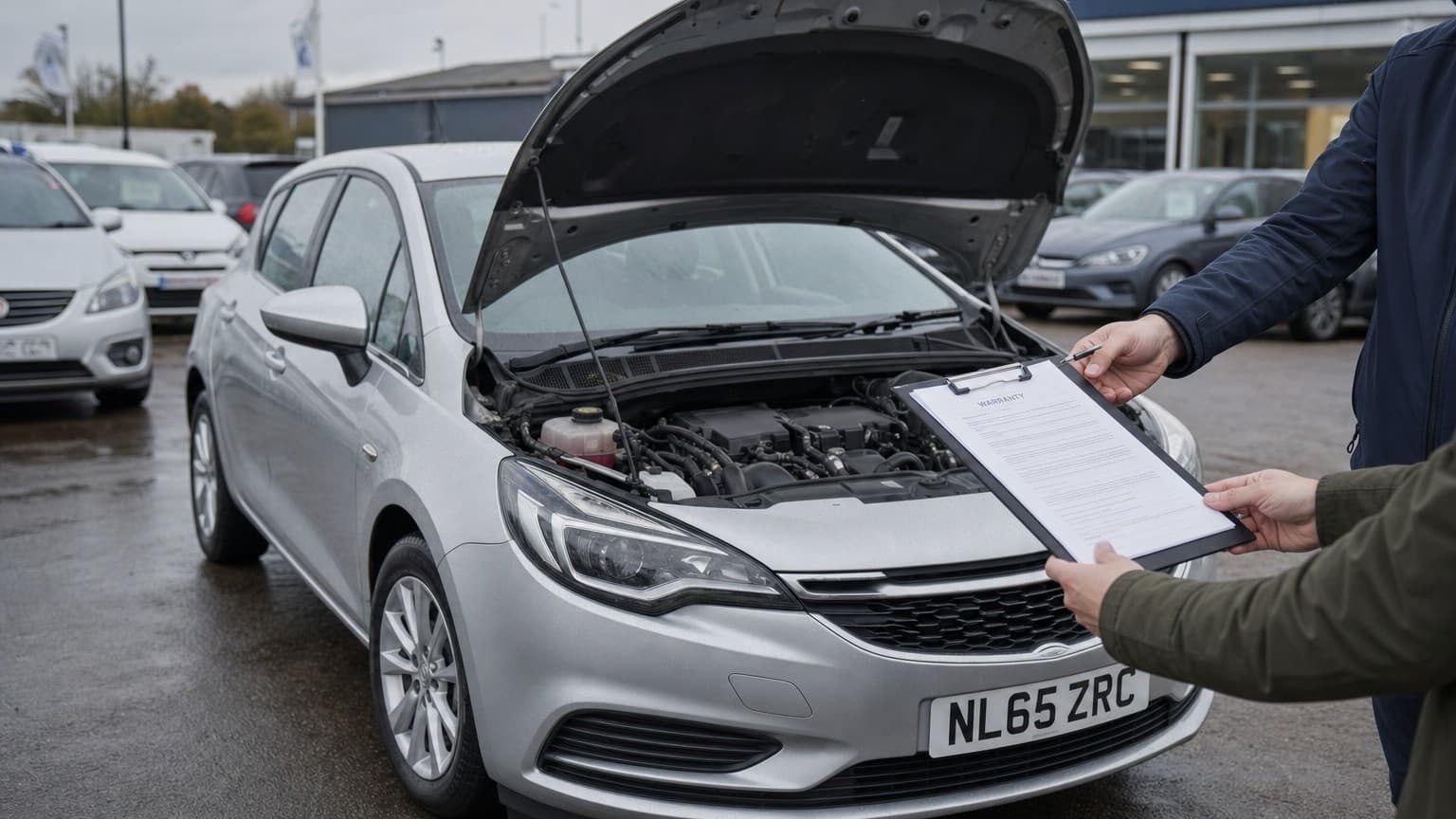

Hire Purchase (HP) is a straightforward way to buy a car on finance – you pay monthly instalments and own the car at the end. But what if your HP car turns out to be faulty? Here's your complete guide to rejecting it. For the bigger picture across all agreement types, see rejecting a car on finance.
How HP Differs from PCP
With HP, you're buying the car outright – not just renting it. There's no balloon payment because you own it after the final regular instalment, and there are no mileage limits so you can drive as much as you want. Monthly payments are higher than PCP because you're paying off the full value – our HP finance calculator shows the monthly figure and total cost side by side with PCP if you want the exact numbers. For rejection purposes, HP and PCP work similarly – the finance company legally supplied the car, so your rejection rights run against them as well as the dealer.
Your Rights When Rejecting an HP Car
The Consumer Rights Act 2015
Whether you paid cash or on finance, the Consumer Rights Act gives you the same rights: a 30-day right to reject for any fault, the right to repair or replacement after 30 days, a final right to reject if repairs fail, and up to 6 years to make a claim.
The Finance Company Is Legally the Seller
With HP, the dealer sells the car to the finance company, which then supplies it to you under the agreement. That makes the finance company directly responsible for the car's quality under the Consumer Rights Act 2015. And under Section 56 of the Consumer Credit Act 1974, the dealer negotiated the sale as the finance company's agent – so misrepresentation (such as lying about the car's condition) counts against the lender too. This is powerful because your claim runs against the finance company even if the dealer won't help – a stronger right than the Section 75 protection you'd get on a credit card purchase.

See if you can reject your car. Free, in 2 minutes.
- Enter your reg
- Get your verdict
- Reject your faulty car
Free · No card · About 2 minutes
Not sure which window you are in? Put in your reg and find out, free.
Step-by-Step: Rejecting Your HP Car
Step 1: Document Everything
Before contacting anyone, photograph and video the fault, keep all receipts and paperwork, note the dates (when you purchased the car and when the fault appeared), and get a diagnostic report if possible. See our guide on gathering evidence for what else to collect.
Step 2: Inform Both Parties
Write to the finance company (they legally supplied the car, so your rejection rights run against them) and the dealer (they handled the sale and may fix things fastest) on the same day. This prevents either party trying to pass the buck.
Step 3: Make Clear You're Rejecting
Your rejection letter should state that you're rejecting the vehicle under the Consumer Rights Act 2015, describe the specific faults, explain that the car is not of satisfactory quality, set out what you want (full refund and cancellation of the agreement), and give a deadline of 14 days.
Step 4: Reference the Relevant Laws
Include Section 9 (satisfactory quality), Section 22 (right to reject within 30 days), Section 24 (right to reject after failed repair), and Section 56 of the Consumer Credit Act 1974 (the dealer negotiated as the finance company's agent, so their claims about the car bind the lender).
Step 5: Continue Payments (For Now)
This is frustrating but important. Keep paying your HP instalments while the dispute is ongoing because stopping payments damages your credit score, the finance company could repossess the car, and it weakens your legal position. You'll get these payments back when you successfully reject.
What Happens to Your HP Agreement
When Rejection Is Successful
The agreement is cancelled as if it never existed, all payments are refunded (deposit plus all instalments), no termination fees should apply, and your credit file should show the agreement as settled, not defaulted.
What You Get Back
You get back your deposit (however you paid it), every monthly payment you've made, the interest portion of those payments, and any arrangement fees.
What You Don't Owe
You don't owe future payments because the agreement is cancelled. You don't owe an early settlement figure because you're not settling – you're rejecting. And termination fees don't apply to fault-based rejection.
HP vs Voluntary Termination
You might have heard of "voluntary termination" – this is different from rejection.
Voluntary termination is available once you've paid 50% of the total amount payable. You return the car and walk away with no refund of payments made, but the car must be in reasonable condition and no fault is required.
Rejection is available when the car is faulty. You get your money back, the car can be in poor condition (because that's why you're rejecting), and it's based on the Consumer Rights Act.
If your car is faulty, rejection is better because you get your money back. VT is only useful if you can't prove a fault but just want out of the agreement. If neither fits, there are three other ways to give a car back to the finance company, and one you should never use.
Dealing with the Finance Company
Why Contact Them?
Finance companies have procedures for handling disputes, are regulated by the FCA, take complaints seriously because of regulatory consequences, can pressure dealers to resolve issues, and are your backup if the dealer refuses.
What to Expect
The finance company should acknowledge your complaint within a few days, then investigate by contacting the dealer. They'll either agree to reject or make an alternative offer. If they don't resolve it, you can escalate to the Financial Ombudsman.
The Financial Ombudsman
If the finance company refuses to help, complain to the Financial Ombudsman Service (FOS). It's free to use, investigates your complaint independently, can award up to £430,000 in compensation, and its decisions are binding on the company. Finance companies actively want to avoid FOS complaints, which often motivates them to resolve disputes before it gets that far.
Common HP Rejection Scenarios
Scenario 1: Fault Within 30 Days
Best case scenario. You have an automatic right to reject. Write to the dealer and finance company, cite Section 22 (the 30-day rejection right), demand a full refund and agreement cancellation, and don't accept repair offers – you don't have to within 30 days.
Scenario 2: Fault After 30 Days But Within 6 Months
Write to the dealer and finance company, citing Section 24 (right to reject after failed repair). Allow one repair attempt, and if it fails or takes too long, reject. The law presumes the fault was present at purchase during this period.
Scenario 3: Dealer Has Gone Bust
This is where HP really helps. Contact the finance company directly – they supplied the car, so their liability is completely unaffected by the dealer's insolvency and they can't dismiss your claim just because the dealer has gone. Proceed as normal and they should refund you.
Scenario 4: Finance Company Refuses
Make a formal complaint to the finance company and allow 8 weeks for their final response. If they don't resolve it, escalate to the Financial Ombudsman, who will investigate and can order compensation.
What About the Car?
Don't Return It Yet
Keep the car until you've received your refund. You're not obliged to return it first.
Who Collects It?
The dealer or finance company should arrange collection at no cost to you.
What Condition?
The car doesn't need to be in perfect condition – it's faulty, that's why you're rejecting it. But don't cause additional damage.


Sample HP Rejection Letter
To: [Dealer Name] and [Finance Company Name]
Re: Rejection of Vehicle – [Registration]
HP Agreement Reference: [Number]
The Bottom Line
HP gives you the same rejection rights as cash purchases, with the added bonus that the finance company – as legal supplier of the car – is directly responsible for its quality. Contact both the dealer and finance company simultaneously – this shows you know your rights and prevents either party from passing the buck. Keep paying your instalments until the dispute is resolved, because you'll get all of it back on a successful rejection. The finance company can't dismiss your claim by saying they're "just the lender", and the Financial Ombudsman is free to use and has real power to help if they refuse. If your car is faulty, rejection is always better than voluntary termination because you get your money back instead of just walking away.
Got a faulty HP car? Check your car — it's free. We draft the letters to both the dealer and the finance company, ready for you to send.
Related topics