
When a car dealer treats you badly, someone at some point will suggest "report them to Trading Standards". But what can Trading Standards actually do? And will it get your money back?
What Trading Standards Actually Does
Trading Standards is a local authority enforcement body. Their job is to enforce consumer protection laws, investigate businesses that break rules, prosecute serious or repeat offenders, warn and advise businesses, and protect consumers generally.
What They DON'T Do
Trading Standards won't get your money back for you, mediate individual disputes, take sides in civil matters, force dealers to refund you, or act as your solicitor.
This is the crucial point: Trading Standards is about enforcement, not individual redress.
When to Report to Trading Standards
Definitely Report If:
Fraud or Criminality – clocked mileage (a criminal offence), stolen vehicles, forged documents, hidden write-off status (Cat S/N), and outstanding finance fraud.
Systematic Problems – multiple complaints about the same dealer, a pattern of deceptive practices, ongoing consumer harm, and repeated similar issues.
Serious Safety Issues – dangerous vehicles being sold, safety equipment tampering, MOT fraud, and concealed airbag issues.
False Advertising – consistent misleading descriptions, fake reviews or testimonials, false claims about history, and bait-and-switch tactics.
May Not Be Worth It If:
It's a simple contract dispute, a difference of opinion about a fault, the dealer is being difficult but not dishonest, or it's a one-off case of poor service.

See if you can reject your car. Free, in 2 minutes.
- Enter your reg
- Get your verdict
- Reject your faulty car
Free · No card · About 2 minutes
How to Report
Citizens Advice Consumer Service
The main route is through Citizens Advice Consumer Service on 0808 223 1133 or online.
They will record your complaint, pass the information to the relevant Trading Standards office, give you initial advice, and create an official record.
What to Include
Your report should cover the dealer's name and address, date of purchase, what you bought, what went wrong, evidence of wrongdoing, your contact details, and details of any other known victims.
Evidence Matters
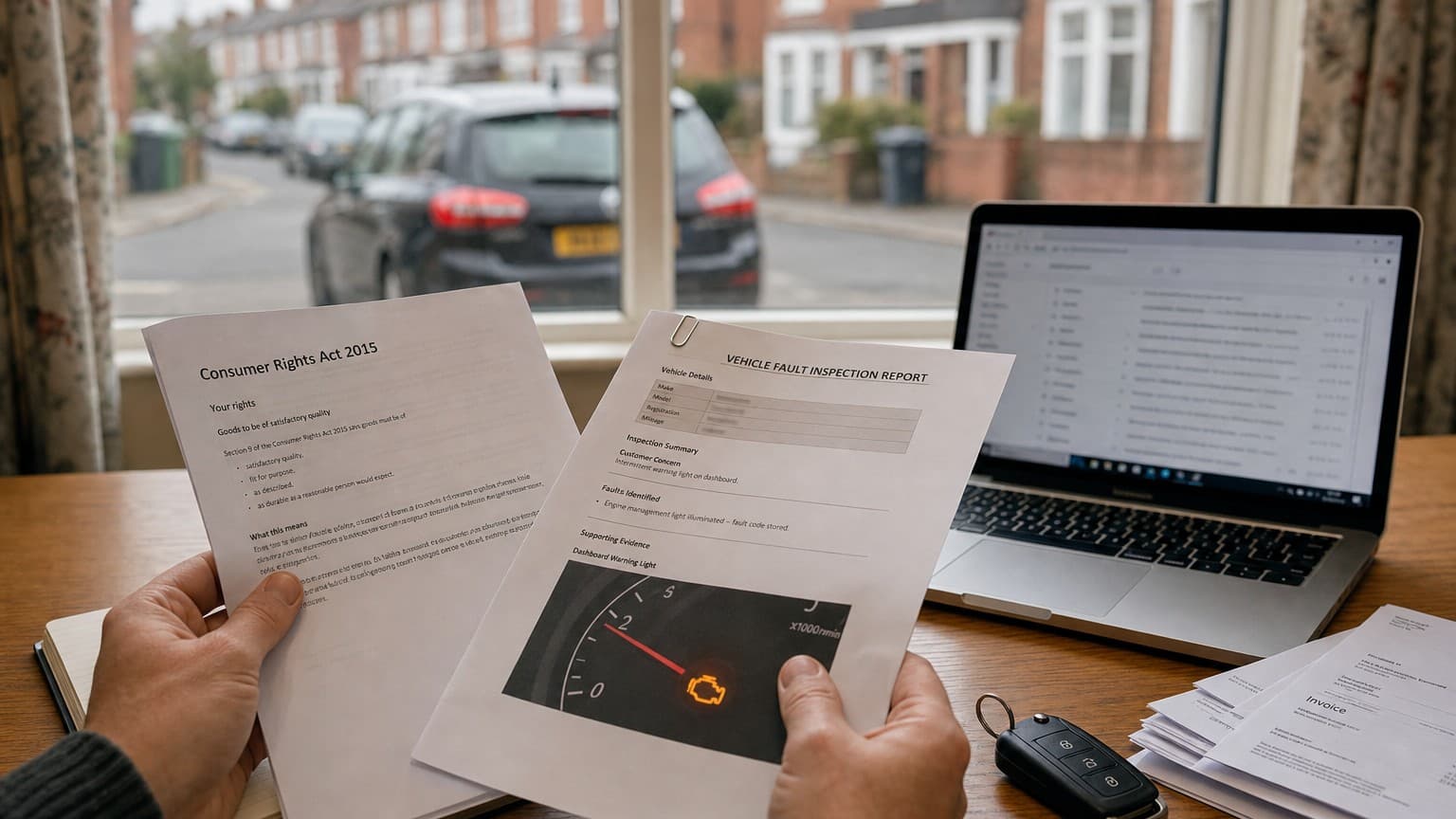
Trading Standards needs evidence to act. Provide documentation of false claims, MOT history showing clocking, communications with the dealer, photos of issues, independent inspection reports, and witness statements if available.
Not sure which window you are in? Put in your reg and find out, free.
What Happens After You Report
Assessment Phase
Trading Standards will review your complaint, check for patterns (other complaints about the same dealer), assess the seriousness, and decide on the response level.
Possible Outcomes
No Action Resource constraints mean not every complaint is investigated. Don't take this personally.
Advice to Dealer For minor issues, they may send a warning letter or provide guidance to the business.
Investigation For serious matters, they'll investigate formally, gathering evidence and interviewing parties.
Prosecution For criminal matters or serious breaches, they can prosecute in court.
Other Enforcement Warnings, improvement notices, licence implications for motor traders.
Trading Standards vs Your Civil Claim
These are SEPARATE processes:
| Trading Standards | Your Claim |
|---|---|
| Criminal/regulatory | Civil |
| Public interest | Personal redress |
| Punishment/deterrence | Compensation |
| Their timeline | Your timeline |
| May take months/years | You control pace |
Don't Wait for Trading Standards
Your civil rights (rejection, refund) are independent. You can pursue your claim AND report to Trading Standards – one doesn't affect the other. Don't delay your rejection waiting for their investigation.
How Trading Standards Reports Help Your Case
While they won't get your money back, a Trading Standards report can help:
Creates Official Record
If you end up in court, evidence that you reported to Trading Standards shows you considered the matter serious enough to involve authorities.
May Uncover Information
Sometimes Trading Standards investigations reveal useful information – other complaints, previous history, enforcement actions.
Puts Pressure on Dealer
Dealers don't like Trading Standards attention. Knowing you've reported may encourage settlement.
Helps Future Consumers
Even if it doesn't help you directly, your report may protect others.
What Dealers Fear from Trading Standards
Prosecution
Criminal convictions for mileage clocking can mean unlimited fines and prison.
Reputation
Prosecution is public. Bad publicity can destroy a dealership.
Licence Issues
Some areas require motor trader licences. Enforcement action can affect these.
Investigation Burden
Investigations disrupt business, require document production, take management time.
Specific Offences Trading Standards Investigates
Consumer Protection from Unfair Trading Regulations 2008
This covers misleading actions (false information), misleading omissions (hiding important facts), aggressive practices (pressure selling), and 31 specific banned practices. Penalties include unlimited fines and up to 2 years imprisonment.
Fraud Act 2006
This covers false representations for gain, dishonestly making false statements, and mileage clocking. Penalties go up to 10 years imprisonment.
General Product Safety Regulations
This covers selling unsafe products and products that pose risks to consumers.
Consumer Rights Act 2015 (Enforcement)
Trading Standards can enforce certain provisions relating to unfair contract terms.
Realistic Expectations
They're Overstretched
Trading Standards has faced severe cuts. They can't investigate everything.
Prioritisation
Criminal matters and widespread harm get priority over individual disputes.
Timeline
Investigations take months or years. Your civil claim may resolve faster.
No Guarantees
Reporting doesn't guarantee action. Resources determine response.

Best Approach
Pursue your civil claim first – this is about getting YOUR money back. Report to Trading Standards for the record and public interest. Don't make the two dependent – your claim shouldn't wait for their investigation. Provide good evidence because it makes investigation more likely. And follow up – you can ask about progress, though they may not share much.
When Trading Standards Really Matters
Clocking Cases
Mileage fraud is criminal. Trading Standards takes it seriously. Your report could lead to prosecution.
Serial Offenders
If a dealer has multiple complaints, your report could be the one that tips them into investigation.
Dangerous Practices
Safety issues get priority. If a dealer is selling dangerous cars, reporting could prevent serious harm.
The Bottom Line
Trading Standards is a valuable tool but not for getting your individual refund. They investigate and prosecute, create official records, put pressure on bad actors, and protect future consumers. But they don't fight your case for you, get your money back, or mediate disputes. Report when appropriate, but pursue your civil remedies separately through the dealer and finance company if applicable. Don't wait for Trading Standards to act before claiming your refund – your 30-day rejection right doesn't wait for anyone.
Need help getting your money back? Check your car – free, and we pursue civil claims while you handle the reporting.