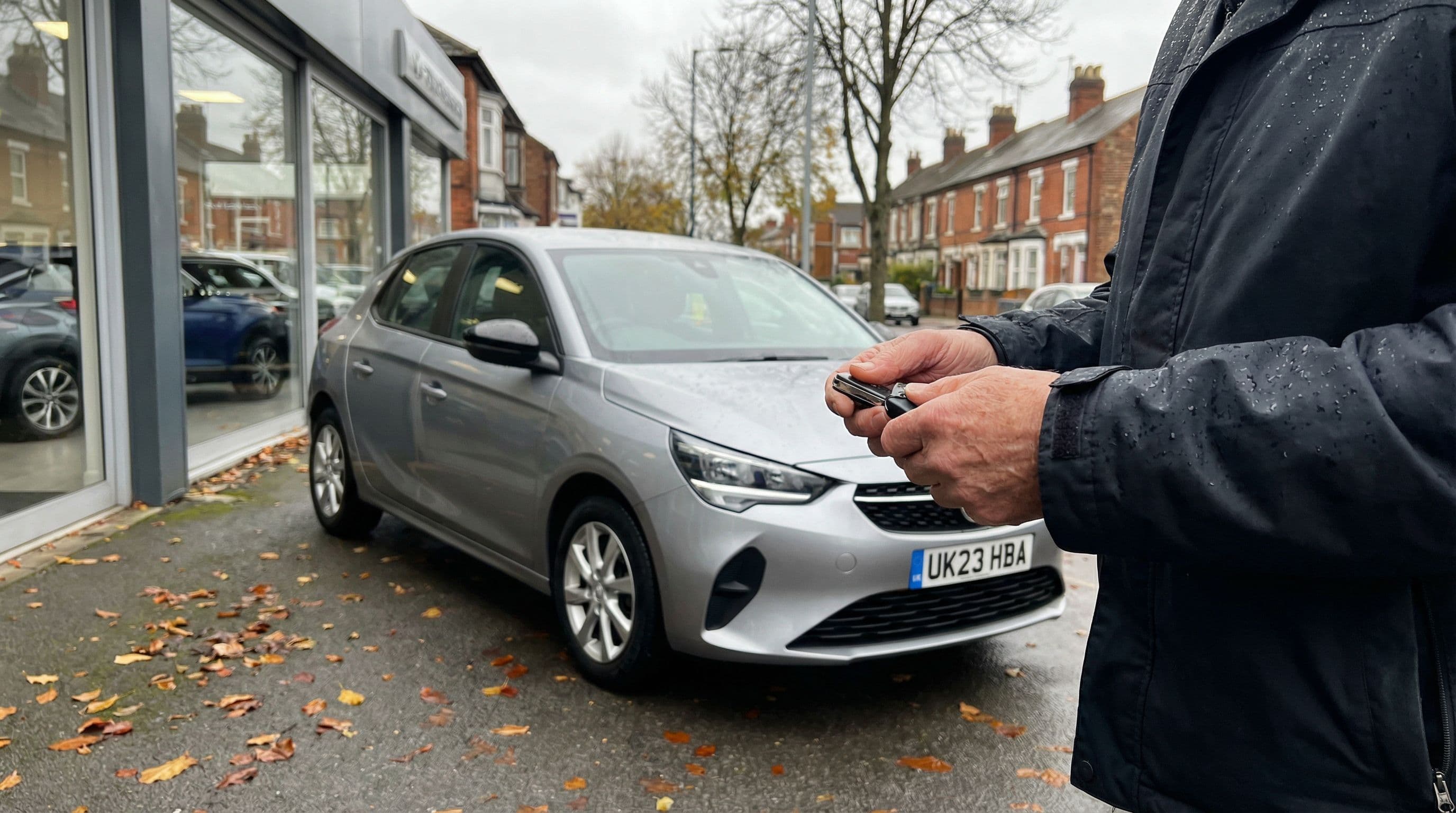

Voluntary Termination (VT) is a legal right that lets you hand back a financed car and walk away – but only once you've paid half the total amount payable. Here's everything you need to know about the "50% rule." Note that VT is different from rejecting a faulty car on finance, which refunds you rather than just ending the agreement.
What Is Voluntary Termination?
Under Section 99 of the Consumer Credit Act 1974, you have the right to end a regulated hire purchase (HP) or conditional sale agreement early by returning the goods.
This is called Voluntary Termination (VT) or sometimes "half rule."
It applies to HP (Hire Purchase), PCP (Personal Contract Purchase), and conditional sale agreements. It does NOT apply to personal loans, PCH (Personal Contract Hire / Leasing), or cash purchases.
The 50% Rule
To voluntarily terminate, you must have paid (or pay) 50% of the "total amount payable" under the agreement.
What's Included in Total Amount Payable?
The total amount payable includes the cash price of the car, interest charges, fees (documentation fees, option-to-purchase fees), and the balloon payment (for PCP). It's printed on your agreement — or you can rebuild it with our HP finance calculator, which shows the total cost of any agreement; half that figure is your VT threshold.
Finding Your 50% Figure
Your finance agreement must state the total amount payable and half of this amount (your VT threshold).
Look for wording like: "If you wish to end this agreement early, the amount you may need to pay is £X"
Example Calculation
PCP Agreement:
- Cash price: £15,000
- Interest and fees: £3,000
- Balloon payment: £7,000
- Total amount payable: £25,000
- 50% threshold: £12,500
If you've paid £10,000 so far, you'd need to pay another £2,500 to reach the VT threshold.

See if you can reject your car. Free, in 2 minutes.
- Enter your reg
- Get your verdict
- Reject your faulty car
Free · No card · About 2 minutes
Not sure which window you are in? Put in your reg and find out, free.
How to Voluntarily Terminate
Step 1: Check Your Position
Find your agreement and identify the 50% figure. Calculate how much you've paid (including deposit) and work out whether you've hit 50% or what's needed to get there.
Step 2: Write to the Finance Company
Send written notice. Email is fine but follow up with recorded delivery letter.
Step 3: Arrange Vehicle Return
The finance company should collect the vehicle. You may also be able to return it to a specified location or drop it at a dealer.
Get a signed receipt confirming the return and condition.
Step 4: Final Inspection
The finance company will inspect the vehicle. This is where condition matters (see below).
The Vehicle Must Be in "Reasonable Condition"
Under Section 100 of the Consumer Credit Act, if you haven't taken "reasonable care" of the vehicle, you may be liable for the cost of putting it right.
What's Reasonable?
Normal wear and tear is expected and acceptable. Age-appropriate condition considering miles and age is fine. And minor cosmetic issues like small scratches and stone chips shouldn't trigger charges.
What's Not Reasonable?
Significant damage such as dents and scrapes requiring repair, excessive interior wear like burns, tears, and stains, mechanical issues caused by neglect, and missing items such as the spare wheel, parcel shelf, or tools may all result in charges.
BVRLA Fair Wear Guide
Many finance companies use the BVRLA Fair Wear and Tear Guide as their standard. Download it to understand what's acceptable.
Charges for Damage
If the vehicle isn't in reasonable condition, they can charge you for repairs – but the charges must be reasonable (actual repair cost), they cannot charge for pre-existing damage, they cannot profit from the repairs, and you can dispute excessive charges through the Financial Ombudsman.
VT vs Rejection: What's the Difference?
| Aspect | Voluntary Termination | Rejection for Faults |
|---|---|---|
| Reason | You want out | Car is faulty |
| When | Once 50% paid | Anytime (with fault) |
| Refund | No | Yes – payments returned |
| Condition | Must be reasonable | Can be faulty |
| Evidence needed | Just the payment record | Proof of fault |
Key point: If your car is faulty, rejection is better because you get your money back. VT is for when you just want out but can't prove a fault. If you are not sure which applies to you, our guide to giving a car back to the finance company walks through all five routes, including the cooling-off period and the end of a PCP.
Common VT Pitfalls
Pitfall 1: Not Reaching 50%
If you haven't paid 50%, you can continue paying until you reach it, make a lump sum payment to get there, or negotiate an early settlement instead (a different process).
Pitfall 2: Damage Charges
If the car is damaged beyond normal wear, you'll face charges. Consider getting minor damage repaired before returning, taking dated photographs of the vehicle condition, and challenging any charges you believe are unreasonable.
Pitfall 3: Being Talked Out of It
Finance companies don't like VT – it costs them money. They may try to offer alternatives (you don't need to accept), claim you haven't reached 50% (check the figures yourself), delay collection (keep pushing), or claim excessive damage (challenge it with photos).
You have a legal right to VT – don't be pressured out of it.
Pitfall 4: Continuing Payments
Once you've sent VT notice and reached 50%, stop paying. Some people keep their direct debit going by mistake.
Pitfall 5: Forgetting the Balloon
For PCP, the balloon payment counts toward the total amount payable. This often means you reach 50% earlier than expected.
What About Excess Mileage?
If you're over your agreed mileage limit:
On VT
Technically, excess mileage is not supposed to be charged on VT. The law says you pay 50% – that's it.
However, some finance companies argue excess mileage counts as not taking "reasonable care." This is disputed legally, and many consumer groups argue it's not a valid charge.
If they try to charge for excess mileage, challenge it in writing, cite Section 99/100 of the Consumer Credit Act, and escalate to the Financial Ombudsman if they insist.
On Normal PCP Return
If you return the car at the end of PCP without exercising VT, excess mileage charges definitely apply.
Is VT Right for You?
VT Makes Sense When:
VT makes sense when you're in negative equity (owe more than the car's worth), you want to exit without penalty, the car is in reasonable condition, and you've reached or are close to 50%.
VT Doesn't Make Sense When:
VT is the wrong route if the car is faulty – reject it instead and get a refund. If you have positive equity, sell or part-exchange instead. If the car is damaged, repair first or face charges. And if you're nowhere near 50%, early settlement may be cheaper.


Early Settlement vs VT
Early settlement is different from VT:
Early Settlement
With early settlement, you pay off the remaining balance and keep or sell the car. There are no condition requirements, but there might be an "early settlement fee."
VT
With VT, you pay to the 50% threshold and hand back the car. Condition requirements apply, but it's a legal right with no fee.
If your car is worth more than the settlement figure, early settlement and selling privately often works out better than VT.
The Bottom Line
VT is a legal right under the Consumer Credit Act 1974 – finance companies can't refuse a valid termination. You must have paid 50% of the total amount payable, and the vehicle must be in reasonable condition or you'll face charges. Always write to terminate formally – don't just stop paying without notice. Remember that VT doesn't give you your money back; if your car is faulty, rejection is the better route because you get a refund. Challenge any unfair charges through the Financial Ombudsman.
VT is useful when you just want out of an agreement. But if your car is faulty, you may be entitled to a refund instead. Check your car — free, and we'll tell you whether you can get your money back.
Related topics