
Key takeaways
- A failed MOT soon after purchase is strong evidence
- Within 30 days, reject for a full refund
- Within 6 months, the dealer has to prove the fault was not there
- Brakes, suspension and corrosion do not fail overnight
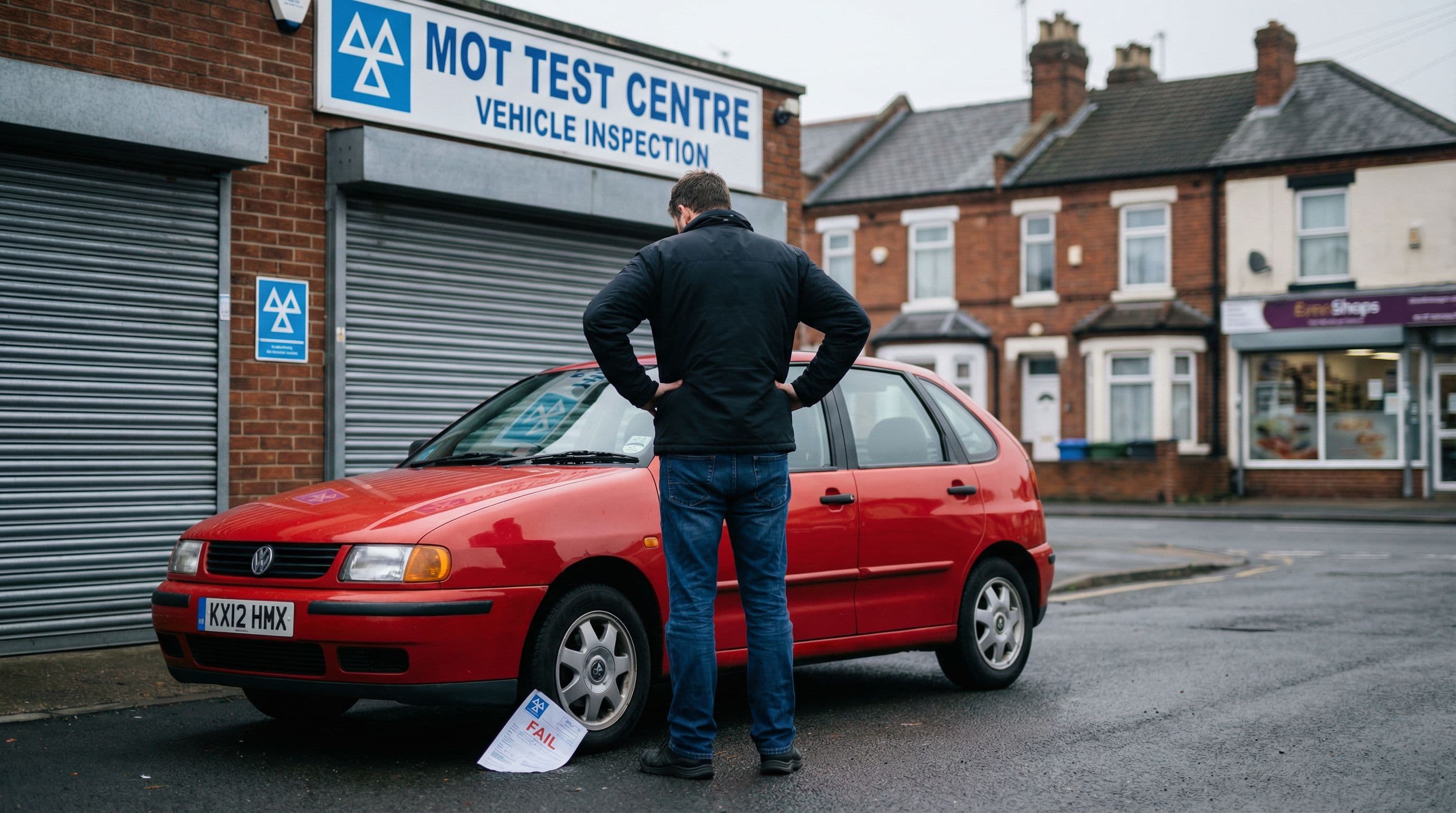
Few things are more frustrating than buying a car only to have it fail its MOT shortly after. But here's the good news: a failed MOT can actually be strong evidence that you're entitled to a refund.
Your rights when a car fails MOT after purchase
Under the Consumer Rights Act 2015, goods sold by a business must be of satisfactory quality. A car that fails its MOT clearly isn't satisfactory – it's literally not roadworthy.
The 30-day golden window
If your car fails its MOT within 30 days of purchase, you have an almost automatic right to reject it for a full refund. You don't have to accept a repair.
After 30 days but within 6 months
After 30 days, the dealer can offer one repair attempt. But here's the key: the law assumes the fault was there when you bought it. The dealer has to prove it wasn't – you don't have to prove it was.
If the repair fails or the dealer refuses, you can then reject for a refund.
After 6 months
You can still claim, but you'll need to prove the fault was present (or developing) at the time of purchase. A failed MOT on an issue that wouldn't develop in 6 months is good evidence.
Common MOT failures and your rights
Dangerous failures
Some MOT failures strongly suggest the car should never have been sold in that condition. Brake problems like worn pads, discs, or faulty brake lines don't develop overnight. Neither do steering issues with excessive play or worn components, suspension failures from broken springs or worn bushes, structural corrosion affecting the car's integrity, or tyre issues like illegal tread depth or damage. On a diesel, a clogged diesel particulate filter (DPF) that fails the emissions test is another fault that builds up over time rather than appearing overnight.
If your car fails on any of these within the first few months, the fault was almost certainly present when you bought it – and you have strong grounds for rejection. It's also worth checking whether any outstanding manufacturer recalls apply to your car, as dealers should complete all safety recalls before selling.
Advisory items
MOT advisories (things flagged as "watch for future") are trickier. They're not failures, so they don't automatically give you rejection rights. However, if advisories become failures shortly after purchase, that's evidence the car was already deteriorating when sold. A car returned with a long list of serious advisories may also fail the satisfactory quality test, even if it technically passed the MOT.

See if you can reject your car. Free, in 2 minutes.
- Enter your reg
- Get your verdict
- Reject your faulty car
Free · No card · About 2 minutes
Not sure which window you are in? Put in your reg and find out, free.
What to do when your car fails
Keep the MOT failure certificate – it's crucial evidence, listing exactly what failed and why in an official, independent document. This is far stronger evidence than your own assessment.
Don't repair the car yet. This is important. If you repair the faults yourself, you risk weakening your right to reject because the dealer could argue you've "accepted" the car by having it fixed. The evidence needs to remain intact.
Contact the dealer immediately in writing. Email is fine, but keep records of everything. State clearly that you're rejecting the car under the Consumer Rights Act 2015, list the specific MOT failures, explain that these faults mean the car is not of satisfactory quality, and require a full refund within 14 days.
Reference the specific legal provisions: Section 9 (satisfactory quality), Section 10 (fitness for purpose – a car should be roadworthy), Section 22 (right to reject within 30 days), or Section 24 (right to reject after failed repair, if you're beyond 30 days). Give the dealer a clear 14-day deadline to arrange collection and refund, and make it clear you'll escalate if they don't respond.
What if the dealer pushes back?
"It passed when we sold it"
This is irrelevant if the failures are things that don't develop quickly. Brake pads don't go from good to dangerous in a few weeks of normal driving. The fault was there – the previous MOT either missed it or the car has deteriorated since.
"We'll repair it for free"
Within 30 days, you don't have to accept a repair – you can insist on a refund. After 30 days, you must allow one repair attempt, but if it fails or takes too long, you can then reject.
"It's wear and tear"
For a recently purchased car, significant wear and tear shouldn't cause MOT failure. The car should have been fit for purpose for a reasonable time. Immediate failure isn't reasonable.
"The MOT was passed when we sold it"
Check the dates. If the MOT was done just before sale, the issues may have developed since – but more likely they existed and were missed. If the MOT had months remaining, the failures clearly existed at purchase.
Special situations
Car sold "as seen" or "trade sale" – these disclaimers don't remove your statutory rights when buying from a dealer. The Consumer Rights Act protections cannot be excluded by contract terms, signs, or verbal statements. If the car isn't of satisfactory quality, your rights apply regardless.
Private sale – unfortunately, private sellers don't have to guarantee satisfactory quality. A failed MOT after a private purchase gives you fewer options, though you may have a claim if the car was significantly misdescribed (e.g., seller claimed it had a "recent MOT with no advisories").
Car bought on finance – this actually strengthens your position. On HP or PCP, the finance company legally supplied the car and is directly responsible for its quality under the Consumer Rights Act, so you can complain to them as well as the dealer. If the dealer isn't cooperating, go straight to the lender.
What refund should you expect?
Within 30 days, you're entitled to a full refund of the purchase price including any dealer fees and add-ons, with no deductions. After 30 days, the dealer may make a "reasonable deduction" for the use you've had, but this should be modest if the car failed its MOT relatively soon after purchase – excessive deductions can be challenged.
On top of the purchase price, you may also be entitled to the MOT test fee, recovery costs if the car isn't driveable, and in some circumstances, hire car costs while the dispute is resolved.
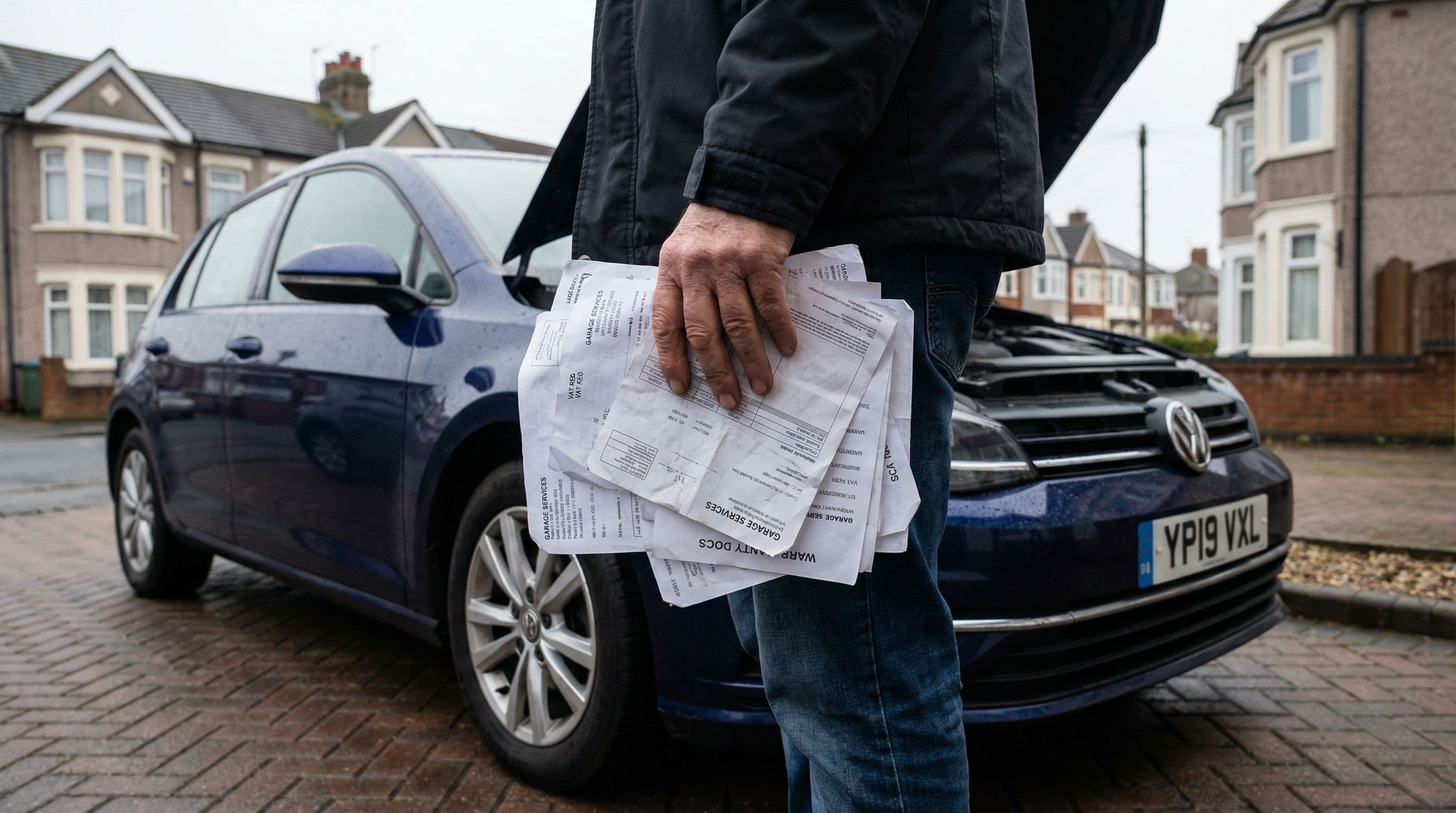

Template: MOT failure rejection letter
Here's what to include in your letter:
The bottom line
A failed MOT is one of the strongest pieces of evidence you can have in a car rejection claim. It's an independent, official assessment that the car isn't roadworthy – which directly proves it's not of satisfactory quality. Don't repair it yourself, don't accept vague promises from the dealer, and don't let them fob you off with "it passed when we sold it." Write your rejection letter, set a deadline, and escalate if they don't cooperate.
Car failed its MOT? Check your car — it's free. We'll write the letters and guide you through the process.
Related topics