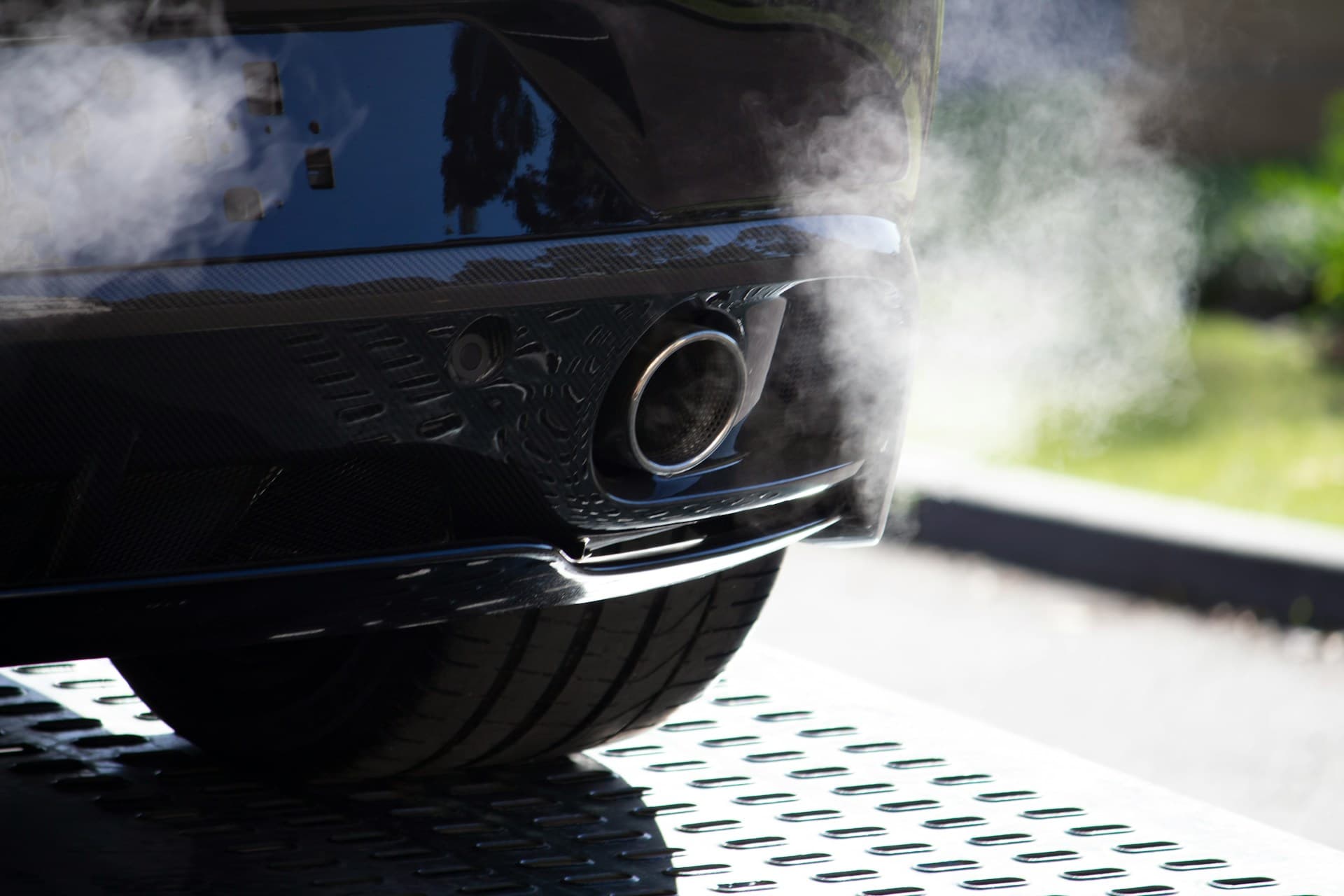

The diesel particulate filter (DPF) is one of the most expensive components on a modern diesel car. When it fails, repair bills can run into thousands. But is a DPF problem grounds for rejection? Here's what you need to know.

See if you can reject your car. Free, in 2 minutes.
- Enter your reg
- Get your verdict
- Reject your faulty car
Free · No card · About 2 minutes
What Is a DPF?
The DPF is part of the exhaust system, capturing soot particles from the engine to prevent them entering the atmosphere. They became mandatory on diesel cars from 2009 under Euro 5 emissions standards and are essential for reducing harmful particulate emissions.
The system works through a cycle: soot accumulates in the filter during normal driving, and when conditions are right – hot exhaust gases and sustained speed, typically on a motorway run – the system "regenerates," burning off the accumulated soot at temperatures around 600°C. The filter clears and the cycle repeats. Problems arise when the regeneration cycle can't complete.
Not sure which window you are in? Put in your reg and find out, free.
Common DPF Problems
A blocked or clogged DPF is the most common issue – the filter becomes so saturated with soot that it can't regenerate properly. You'll notice a DPF warning light on the dashboard, loss of power as the car enters limp mode, poor fuel economy, increased exhaust smoke, and difficulty starting. The causes are varied: too many short journeys preventing regeneration, faulty sensors or related components, engine problems causing excessive soot production, the previous owner's driving habits, or a faulty EGR valve contributing to buildup.
Failed regeneration means the car attempts to burn off the soot but can't complete the process. Warning lights appear, you may notice a burning smell or very hot exhaust, and the engine runs rough. This often leads to a worsening blockage as the system tries and fails repeatedly.
Physical damage to the filter element itself – cracking or internal breakdown – produces a rattling noise from the exhaust area, persistent warning lights, MOT failure, and a complete inability to regenerate. At this point, cleaning won't help – the filter needs replacing.
DPF removal is worth mentioning because some previous owners remove DPFs entirely to avoid these problems. This is illegal for road use, an automatic MOT failure, and if you've unknowingly bought a car with the DPF removed, that's a clear misrepresentation.
DPF Repair Costs
The cost depends on the severity. A forced regeneration at a garage, where a technician uses diagnostic equipment to trigger the burn-off cycle, costs £100-200 and works if the blockage is minor. Chemical cleaning – using specialist additives or off-car ultrasonic cleaning – costs £200-400 and can restore more heavily blocked filters. A full DPF replacement costs £1,000-3,000+ depending on the vehicle and is needed when the filter is physically damaged or cleaning has failed.
The real sting is that DPF problems rarely exist in isolation. Related repairs often include sensors (£100-300 each), the EGR valve (£300-600), and fuel injectors (£200-500 each). Total repair bills can easily exceed £2,000-4,000, which is why pursuing your consumer rights is worth the effort.
Is a DPF Problem Grounds for Rejection?
The key question is whether the DPF problem was present at the time of sale or developed afterwards due to your driving. The answer determines your rights.
You have strong grounds for rejection if the warning light appeared within days of purchase, the problem existed before you drove the car significantly, the previous owner's driving patterns caused the blockage (not yours), fault codes show long-term issues, the dealer cleared warning lights before sale, or they performed a temporary fix (like a forced regeneration) that failed quickly. Within 30 days, any DPF fault making the car unsatisfactory gives you a clear right to reject – it doesn't matter whether it's "your driving" yet because you've barely had the car.
Rejection is harder if the problem genuinely developed from your own driving – months of short urban journeys with no motorway runs, for example – or if you're past the 6-month mark where you need to prove the fault existed at sale. DPF problems are particularly tricky in this regard because they can develop relatively quickly from "wrong" driving patterns, dealers will always claim it's the driver's fault, and proving pre-existing issues requires diagnostic expertise.
What Dealers Say (And Whether They're Right)
"DPFs fail because of how you drive"
Partly true. DPFs do need regular regeneration conditions (sustained highway driving). However:
- If the DPF was already marginal at sale, your driving just exposed the problem
- A healthy DPF should tolerate mixed driving patterns
- Excessive soot may indicate other engine problems
"That's not covered under warranty"
Often false. Many warranties exclude "wear and tear" but a failed DPF on a recent car isn't wear and tear – it's a component failure. Your statutory rights don't have these exclusions.
"You should have done more motorway driving"
Irrelevant for rejection. You're not obliged to drive a certain way. The car should be fit for normal use, including urban driving.
"The DPF was fine when we sold it"
Prove it. Ask for evidence. When did they last check it? What were the readings?
Getting Evidence
A diagnostic check is your most valuable tool. A garage can read the DPF soot level, regeneration history, related fault codes, and crucially, how long issues have been present. Some fault codes are timestamped, showing when problems actually began – this can prove the issue predates your purchase.
Service history may reveal whether the DPF was addressed before sale – look for forced regenerations, additive top-ups, or any DPF-related work. MOT history is also worth checking for smoke test failures or advisories, DPF-related comments, and mileage patterns that suggest the car was predominantly used for short journeys.
An independent inspection from a diesel specialist can give an expert opinion on whether the DPF condition is consistent with a pre-existing problem, recent deterioration, or normal wear for the car's age and mileage. This evidence is particularly important for DPF cases because the dealer will inevitably blame your driving.
What to Do
Document immediately when the warning light appeared, how many miles you've driven since purchase, what kind of driving you've done, and take photos of warning lights and the mileage. Then get a diagnostic check to find out exactly what's wrong and, if possible, how long it's been developing.
Write to the dealer stating the problem, citing the Consumer Rights Act 2015, and requesting either repair or rejection depending on your timing. Include your diagnostic evidence.
Don't pay for repairs yourself yet. If you pay for repairs, you risk weakening your rejection rights. Give the dealer the opportunity to remedy first – unless you're within 30 days, when you can reject directly without accepting a repair.
Know your timeframes: within 30 days you have a strong right to reject outright; between 1-6 months you have a right to one repair attempt, then rejection if it fails; after 6 months you need to prove the fault was pre-existing.


Buying a Diesel: DPF Checks
If you're considering a used diesel, check for DPF warning lights at startup, ask about the previous owner's driving patterns (predominantly short urban journeys are a red flag), and request a diagnostic check of the DPF soot level before committing. After purchase, do a proper motorway run within the first week to trigger a regeneration, monitor for warning lights, and report any issues immediately while keeping evidence of your driving patterns.
For predominantly urban or short-journey use, it's worth considering whether a petrol car or hybrid might be more suitable. DPFs and city driving simply don't mix well, and while newer systems are more reliable and better at regenerating in varied conditions, the fundamental problem – the filter needs sustained heat to clean itself – hasn't changed.
The Bottom Line
DPF problems can absolutely be grounds for rejection if the fault existed at the time of sale, the car is unsatisfactory for normal use, and you're within your rights timeframe. The challenge is proving the problem was pre-existing, especially with a fault that's sensitive to driving patterns.
Act quickly, get diagnostic evidence, and don't accept the "it's your driving" excuse without scrutiny. A properly functioning diesel should handle varied driving – if it can't, something was already wrong. If the dealer won't cooperate, your finance company or Trading Standards are your next steps.
Stuck with a diesel that's got DPF problems? Check your car – free, and we handle complex cases like DPF disputes regularly.
Related topics