
Discovered damp carpets, a musty smell, or water pooling in your car's footwells? Water ingress is a serious problem that causes ongoing damage – and it was almost certainly there when you bought the car.

See if you can reject your car. Free, in 2 minutes.
- Enter your reg
- Get your verdict
- Reject your faulty car
Free · No card · About 2 minutes
Signs of Water Ingress
Obvious Signs
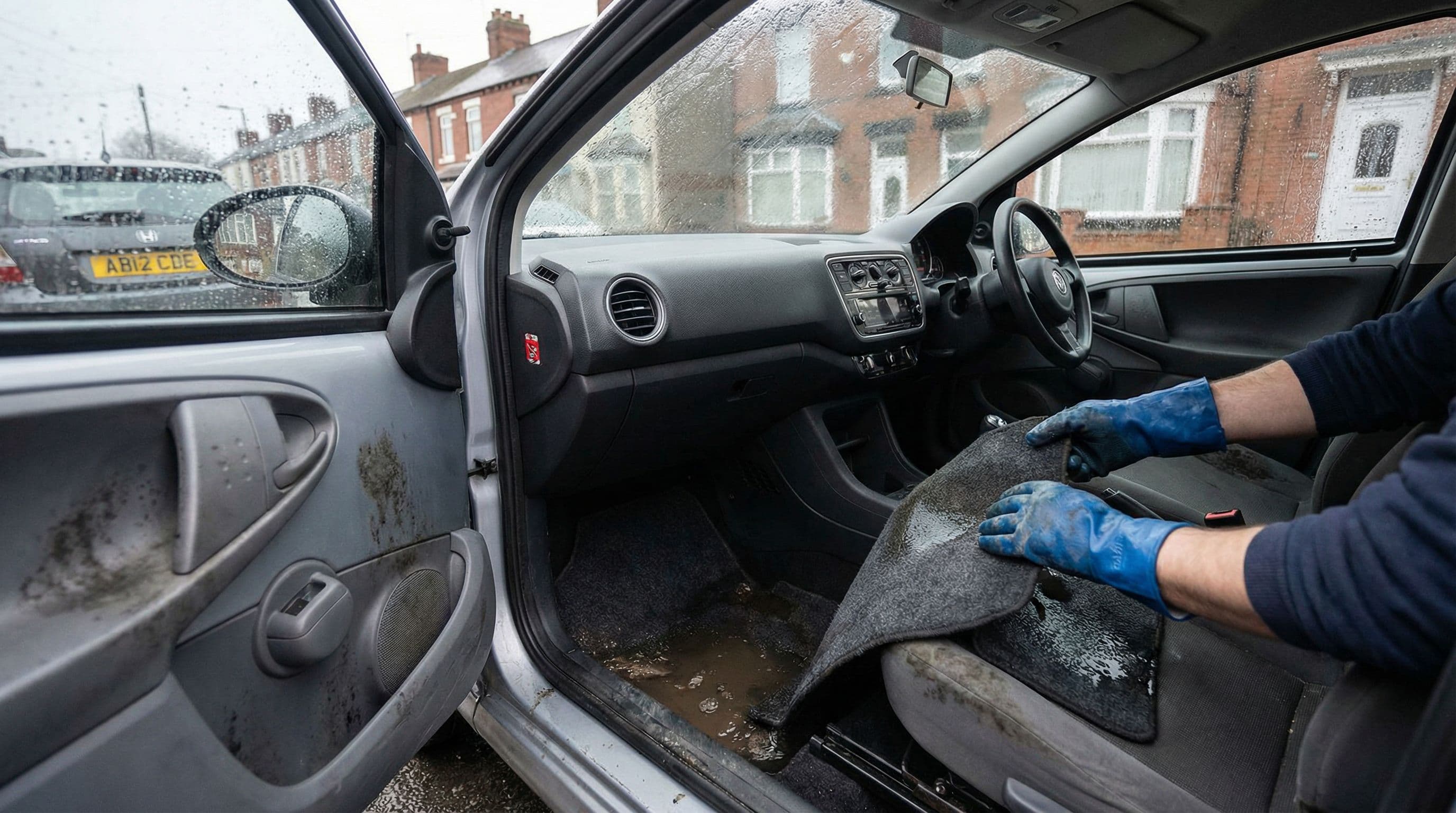
Wet or damp carpets (especially footwells), water pooling as visible standing water, a musty or mouldy smell (particularly when the heating is on), misted windows with interior condensation that won't clear, and visible mould on seats, carpets, or headlining.
Hidden Signs
Corrosion under carpets from floor pan rust, electrical problems caused by water reaching wiring, failed speakers from moisture damage, and stiff seat runners from corrosion.
Red Flags the Dealer Might Have Masked
Watch for a strong air freshener smell (covering a musty odour), new carpets in an older car (replacing saturated ones), or the car feeling excessively warm when you view it (dried out temporarily before viewing).
Not sure which window you are in? Put in your reg and find out, free.
Common Causes of Water Ingress
Sunroof Drain Blockages
Sunroofs have drainage tubes that channel water away. When blocked, water overflows into the headlining, runs down inside the A-pillars, pools in the footwells, and damages electronics in the doors.
Door Seal Failures
Worn or damaged door seals allow water to enter during rain, when washing the car, and the problem gradually worsens over time.
Windscreen Seal Leaks
The windscreen seal can fail due to age and UV exposure, poor previous replacement, or stress cracks in the seal.
Water enters and runs down inside the dashboard.
HVAC Drain Blockages
The air conditioning system drains condensation outside the car. When blocked, water backs up into the cabin, usually appearing in the front footwells and often accompanied by bad smells.
Boot/Tailgate Seal Failures
Water entering through boot seals can soak boot carpets, reach the spare wheel well, and migrate to the rear seat area.
Rust Holes
Corrosion can create holes in the floor pan, inner wheel arches, and drain plugs that have rusted through.
Why Water Ingress Was There at Purchase
Water ingress doesn't happen overnight. Seal degradation develops over years, drain blockages accumulate debris over time, and corrosion takes years to create holes. If you're experiencing water ingress shortly after purchase, the cause – and likely some existing damage – was present when you bought the car.
The Evidence Trail
Damp doesn't appear instantly – carpets take time to become saturated. Mould needs time to grow, so visible mould indicates ongoing moisture. Corrosion under carpets takes months or years to develop. And blocked drains don't accumulate debris in weeks. All of this supports the argument that the fault existed at purchase.
Your Consumer Rights
Under the Consumer Rights Act 2015:
Not Satisfactory Quality
A car with water ingress is not of satisfactory quality because it causes ongoing damage (corrosion, electrical issues), it's not safe (mould is a health hazard), it smells unpleasant (musty/mouldy odour), and it lacks durability (the ingress will worsen without intervention).
Not Fit for Purpose
A car that leaks water is not fit for its normal purpose – providing dry, comfortable transport.
The 6-Month Presumption
Within 6 months, the fault is presumed present at purchase. For water ingress, this is especially valid given how long it takes to develop.
Building Your Case
Step 1: Document the Problem
Photograph wet carpets, water pooling, and mould. Video any active leaking. Note the locations and extent of moisture. See our guide on gathering evidence for what else to collect.
Step 2: Find the Source
Have an independent garage identify where water is entering by testing sunroof drains, checking door seals, inspecting the windscreen seal, and testing the HVAC drain.
Step 3: Assess the Damage
Document corrosion under carpets, electrical faults caused by water, mould presence, and the smell (though harder to prove in writing).
Step 4: Check History
Look for evidence the problem existed before you bought the car. MOT advisories for corrosion, service records mentioning damp or leaks, and previous water-related electrical fault codes all support your case.
What to Write to the Dealer
Dealer Responses
"You must have driven through deep water"
Unless you actually did, challenge this. Normal rain doesn't cause water ingress in a properly sealed car. Ask them to prove what external event caused the seals to fail.
"It's condensation, not a leak"
Excessive condensation (misted windows that won't clear) is also a fault – it indicates a moisture source inside the car. A properly sealed car doesn't accumulate this level of humidity.
"We'll fix the seal"
Fixing the entry point doesn't fix existing damp and mould, corrosion already caused, or electrical damage already done.
You may be entitled to reject rather than accept a repair, especially if damage is extensive.
"It's normal for older cars"
Cars of any age should be watertight. Age-related seal deterioration is a fault, not a feature. The dealer should have checked and rectified seals before selling.
The Repair vs Rejection Decision
When Repair Might Be Acceptable
Repair may be acceptable if the entry point is simple (such as unblocking a drain), no permanent damage has occurred, carpets can be dried with no mould, and you want to keep the car.
When Rejection Is Better
Rejection is the better route when there's extensive mould or mildew, corrosion to the floor pan or panels, electrical damage, multiple entry points, a strong ongoing smell, or you've simply lost confidence in the car.
Cost of Proper Remediation
Properly fixing water ingress damage can require removing carpets and insulation, rust treatment and repair, mould remediation, replacing damaged electronics, and resealing all entry points.
This can cost thousands – often more than the repair cost the dealer will offer.
Health Implications
Mould and damp in cars can cause respiratory issues, allergic reactions, headaches, and persistent unpleasant odours.
If you or passengers have health conditions affected by mould, document this as additional grounds for rejection.

Finance Protection
If you bought on PCP or HP, the finance company legally supplied the car and is directly responsible for its quality. Contact them as well as the dealer – they may be more responsive, and you can pursue them directly if the dealer won't help. If you paid any part by credit card, Section 75 may also give you a claim against the card issuer.
The Bottom Line
Water ingress doesn't happen overnight – the cause existed at purchase. It causes ongoing damage including corrosion, electrical faults, and mould growth. Document everything with photos, source identification, and a damage assessment. Simple repairs may not be enough because underlying damage often remains hidden. Health concerns are valid – mould is a genuine hazard. Within 6 months, the fault is presumed pre-existing, and rejection is often the appropriate remedy for significant water ingress. If you bought on finance, write to the finance company at the same time as the dealer.
Discovered water ingress in your recently purchased car? Check your car – free, and we'll help you pursue a refund.
Related topics