
Key takeaways
- Ford, Peugeot, Citroën, DS, Vauxhall and Honda have all fitted belts that run in oil
- Ford’s 1.0 EcoBoost moved to a chain from 2018; its 2.0 EcoBlue diesel still has the belt
- Recent Toyota, Mazda, Kia, Hyundai, Nissan, BMW and Mini petrol engines use chains
- VW, Skoda and Seat petrols have a timing belt, but we found nothing saying it runs in oil
- Failed soon after you bought from a dealer? Your rights are against the dealer, not the maker
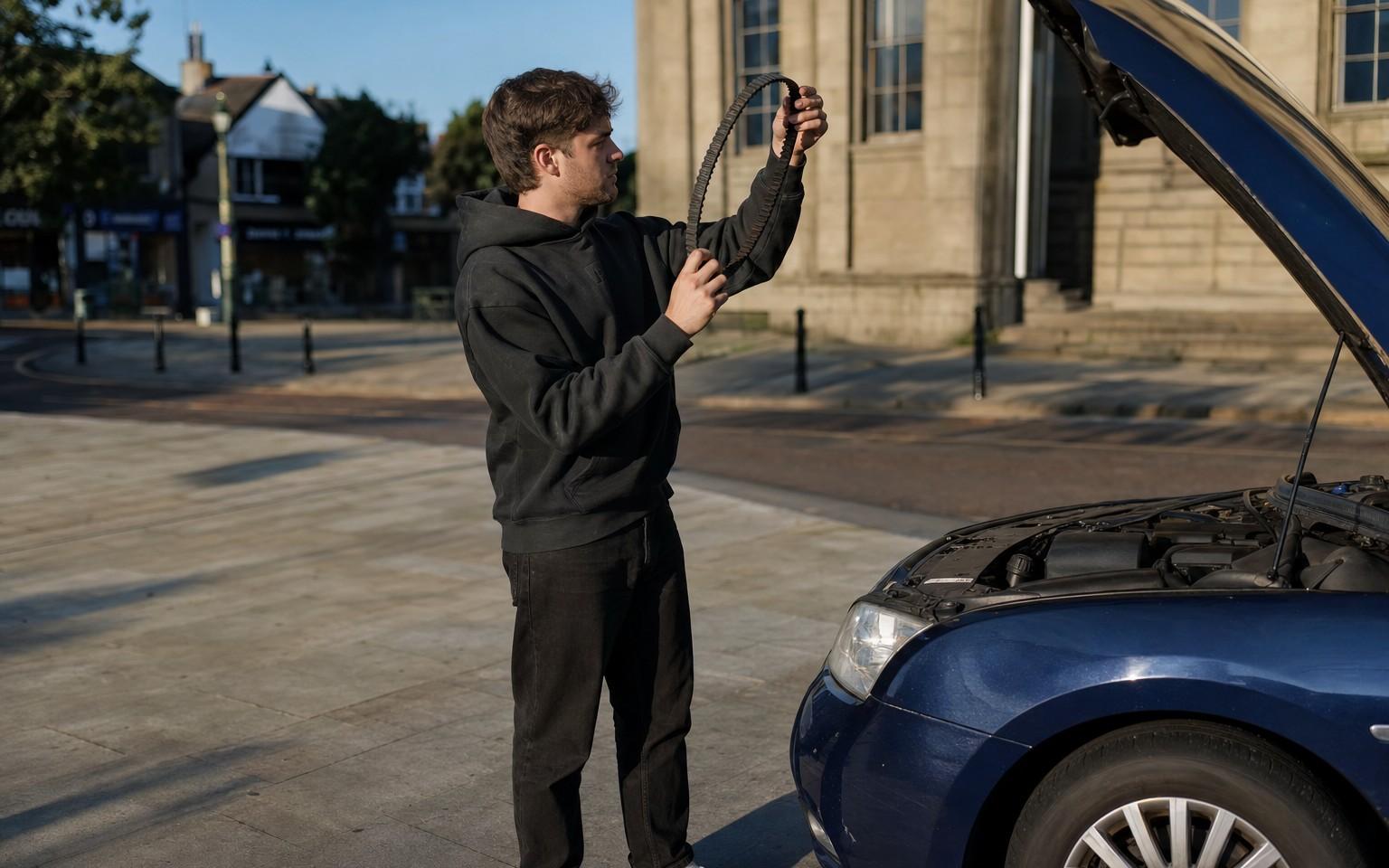
A wet belt is a timing belt that runs inside the engine, bathed in its oil, instead of behind a cover on the outside. It does the same job as any timing belt, keeping the crankshaft and camshafts in step. Makers fitted it because it helps efficiency and emissions. The catch is what the oil does to it over time: the rubber breaks down, the particles travel round the engine in the oil, and they can block the oil pump’s pick-up and starve the engine. Peugeot’s own description of the result on its cars is “an oil pressure issue (resulting from a premature degradation of the timing belt)”.
So it matters which engine you have. Below is every make UK owners ask about, in alphabetical order, with what we could confirm from the makers and the UK motoring press. Where we could not confirm something, we say so.
Checking one car? Our free wet belt check takes your registration and tells you whether the engine has a wet belt or a chain.
The list, make by make
BMW and Mini
No wet belts that we found. Auto Express’s buyer’s guides say every engine in the 1 Series sold from 2019 and in the Mini hatch of 2014–2024 is chain-driven. The known engine faults on these makes are chains, not belts: see our guides to the BMW N47 diesel and the Mini Cooper petrol.
Citroën
Yes, on the 1.0 and 1.2 PureTech petrol, which Stellantis launched in 2012. Parkers lists the Citroëns with it as the Berlingo (2018 on), C1 (2014–2018), C3 (2017–2024), C3 Aircross (2017–2024), C4 (2021 on), C4 Cactus (2014–2018), C4 Picasso (2013–2018) and C5 Aircross (2018 on). Only the PureTech petrol versions are in question. Stellantis covers 100% of the costs for up to 10 years or 112,000 miles, under conditions. The years in which the belt gave way to a chain are under Peugeot below, because they apply to Citroën too.
DS
Yes, the same PureTech engine. Parkers lists the DS 3 (2015–2019), DS 3 Crossback (2019–2022) and DS 7 Crossback (2018–2022). DS is one of the four brands Stellantis names in its cover.
Ford
Yes, on two engine families.
- 1.0 EcoBoost petrol, 2012 to 2018. Fiesta, Focus, EcoSport, B-Max, C-Max and Mondeo, plus some Transit and Tourneo models. Parkers reports that Ford switched to a timing chain in 2018, so the Puma (2019 on) and later Fiestas and Focuses should have the chain, though the earliest may still have the belt. A 2018 car can have either. Specialist garages report that the chain engine still drives its oil pump with a small belt in oil. Our Ford 1.0 EcoBoost guide has the model-by-model detail.
- 2.0 EcoBlue diesel, 2016 on. Ford’s own specification sheets describe its camshaft drive as a “low-friction belt-in-oil”, in the Focus from 2018 and the Kuga from 2020 as well as the Transit, Transit Custom and Tourneo. See our Ford 2.0 EcoBlue guide.
Ford’s sheets list a chain on the 1.5 EcoBoost petrol in the Kuga from 2020, and on the 1.0 EcoBoost Hybrid and 1.5 EcoBoost in the Puma ST of 2023. Parkers says earlier 1.5 and 1.6 EcoBoost engines used both belts and chains, so a VIN check settles those. Two more Ford petrols run a belt in oil on Ford’s own sheets: the 1.1 Ti-VCT non-turbo in the 2017 Fiesta and the 2.5 plug-in hybrid in the 2020 Kuga. We found no pattern of failures reported on either.
Honda
Yes, on one engine: the 1.0 VTEC Turbo petrol in the Civic of 2017–2022. Parkers says its “wet belt design” sheds material that can clog the turbo, and that Honda “has paid for some repairs, seemingly ignored others”. A Honda parts dealer sells Honda’s genuine timing belt for this engine as designed for its “wet belt” conditions. One source disagrees: Auto Express’s Civic guide says all its engines are chain-driven. The weight of evidence is on the belt. Honda’s Jazz from 2020 is chain-driven.
Hyundai
No wet belts that we found. Auto Express says every Tucson engine of 2015–2020 is chain-driven, as is the 1.6 T-GDi in the Tucson from 2020, and every engine in the i20 from 2020.
Kia
Not in the petrol engines. Auto Express says the Picanto (2017 on) and the petrol Ceed (2018 on) and Sportage are chain-driven. The 1.6 CRDi diesel in the Ceed and Sportage has a cambelt, with a long change interval of 16 years or 160,000 miles on the Ceed. None of the sources we read says whether that belt runs in oil, so we have not confirmed it either way.
Mazda
No. Auto Express says every engine in the Mazda 3 from 2019 has a timing chain, and that the CX-5’s petrol and diesel engines from 2017 are chain-driven.
Mercedes-Benz
Mostly chains. Auto Express’s guide to the A-Class from 2018 says every engine is chain-driven. One question mark: the A 180 d’s 1.5 diesel was co-developed with Renault, and Renault’s 1.5 diesel has a cambelt in the Dacia Duster. We have not confirmed which applies to the Mercedes, so ask a Mercedes-Benz dealer to check yours by VIN.
Nissan
Not in the current petrols. Auto Express says the Qashqai from 2021 and the Juke from 2019 are chain-driven. On the 2014–2021 Qashqai, What Car? says the 1.5 diesel needs a cambelt every five years or 75,000 miles and every other engine has a chain.
Peugeot
Yes, on the 1.0 and 1.2 PureTech petrol from 2012. Parkers lists the 108 (2014–2022), 208 (2012 on), 2008 (2013 on), 308 (2013 on), 3008 (2016–2024) and 5008 (2017–2024). On the 108, only the 1.2 has the belt: Auto Express says its 1.0 is chain-driven. Peugeot has said plainly that it faced “quality issues affecting some of our PureTech engines”, and its UK site sets out the cover and a refund scheme for owners who paid for repairs.
The change to a chain did not happen in one year. The 1.2 hybrids have a chain, as What Car? notes on the Vauxhall Corsa, but the plain petrol 208 and 2008 kept the wet belt until the new Turbo 100 engine arrived in 2026, which Peugeot describes as “the transition from a wet belt to a silent timing chain”. So a non-hybrid PureTech from 2023 to 2026 can have either. Our PureTech guide covers who pays.
Renault and Dacia
Not in the petrols, as far as we found. Auto Express says every Clio engine from 2019 is chain-driven, and that the 999cc three-cylinder in the Sandero from 2020 (the SCe 65, TCe 90 and TCe 100) “doesn’t have a cambelt”. That answers the Dacia 1.0 TCe question: no wet belt. The older Sandero’s 0.9 TCe is chain-driven too, while its 1.2 has a cambelt. The 1.5 diesel (dCi) has a cambelt, every 90,000 miles or six years on the Duster of 2018–2024. We found nothing saying it runs in oil.
Seat
A timing belt, but the sources disagree on which engines. Auto Express’s guide to the Leon from 2020 says the petrols are chain-driven and the diesels have a cambelt every five years or 130,000 miles. Its guide to the Golf of the same years, which uses the same 1.0 and 1.5 TSI petrols, says every engine has a cambelt. Either way, we found no source saying the belt runs in oil.
Skoda
A timing belt, not a wet belt that we could find. Auto Express says every engine in the Octavia from 2020 has a cambelt, with a change at 15 years or 186,000 miles on the petrols. On the 1.0 TSI in the 2022 Fabia, CompleteCar’s expert answer is plain: “The belt in that engine is ‘dry’.”
Toyota
No. Auto Express says every engine in the Yaris from 2020 and the Corolla from 2019 has a timing chain, and that the Aygo from 2014 has no cambelt. One parts retailer’s list names the Aygo and the Proace van as having wet belts. We found nothing from Toyota or the motoring press to support that for the Aygo, and have not confirmed it for the Proace.
Vauxhall
Yes, on the 1.2 petrol (the PureTech), from the Crossland X and Grandland X of 2017. What Car? says Corsas from 2019 to 2023 have the wet belt; Auto Express says the Mokka’s 1.2 turbo from 2021 has “a wet cambelt” and the Grandland’s 1.2 an “oil-lubricated cambelt”. Parkers adds the Astra and Combo. Vauxhall moved to a chain-driven 1.2 during 2023 and 2024 at different times for different models, and the hybrids have the chain. The Vauxhall wet belt guide goes model by model.
Volkswagen
A timing belt, and the evidence says a dry one. Auto Express says every engine in the Golf from 2020 has a cambelt, with Volkswagen UK recommending a new belt every five years. That includes the 1.5 TSI people ask about: we found no maker or motoring press source saying its belt runs in oil, and the 1.0 TSI’s is confirmed dry. The one VW Group belt we found that does run in oil drives the oil pump on the 1.6 TDI diesel, according to Dayco, which developed it.
Volvo
A cambelt with long intervals. Auto Express’s XC60 guide gives ten years or 144,000 miles on the petrols and ten years or 90,000 miles on the diesels, and its XC40 guide puts a cambelt change into the scheduled services. None of the sources says whether the belt runs in oil, so we have not confirmed it.
Not sure which window you are in? Put in your reg and find out, free.
How long does a wet belt last?
Less long than first promised, on the engines with the worst record. These are the makers’ intervals as reported:
| Engine | Change interval | Source |
|---|---|---|
| Ford 1.0 EcoBoost | Ten years or 150,000 miles at first; six years or 100,000 miles from 2026 | Parkers; Ford’s notice to the US regulator |
| Ford 2.0 EcoBlue (Transit, Tourneo) | Six years or 100,000 miles, cut from ten years or 150,000 | Fleet News, Parkers |
| Peugeot 1.2 PureTech | Six years or 60,000 miles | Parkers |
| Vauxhall Corsa 1.2 (2019–2023) | Six years or 60,000 miles | What Car? |
| Vauxhall Mokka 1.2 turbo | Six years or 100,000 miles | Auto Express |
| Honda Civic 1.0 | No published figure found |
Ford told the US regulator NHTSA in June 2026 that it would notify owners worldwide of the shorter 1.0 EcoBoost interval. The same NHTSA file records an average failure at about 70,000 miles in its US data, 98% of failures before the old 150,000-mile interval, and failures despite evidence of routine oil changes. Peugeot UK says the right interval for your PureTech is the one in your service booklet.
Two things shorten a wet belt’s life more than any other: late oil changes and the wrong oil. Low oil pressure is often the first warning, and rubber in the oil filter at a service is a clear sign the belt is breaking down.
What if your wet belt failed after you bought from a dealer?
The Consumer Rights Act 2015 makes the dealer who sold you the car responsible for faults that were there when you bought it, and what you can ask for depends on how long you have had it.
First 30 days
Short-term right to reject
Your strongest right. Reject outright and demand a full refund with no deduction. The dealer cannot insist on repairing it first, and the refund is due within 14 days.
30 days – 6 months
One repair, then reject
Allow one repair or replacement. If it fails (or they refuse), you gain the final right to reject. The fault is presumed present at purchase, so the burden is on the dealer.
6 months – 6 years
Rights continue — you prove it
You must show the fault was present or developing at sale, usually via an independent inspection. Claims run up to 6 years in England & Wales (5 in Scotland).
You can bring a claim for up to 6 years after buying (5 in Scotland). If you bought on hire purchase or PCP, the finance company supplied the car in law and carries the same responsibility as a dealer. It has 8 weeks to give a final response to a complaint, after which you can take it to the Financial Ombudsman Service.
A wet belt is a maintenance item, so the argument usually turns on the service history. A belt that fails well inside its interval, on a car serviced on time with the right oil, is a different case from one that missed its change. A maker’s cover or refusal does not settle the dealer’s responsibility either way: the Act is separate from any warranty.
- Find out which engine you have. Use the free check, or ask a franchised dealer to read the VIN.
- Get the failure diagnosed in writing, and ask the garage to keep the old belt and oil filter.
- Gather the service history, with the dates, mileages and the oil used.
- Put it to the dealer in writing, and to the finance company too if the car is on finance.
How long you have had the car decides your first step, and how long you have to reject a car sets out each window. The step-by-step rejection guide covers the rest.

Or have the letter written from your answers.
- Enter your reg
- Get your verdict
- Reject your faulty car
Free · No card · About 2 minutes
Frequently asked questions
Yes. Our free wet belt check at /tools/wet-belt-check takes your registration, reads the make, fuel, engine size and year from the DVSA record, and tells you whether your engine has a wet belt or a chain. It answers for the engines we have researched in depth. For anything else, a franchised dealer for your make can tell you from the VIN, which is on your V5C.
On the 1.0 EcoBoost petrol, Ford moved to a timing chain from 2018, phased in model by model, so a 2018 car can have either. The chain engines still drive the oil pump with a small belt in oil. Ford has not stopped using the belt everywhere: its 2.0 EcoBlue diesel, in the Transit, Transit Custom, Focus and Kuga, still has a belt in oil.
Makers’ intervals run from about six years or 60,000 miles (Peugeot’s 1.2 PureTech, as reported by Parkers) to the ten years or 150,000 miles Ford first set for the 1.0 EcoBoost, which Ford cut to six years or 100,000 miles in 2026. In US data on the 1.0 EcoBoost, the average belt failure came at about 70,000 miles. Oil changes on time, with the exact grade the maker specifies, matter more on a wet belt than on any other kind.
Not for the timing belt, as far as we could find. Their 1.0 and 1.5 TSI petrols have a timing belt, and the 1.0 TSI’s is confirmed as a dry belt. We found no maker or motoring press source saying the 1.5 TSI’s belt runs in oil. The one VW Group belt we found that does run in oil drives the oil pump on the 1.6 TDI diesel.
Going by UK buyer’s guides, recent petrol models from Toyota (Yaris, Corolla, Aygo), Mazda, Kia, Hyundai, Nissan, BMW, Mini and Honda’s Jazz use timing chains, as do Dacia’s three-cylinder Sandero and Renault’s Clio petrols. A chain is not the same as fault-free, but it does not sit in the oil wearing away the way a wet belt can.
Have a question this didn’t answer?
Ask it in Faulty Car Advice UK, our Facebook group for drivers dealing with a faulty car.
Related topics