
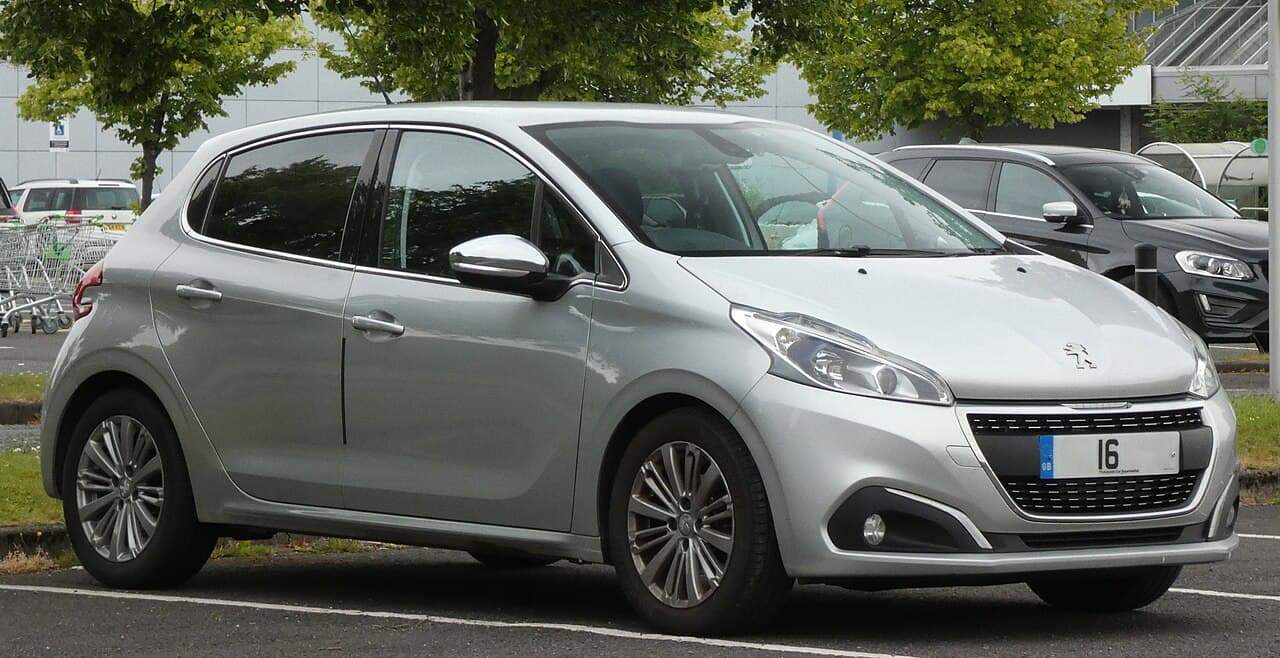
Which cars have the PureTech wet belt?
Peugeot, Citroën, DS and Vauxhall petrol cars with the 1.0 or 1.2 PureTech engine built up to June 2022.
Stellantis draws the line by build date, not by model. Its UK terms cover the non-turbo engine built from June 2012 to June 2022 and the 1.2 turbo built from April 2014 to June 2022. Vauxhalls join the list from 2017, with the Crossland X and Grandland X.
Models affected
Petrol cars with the 1.2 PureTech engine built up to June 2022, and the 1.0 PureTech, which Stellantis treats the same way. Diesels are not part of this, and nor is the later chain-driven 1.2.
- Peugeot 2082012–2022
Cars built June 2013 to July 2020 are in the DVSA recalls
- Vauxhall Corsa2019–2022
- Peugeot 20082013–2022
Recalled in 2021 and 2022
- Peugeot 3082013–2022
Recalled in 2021 and 2022
- Peugeot 30082016–2022
Recalled in 2021 and 2022
- Citroën C32017–2022
Earlier C3s built from March 2013 are in the 2021 recall
- Vauxhall Crossland2017–2022
Sold as Crossland X at first. 2017 cars recalled in 2022
- Vauxhall Grandland2017–2022
Sold as Grandland X at first. 2017 cars recalled in 2022
- Vauxhall Mokka2021–2022
- Citroën C3 Aircross2017–2022
Cars built 2017 to 2018 recalled in 2022
- Citroën C4 Cactus2014–2018
Recalled in 2021 and 2022
- Citroën C4 Picasso2013–2018
Recalled in 2021 and 2022
- Citroën C42021–2022
The previous C4, built from 2013, is in the recalls
- Citroën C5 Aircross2018–2022
- Peugeot 50082017–2022
Recalled in 2021 and 2022
- Peugeot 1082014–2022
- Citroën C12014–2018
- Citroën Berlingo2018–2022
Earlier Berlingos are in the recalls
- DS 32015–2019
Recalled in 2021 and 2022, including cars badged Citroën DS3
- DS 3 Crossback2019–2022
- DS 7 Crossback2018–2022
| Model | Built | Notes |
|---|---|---|
| Peugeot 208 | 2012–2022 | Cars built June 2013 to July 2020 are in the DVSA recalls |
| Vauxhall Corsa | 2019–2022 | |
| Peugeot 2008 | 2013–2022 | Recalled in 2021 and 2022 |
| Peugeot 308 | 2013–2022 | Recalled in 2021 and 2022 |
| Peugeot 3008 | 2016–2022 | Recalled in 2021 and 2022 |
| Citroën C3 | 2017–2022 | Earlier C3s built from March 2013 are in the 2021 recall |
| Vauxhall Crossland | 2017–2022 | Sold as Crossland X at first. 2017 cars recalled in 2022 |
| Vauxhall Grandland | 2017–2022 | Sold as Grandland X at first. 2017 cars recalled in 2022 |
| Vauxhall Mokka | 2021–2022 | |
| Citroën C3 Aircross | 2017–2022 | Cars built 2017 to 2018 recalled in 2022 |
| Citroën C4 Cactus | 2014–2018 | Recalled in 2021 and 2022 |
| Citroën C4 Picasso | 2013–2018 | Recalled in 2021 and 2022 |
| Citroën C4 | 2021–2022 | The previous C4, built from 2013, is in the recalls |
| Citroën C5 Aircross | 2018–2022 | |
| Peugeot 5008 | 2017–2022 | Recalled in 2021 and 2022 |
| Peugeot 108 | 2014–2022 | |
| Citroën C1 | 2014–2018 | |
| Citroën Berlingo | 2018–2022 | Earlier Berlingos are in the recalls |
| DS 3 | 2015–2019 | Recalled in 2021 and 2022, including cars badged Citroën DS3 |
| DS 3 Crossback | 2019–2022 | |
| DS 7 Crossback | 2018–2022 |
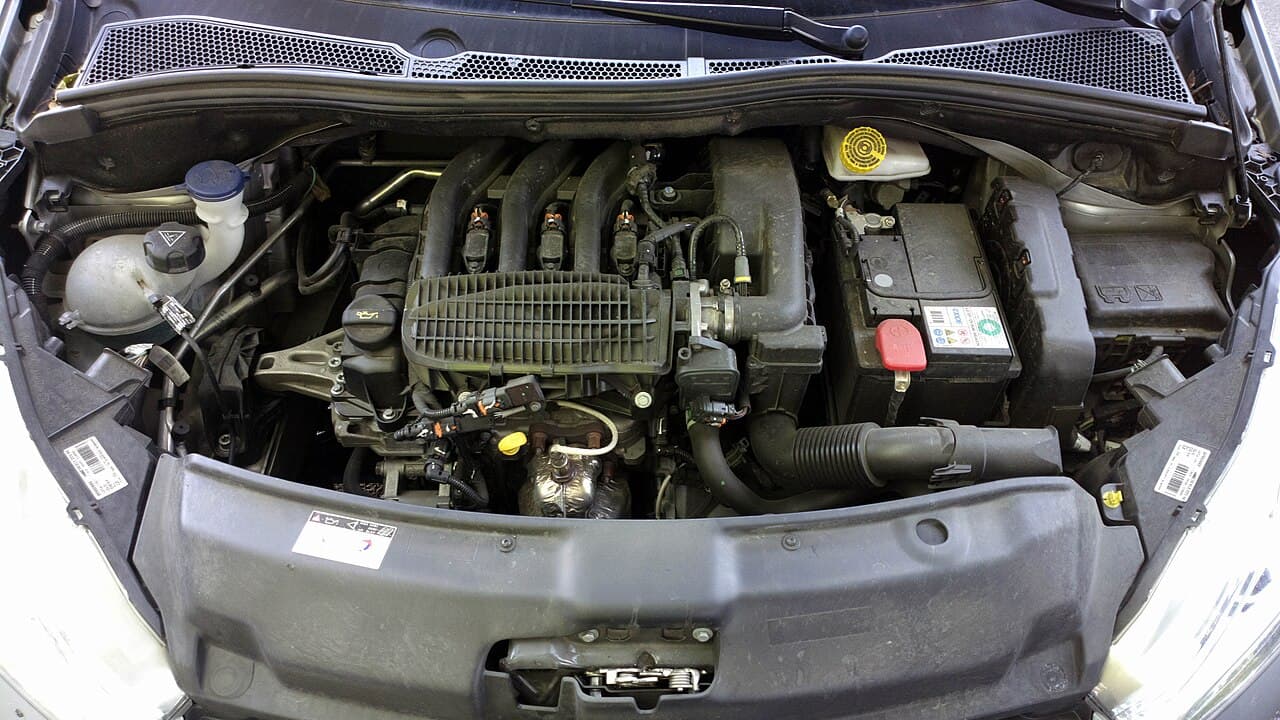
The engine
- Engine
- 1.2 PureTech three-cylinder petrol, Stellantis’s EB family
- Versions
- Non-turbo 82hp, and turbo 110 and 130hp
- Timing drive
- Belt running in engine oil
- Built with the belt
- Non-turbo June 2012 to June 2022, turbo April 2014 to June 2022
- Belt change
- Six years or 60,000 miles, as reported by Parkers. Your service booklet has the figure for your car
- Stellantis’s extended cover
- 10 years or 112,000 miles, with conditions
The badge on the boot will not tell you which timing drive you have. Fleet News reports that Stellantis moved the engine to a timing chain in 2023. If your car was registered around then, ask a franchised retailer to check the VIN. The same call will tell you whether a recall is outstanding, and you can look that up yourself on the DVSA’s recall checker on GOV.UK.
What are the symptoms of PureTech belt failure?
An oil pressure warning is the usual first sign. Weaker brake assistance, loss of power and a car that will not start can follow.
Stellantis describes the fault as “an oil pressure issue (resulting from a premature degradation of the timing belt)”. The DVSA recall notices add the brake vacuum pump. Drivers in the Ombudsman’s published decisions reported loss of power, juddering and a breakdown.
- 1
An oil pressure warning on the dashboard. This is the fault Stellantis itself names.
- 2
Less help from the brake pedal, once material from the belt reaches the brake vacuum pump.
- 3
Loss of power and juddering as the engine stops running cleanly.
- 4
The car will not start, or a garage finds the engine is beyond economic repair.
Why does the PureTech belt fail?
The belt sits in the engine’s oil. As the oil ages the belt sheds material, and that material goes wherever the oil goes.
The DVSA’s recall notices put it in one line: material detaches from the timing belt, “caused by the ageing of the engine oil”. An engineer in one Ombudsman case found a belt that was “heavily cracked and swollen” at 39,405 miles.
The loose material travels round the engine with the oil. It can restrict the flow, which is where the oil pressure warning comes from. It can also reach the vacuum pump that powers the brake servo, which is why this became a safety recall. Fleet News notes that the wrong grade of oil speeds the process up. That is the reason every route to getting the repair paid for comes back to the service record.
How much does a PureTech wet belt cost to replace?
Two owners in published Ombudsman decisions paid £900 and £1,000 for a new belt in 2024. An engine costs far more.
Those two invoices are the firmest figures available. For comparison, WhoCanFixMyCar data published by the RAC in August 2026 puts the average cambelt change, of any type, at £617 for a Vauxhall, £622 for a Citroën and £724 for a Peugeot.
A new belt does not always end it. In one of those decisions the garage replaced the belt for £900, changed the oil several times to flush out debris, and still found the engine was not economically repairable. We could not find a reliably sourced UK price for a replacement engine, so we have not quoted one.
What has Stellantis said about the PureTech belt?
It has accepted the fault in public, recalled cars through the DVSA, and extended its cover to 10 years or 112,000 miles, with conditions.
Peugeot’s UK site says: “We have faced quality issues affecting some of our PureTech engines.” Since March 2024 all four brands have covered 100% of parts and labour for this fault for up to 10 years or 112,000 miles.
There is also a Customer Support Platform for owners who had already paid. The UK terms cover repairs between 1 January 2022 and 31 December 2024. They require servicing on schedule with the correct oil, with no more than three months or 1,800 miles of slippage, shown by the last three invoices. Diagnosis and repair must have been done in the Stellantis network.
The DVSA has logged eight recalls for the brake vacuum pump risk. The two largest, in January 2021, covered 22,580 Peugeots and 21,226 Citroën and DS cars built between 2013 and April 2017. Retailers were to update the software, inspect the pump and belt, and replace them if necessary. A second round in December 2022 covered later Peugeots and Citroëns and 10,100 Vauxhall Crossland X and Grandland X. For most of those cars it was a software update only.
The scheme runs across Europe. In France, 883 owners filed a criminal complaint against Stellantis in February 2025. We found no equivalent group action in the UK.
Who pays for a PureTech wet belt failure?
Stellantis pays in full on cars that meet its conditions. Where they are not met, the question moves to the dealer who sold the car, or the finance company.
Stellantis (Peugeot, Citroën, DS, Vauxhall)
Since March 2024 it has covered 100% of parts and labour for this fault for up to 10 years or 112,000 miles. The conditions are strict: servicing on schedule with the right oil, proved by invoices, and diagnosis and repair inside its own network. It also reimburses some repairs owners paid for between January 2022 and December 2024.
The dealer who sold it
Answerable in law for the car being of satisfactory quality on the day of sale, and that includes how long a timing belt lasts. Stellantis’s conditions are not the dealer’s conditions. A car that misses the extended cover can still be the dealer’s responsibility.
The finance company
On hire purchase or PCP the lender supplied the car and carries the same responsibility as a dealer. Two of the three published Ombudsman decisions we found on this fault went against the finance company.
Your warranty
A used-car warranty is a contract on its own terms. Read how yours treats timing belts and damage that follows from one. Whatever it says, it does not replace the dealer’s responsibility.
Goodwill from the manufacturer and your rights against the seller are separate. Asking for one does not give up the other.
Is the PureTech belt covered under warranty?
By Stellantis’s extended cover, yes, if the conditions are met. If they are not, that does not settle what the dealer owes you.
The extended cover is a goodwill policy with rules. The rule that catches people is servicing. In one published decision the lender said a car did not qualify because it had not been serviced by the franchised dealer in the four years the driver had owned it.
The Ombudsman in that case said whether the car qualified for the warranty “isn’t relevant to my considerations about the quality of the car”. Your rights under the Consumer Rights Act 2015 sit apart from any warranty, the manufacturer’s or a used-car policy.
Can you hand the car back?
That turns on how long ago you bought it. The Act sets three windows, each counted from the day the car was handed over.
First 30 days
Short-term right to reject
Your strongest right. Reject outright and demand a full refund with no deduction. The dealer cannot insist on repairing it first, and the refund is due within 14 days.
30 days – 6 months
One repair, then reject
Allow one repair or replacement. If it fails (or they refuse), you gain the final right to reject. The fault is presumed present at purchase, so the burden is on the dealer.
6 months – 6 years
Rights continue — you prove it
You must show the fault was present or developing at sale, usually via an independent inspection. Claims run up to 6 years in England & Wales (5 in Scotland).

Find out your exact deadline. Free, in 2 minutes.
- Enter your reg
- Get your verdict
- Reject your faulty car
Free · No card · About 2 minutes
What has the Ombudsman decided?
We found three published decisions. Two went the driver’s way. All three turned on the service record and on evidence of why the belt failed.
The Financial Ombudsman Service does not name the car in its decisions. These three all involve a new car supplied by Stellantis’s own finance arm, with a wet timing belt that failed early.
DRN-5956827. The belt degraded at about 34,700 miles and the garage then found the engine beyond economic repair. The lender said the car had not been serviced within the network. The Ombudsman found it had been serviced at the right intervals, twice by a well-known service centre and once by an independent garage, and that a new car’s engine failing inside four years was not durable. The driver was allowed to reject the car.
DRN-5198522. An independent inspection found the belt had failed prematurely at 39,405 miles and “should have lasted at least another 20,000 miles”. The lender did not arrange a repair. The Ombudsman treated the agreement as a rejection and had the £264 inspection fee refunded.
DRN-5374991. The belt failed at just under 40,000 miles, but only one service had been done in more than three years. The Ombudsman decided missed oil changes were the likelier cause and did not uphold the complaint.
An independent inspection that says why the belt failed carried real weight in these cases. So did a stack of service invoices.
What should you do now?
Stop driving on an oil pressure or brake warning. Then get your service invoices together before you speak to anyone.
- Park the car if the oil pressure or brake warning is showing. The inspector in one Ombudsman case warned that driving on risked catastrophic engine damage.
- Find every service invoice. You want dates, mileages and the oil grade used. Stellantis’s cover and the Ombudsman’s decisions both turn on them.
- Ask a Peugeot, Citroën, DS or Vauxhall retailer to check the VIN for open recalls and for the 10-year cover. Get the answer in writing, including the reason for any refusal.
- Get the diagnosis in writing with the date and mileage. If the cause is disputed, an independent engineer’s report is the evidence that counts.
- Write to the dealer who sold the car. If it is on finance, write to the lender too. A finance company has eight weeks to give its final response, and after that you can go to the Financial Ombudsman Service.
Questions people ask
It is not clear cut. The UK terms for reimbursing past repairs ask for servicing by a Stellantis authorised repairer, while Stellantis’s May 2025 press release says servicing by any automotive professional counts if it followed the schedule. Ask the retailer to confirm in writing which rule it is applying. Either way, the dealer’s responsibility for the car does not depend on where it was serviced.
Not necessarily. Most of the 2022 recalls only updated software so the car warns earlier about losing brake assistance. The 2021 recalls inspected the belt and vacuum pump and replaced them only if needed. Ask the retailer what was actually done on your car and keep the paperwork.
Stellantis’s cover applies to engines built up to June 2022, and Fleet News reports the engine moved to a timing chain in 2023. For a car registered around then, ask a franchised retailer to confirm from the VIN.
Possibly, through its Customer Support Platform, if the repair was done in the Stellantis network between 1 January 2022 and 31 December 2024, the car was under 10 years and 112,000 miles, and you can show the servicing was done on schedule. Peugeot’s chief executive told Parkers in 2025 that about 60% of people using the platform were paid.
It may end the manufacturer’s cover, which allows only three months or 1,800 miles of slippage. It does not decide the dealer’s or finance company’s position under the Consumer Rights Act 2015. In one Ombudsman decision missed services did count against the driver. In another, servicing outside the network did not.
Sources
- Peugeot UK: PureTech engines, our solutions
- Stellantis UK: PureTech reimbursement terms and conditions (PDF)
- Stellantis press release, 7 May 2025: compensation policy for PureTech 1.0 and 1.2 engines
- Vauxhall UK: customer support for PureTech 1.0 and 1.2 engines
- DVSA recall data: R/2020/326, R/2020/327, R/2021/238, R/2022/352, R/2023/035, R/2023/036
- Financial Ombudsman Service, decision DRN-5956827
- Financial Ombudsman Service, decision DRN-5198522
- Financial Ombudsman Service, decision DRN-5374991
- Parkers: Stellantis expands wet belt compensation portal to UK
- Fleet News: fleets warned of wet timing belts
Last checked 4th October 2026. Nothing here is legal advice.