
Key takeaways
- Low AdBlue clears when you refill; a system fault does not
- At zero, the engine will not restart once you switch it off
- The same warning has been traced to a module, an injector, wiring, a heater and sensors
- No UK recall covers AdBlue parts on VW, Audi, Skoda or Seat
- Bought from a dealer under six months ago? The fault is presumed present at sale
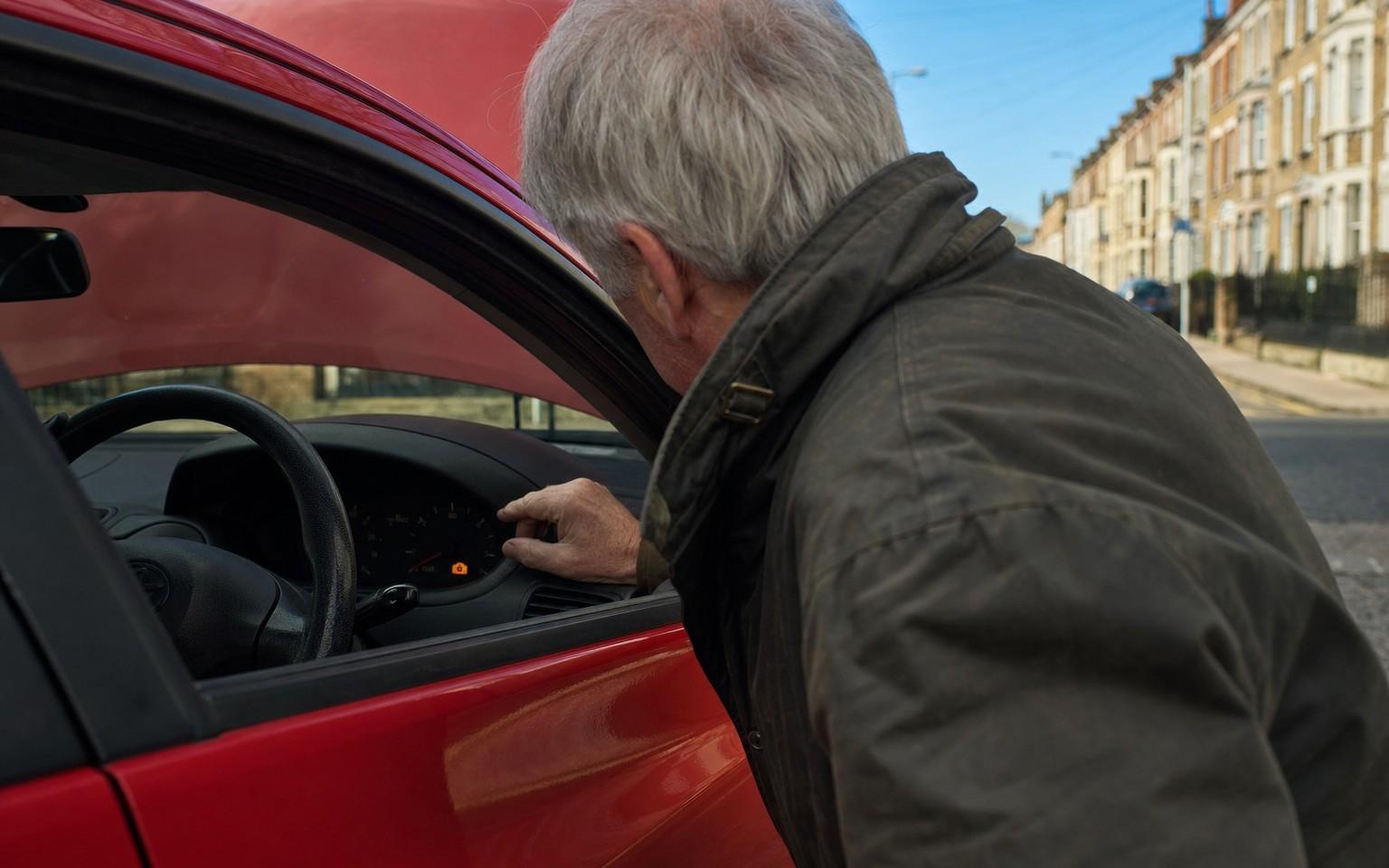
“AdBlue system fault: no restart in 650 miles.” On another car it says 600, or 1,000 km. Whatever the number, the message means one thing: the car’s emissions system has a problem, and when the distance runs out the engine will not start again after you switch it off.
What matters is why. If the AdBlue tank is simply low, a refill clears it. If a part has failed, a refill changes nothing and the countdown carries on. Below is how to tell the two apart, what to do before the miles run out, what we could confirm make by make, and who answers for it if you bought the car from a dealer recently.
What the countdown means
AdBlue is “a colourless, non-toxic mixture of urea and de-ionised water”, as the AA puts it, sprayed into a diesel’s exhaust to cut nitrogen oxides. The AA says a diesel from any French or German maker registered new after September 2015 uses it.
Volkswagen UK explains the low-fluid version plainly on its warning-light page. An amber warning appears when about 1,000 miles of AdBlue are left, and repeats every 31 miles with a tone. Ignore it and it turns red, and then “the car will not restart once the ignition is turned off”. In Volkswagen’s words: “This is not a fault, but a required feature of the system.” The AA puts the first warning at around 1,500 miles, so the exact figures vary from car to car.
The same countdown also appears when something in the system has failed. Some cars then say “AdBlue system fault” rather than asking for a top-up, but the wording differs by make and model. The test that settles it is what happens after a refill.
Not sure which window you are in? Put in your reg and find out, free.
Low AdBlue or a system fault?
Low AdBlue. The AA says the warning will normally disappear once you have refilled to the minimum level, though you may need a short drive before the car registers it. If you let it reach the red stage, Volkswagen says the system needs a full top-up before the car will restart. The AA’s general guide is that 5 litres should be enough to restart a car that has run out completely. One caution: a garage quoted in an Ombudsman decision (DRN-3541464) said some systems that have run very low still need a reset after the top-up, and that overfilling causes problems of its own.
A system fault. The tank is full and the countdown keeps going. Two UK trade magazines have written up this warning on Audis, and the cause was different each time:
- A 2016 Audi A4 still showed “No engine start in 500 miles” after the owner had refilled the AdBlue. The fault codes pointed to low pressure and low voltage at the AdBlue control module. The wiring tested fine. Under a peeling sticker on the module’s casing was a small hole, and the module inside was damaged. A new module cleared it (Professional Motor Mechanic, August 2022).
- A 2013 Audi Q5 2.0 TDI counted down from 1,500 miles to “600 miles to no restart”, with the engine management and glow plug lights on. The garage found crystallised AdBlue round the injector, damaged injector wiring, an injector that dribbled instead of spraying, and a failed heater circuit inside the pump unit. It replaced the injector, the pump unit and a section of fluid line (Autotechnician, February 2021).
Published Financial Ombudsman decisions add more parts to the list: a NOx sensor and an AdBlue level sensor (DRN-4062321), a tank sensor that could only be replaced with the whole tank (DRN-3674945), and a fault the selling dealer fixed with a software update (DRN-5777222). One car counted down for the fluid itself: “No engine restarts possible incorrect diesel exhaust fluid quality detected” (DRN-5119940).
So “AdBlue fault” names a symptom, not a part. Two cars with the same message can need very different repairs.
What to do when the countdown starts
- Write down the numbers. Photograph the message with the remaining distance, and note the mileage and the date.
- Top up, into the right filler. The AdBlue filler is separate from the diesel one. The AA warns that AdBlue in the fuel tank can damage the pump and injection system, and that if it happens you should not start the engine. Keep the receipt.
- Drive a short distance, then look again. If the warning has gone, it was the level.
- If it is still there, have the fault codes read and printed. The garages in the case studies above checked the codes, the AdBlue control module’s supply voltage, the wiring, the heater circuit, the pump pressure and the injector’s spray. On some Volkswagen Group cars, clearing the warning after a repair needs the maker’s dealer software.
- Check for a recall. GOV.UK’s recall check takes your registration, and says you will not usually have to pay for recall repairs.
- Do not let it reach zero away from home. Book the car in while there are miles left.
If you bought the car recently from a dealer, put the fault to the dealer in writing before you authorise a repair anywhere else. The section on who pays explains why.

What does it cost to fix?
We found no published UK price list for AdBlue repairs from a maker or the motoring press. The figures we can stand behind come from Ombudsman decisions, and each one is a single car:
- £166.80 paid to a main dealer to diagnose an AdBlue sensor fault (DRN-4062321).
- About £3,840 for AdBlue pump parts and labour, an estimate the ombudsman accepted as reasonable (DRN-4438887).
- Over £5,300 quoted for a new engine control unit, wiring harness, NOx sensor and AdBlue tank and pump, on a four-year-old car with several faults (DRN-3674945).
The fluid itself is cheap: the AA puts it at around £8 for 5 litres. Ask for the fault codes on the job sheet, and for parts and labour as separate lines.
Make by make
Volkswagen, Audi, Skoda and Seat
Volkswagen UK’s warning-light page is the only thing the group publishes in the UK on this warning, and it covers the low-fluid countdown only. We found no UK statement, goodwill scheme or extended warranty for AdBlue heaters, pumps or sensors from Volkswagen, Audi, Skoda or Seat. The DVSA recalls file has no recall mentioning AdBlue, urea, NOx or SCR for VW, Audi, Skoda, Seat or Cupra.
The two case studies above are both Audi 2.0 TDIs, and they failed in different places. The one maker document we found on a failing AdBlue heater is Volkswagen of America’s 2018 service action 26K4, which replaced the heater on 2012–2014 Passat TDIs in the US and Canada. That Passat was never sold here, and nothing like it exists for UK cars. For Skoda and Seat we found nothing separate.
Mercedes-Benz
We could not open a Mercedes-Benz UK page or handbook describing the warning, and found no UK statement on AdBlue part failures. What is on record is a series of DVSA recalls from 2018 to 2021 that update diesel engine software for emissions, on models including the C-Class, E-Class, GLC, GLE, S-Class, V-Class and Vito. Some replace NOx sensors “if necessary”, for example R/2020/243 on cars built from 2011 to 2018. None is described as a fix for the AdBlue warning, but an outstanding recall is worth having done, and the GOV.UK check will show it. We found nothing in the DVSA file specific to the Sprinter’s AdBlue system.
Peugeot, Citroën, DS and Vauxhall cars
These have a known fault of their own: a tank unit that reports empty when it is full, with a contribution from Stellantis on some cars. Our Peugeot and Citroën AdBlue tank guide covers which cars, what Stellantis pays and the recalls, including the Berlingo. If you have a Vauxhall such as the Combo, the guide’s note on Vauxhall applies.
Fiat Ducato, Peugeot Boxer and Citroën Relay vans
The DVSA records small software recalls on these vans that bear directly on the countdown. On 12 Boxers built 2021–2024 (R/2025/182), 11 Relays (R/2025/183) and 6 Vauxhall Movanos (R/2025/181), the low AdBlue message might not appear, so the van could run dry and refuse to start without warning. On 14 Ducatos built in March 2024 (R/2024/334), the AdBlue menu could be missing from the dashboard. Beyond those, we found nothing on AdBlue part failures on these vans except owner forums. Whether Stellantis’s tank contribution extends to the Boxer and Relay we could not confirm, so ask a dealer to check the VIN.
One thing to settle before the next section. The Consumer Rights Act 2015 protects a consumer, which it defines as an individual acting for purposes wholly or mainly outside their trade, business, craft or profession. A Sprinter, Boxer, Relay or Ducato bought for a business is not a consumer purchase, and different rules apply.
Who pays if it happens soon after you bought it?
If you bought the car from a dealer, the Consumer Rights Act 2015 makes the dealer responsible for it being of satisfactory quality, and what you can ask for depends on how long you have had it.
First 30 days
Short-term right to reject
Your strongest right. Reject outright and demand a full refund with no deduction. The dealer cannot insist on repairing it first, and the refund is due within 14 days.
30 days – 6 months
One repair, then reject
Allow one repair or replacement. If it fails (or they refuse), you gain the final right to reject. The fault is presumed present at purchase, so the burden is on the dealer.
6 months – 6 years
Rights continue — you prove it
You must show the fault was present or developing at sale, usually via an independent inspection. Claims run up to 6 years in England & Wales (5 in Scotland).
You can bring a claim for up to 6 years after buying (5 in Scotland). If you bought on hire purchase or PCP, the finance company supplied the car and carries the same responsibility as a dealer. It has 8 weeks to give a final response to a complaint, after which you can take it to the Financial Ombudsman Service.
Published decisions on AdBlue faults have turned on timing and evidence:
- In DRN-4062321 a NOx sensor fault was there when the owner collected the car, the repair two weeks later did not work, and he asked to reject within 30 days. The ombudsman said he could, and told the finance company to take the car back and refund his instalments.
- In DRN-3674945 the AdBlue warning stayed on with a full tank within months of supply, on a four-year-old car with about 70,000 miles. The ombudsman found it more likely a manufacturing issue than wear and tear, and present at supply.
- In DRN-3541464 the complaint failed. The garage’s records showed the owner had kept driving after a warning with 400 miles left and let the AdBlue run too low, and an independent report said the fault was not present at supply. The ombudsman treated it as maintenance, not a fault.
Keep every AdBlue receipt. A history of top-ups answers the “you let it run dry” point before anyone makes it.
There is one more case worth knowing about. In DRN-4438887 and DRN-5865553, used cars turned out to have had their AdBlue systems disabled before they were sold. One came to light when the maker’s dealer could not install a software update; the other had an empty tank and no warning at all. Both complaints were upheld.
If the warning appeared after six months, an independent inspection is usually what ties it to the day of sale. How long you have to reject a car sets out each window, and the step-by-step rejection guide covers the letter. On finance, start with rejecting a car on finance.
Every week the countdown runs, the miles go down, and your 30-day and six-month dates do not wait for the garage. Our free check takes about two minutes, needs no card, and tells you which of those dates apply to your car.

Or have the letter written from your answers.
- Enter your reg
- Get your verdict
- Reject your faulty car
Free · No card · About 2 minutes
Frequently asked questions
The AA says the warning normally goes once you have refilled to the minimum level, though you may need a short drive for the car to register it. If you ran the tank to the red stage, Volkswagen says the system needs a full top-up before the car will restart. If the warning is still there after a proper refill and a drive, have the fault codes read: the cause may be a failed part rather than the level, and some systems need a reset after running very low.
The emissions system has logged a fault, and the car is counting down to the point where it will not start again once switched off. On the two Audis we found written up by UK trade magazines, the cause was a damaged control module on one and a crystallised injector, broken wiring and a heater circuit fault on the other. The number of miles is a countdown, not a diagnosis.
Until it reaches zero, yes, but plan for that moment. Volkswagen’s own words are that once the warning turns red the car will not restart once the ignition is turned off. Book the car in while the miles are still on the clock, and do not switch off somewhere you cannot be recovered from.
Not for Volkswagen Group cars: the DVSA recalls file has none mentioning AdBlue, urea, NOx or SCR for VW, Audi, Skoda, Seat or Cupra. Mercedes-Benz has run emissions software recalls on many diesels, some replacing NOx sensors if necessary, but none is described as a fix for the AdBlue warning. Check your own car by registration on GOV.UK.
That depends on who bought it and why. The Consumer Rights Act 2015 covers an individual buying wholly or mainly outside their trade or business. A van bought for a business is not a consumer purchase, and different rules apply. Separately, small numbers of 2021–2024 Boxers, Relays and Ducatos were recalled because the low AdBlue message might not appear, so check the van by registration.
If you bought it from a dealer, the dealer answers for it being of satisfactory quality, and on hire purchase or PCP so does the finance company. In the first 30 days you can reject the car for a full refund. Up to six months, the dealer gets one repair attempt and the fault is presumed to have been there when you bought it.
Have a question this didn’t answer?
Ask it in Faulty Car Advice UK, our Facebook group for drivers dealing with a faulty car.
Related topics