Which Fords have the 2.0 EcoBlue wet belt?
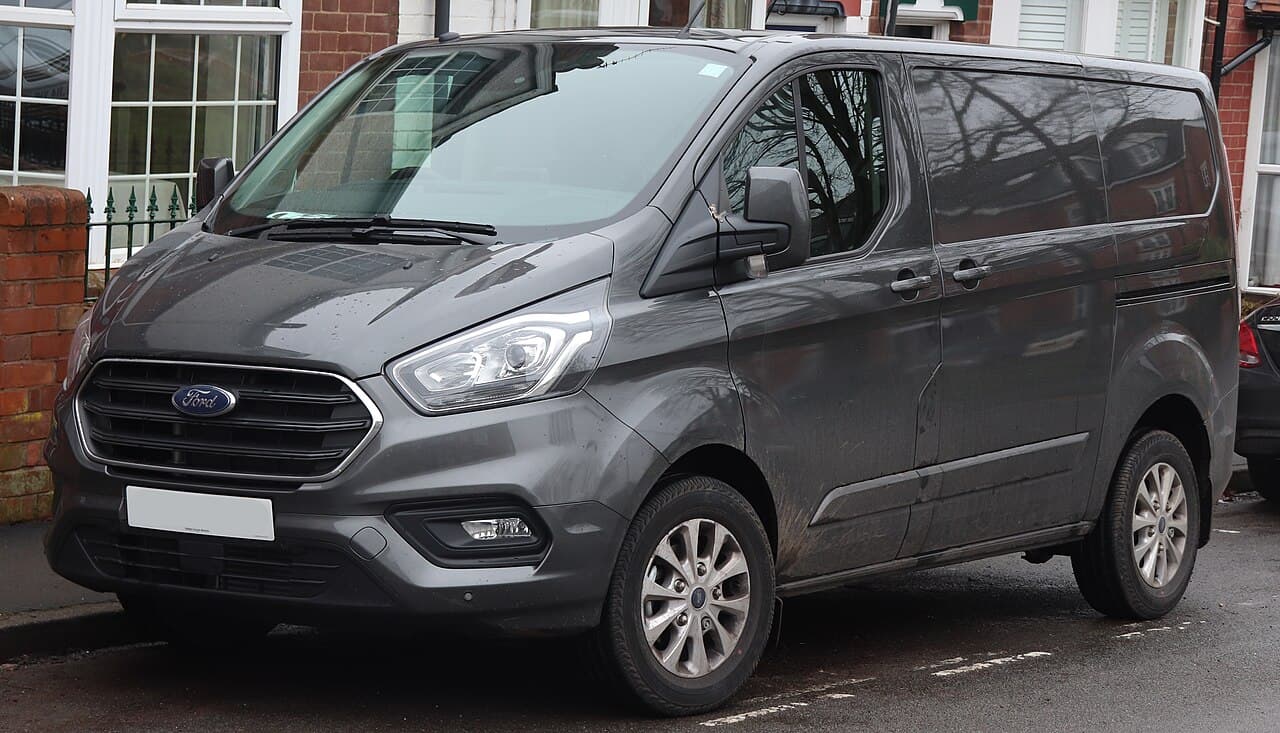
Every 2.0 EcoBlue diesel since 2016: the Transit, Transit Custom and Tourneo Custom first, then the fourth-generation Focus, the Ranger from 2019 and the third-generation Kuga. Ford’s specification sheets describe the cam drive as a belt-in-oil, and motoring press say the same of the Ranger.
Ford brought the EcoBlue into the Transit and Transit Custom during 2016 to meet Euro 6, replacing the 2.2 TDCi. It went on into the Tourneo Custom, the Focus from 2018 and the Kuga from 2020.
The Ranger pick-up took it in mid-2019, as a 130 or 170 PS single-turbo and a 213 PS bi-turbo, and the next-generation Ranger kept both. Ford’s European releases for the Ranger do not describe the cam drive. CarsGuide does: the bi-turbo’s belt is “partially submerged in the oil in the engine’s sump”, and Chasing Cars calls the single-turbo and bi-turbo both wet-belt engines. Ford wrote in May 2026 that the Ranger’s 2.0 diesel now has “a new timing chain”, without saying which countries or build dates; we found nothing on when that reaches UK Rangers.
Models affected
Only the 2.0 EcoBlue diesel. Ford’s own specification sheets give the 1.5 EcoBlue a dry belt with a cam-to-cam chain, and the 2.2 TDCi in earlier Transits is a different engine. The Ranger row rests on motoring press rather than a Ford document. Garages also quote for the Mondeo, S-Max and Galaxy with this engine; we could not confirm the belt in oil for those, so they are not listed.
- Ford Transit Custom2016 onwards
Euro 6 vans from late 2016. The new-generation van from 2023 keeps the engine; Ford has not said whether the belt changed.
- Ford Transit2016 onwards
Van, chassis cab and minibus. The 2.2 TDCi before it has a conventional belt.
- Ford Tourneo Custom2016 onwards
The people carrier on the Transit Custom. Often bought privately.
- Ford Focus2018 onwards
Fourth generation, 2.0 EcoBlue 150 and 190 PS only. The 1.5 EcoBlue is a different design.
- Ford Kuga2020 onwards
Third generation, 2.0 EcoBlue 190 PS and the 150 PS EcoBlue Hybrid. Not the 1.5 diesel or the plug-in hybrid.
- Ford Ranger2019 onwards
2.0 EcoBlue single-turbo and bi-turbo, from mid-2019 and in the new Ranger. Ford says a 2026 update gives the 2.0 a chain; we found no UK date for it. Not the earlier 2.2 or 3.2 TDCi.
| Model | Built | Notes |
|---|---|---|
| Ford Transit Custom | 2016 onwards | Euro 6 vans from late 2016. The new-generation van from 2023 keeps the engine; Ford has not said whether the belt changed. |
| Ford Transit | 2016 onwards | Van, chassis cab and minibus. The 2.2 TDCi before it has a conventional belt. |
| Ford Tourneo Custom | 2016 onwards | The people carrier on the Transit Custom. Often bought privately. |
| Ford Focus | 2018 onwards | Fourth generation, 2.0 EcoBlue 150 and 190 PS only. The 1.5 EcoBlue is a different design. |
| Ford Kuga | 2020 onwards | Third generation, 2.0 EcoBlue 190 PS and the 150 PS EcoBlue Hybrid. Not the 1.5 diesel or the plug-in hybrid. |
| Ford Ranger | 2019 onwards | 2.0 EcoBlue single-turbo and bi-turbo, from mid-2019 and in the new Ranger. Ford says a 2026 update gives the 2.0 a chain; we found no UK date for it. Not the earlier 2.2 or 3.2 TDCi. |
The engine
- Engine
- 2.0 EcoBlue, four-cylinder turbo diesel, 1,996 cc. Ford and the DVSA call it the Panther engine.
- Power outputs
- 105, 130 and 170 PS in the vans from 2016, 185 PS from mid-2019; 150 and 190 PS in the Focus and Kuga; 130, 170 and 213 PS in the Ranger from mid-2019
- Timing drive
- Ford’s words: “low-friction belt-in-oil with dynamic tensioner”. A second, smaller belt in the oil drives the oil pump.
- Ford’s original belt interval
- 10 years or 240,000 km (about 150,000 miles)
- Ford’s revised interval (2024, Transit and Tourneo)
- 6 years or 160,000 km (100,000 miles), belt, tensioner and idlers together
- Oil specification
- 0W-30 on Ford’s 2016 Transit sheet. Check the handbook for your year, and keep the oil-change reminders.
To tell the engines apart, look at the V5C: 1,996 cc (1,995 on the Kuga) with a 2016 or later registration is the EcoBlue. The 1.5 EcoBlue is a different design on Ford’s own sheets, with a dry belt and a short chain between the cams, so a 1.5 Focus or Kuga is not covered by this guide.
One thing before the mechanics. Most of these vans were bought by businesses, and a business is not a consumer. If a company or a sole trader bought the van for work, the Consumer Rights Act 2015 does not apply. On hire purchase the older Supply of Goods (Implied Terms) Act 1973 still requires satisfactory quality, and the Ombudsman has upheld two business-van belt failures under it. But the three windows below are the consumer ones: for the person who bought a Tourneo for the family, a Kuga or Focus for themselves, or a Custom as a private camper.
What does a failing EcoBlue belt feel like?
A low oil pressure warning under load, a rattle from cold, and sometimes the brakes going heavy before anything else.
Parkers puts the oil pressure light first. The brake sign is particular to this engine: the belt’s fibres travel to the vacuum pump that assists the pedal, and in two Ombudsman cases the brakes failed months before the engine did. Dayco, which makes the belts, says some failures give no warning at all.
- 1
A low oil pressure warning, often when the engine is working hardest: a long hill, a full load, towing.
- 2
A rattle or ticking from the engine, worst on a cold start, or a rough idle and poor starting.
- 3
The oil smells of diesel at a service, or the garage finds rubber fibres in the oil filter or the sump strainer.
- 4
The brake pedal goes hard. Belt debris reaches the vacuum pump that gives the brakes their assistance. In two Ombudsman cases the brakes failed before the engine did.
- 5
The belt strips its teeth or the engine seizes, and the bill becomes a replacement engine.
Caught here: belt, tensioner and oil pump belt together, about £1,050 to £1,300 at an independent garage
Left to here: a replacement engine, £6,200 to £13,000 in published cases
Why does the belt break up?
Diesel gets into the oil when the particulate filter cleans itself, and oil thinned with diesel attacks the belt. Shed material then blocks the oil pump strainer.
Ford’s own explanation, given when it cut the interval, is that belt life was being shortened by “engine oil dilution/ vehicle operation conditions/ usage”, and that dilution “can occur on the latest generation of low-emission diesel engines when the emissions system cleans the diesel particulate filter”. Short runs that interrupt that cleaning make it worse, which is why a lightly used van is not a safe van.
Dayco’s technical note to garages says the same from the other side: diesel in the oil “is not uncommon with this engine”, it is usually noticeable by smell, and in extreme cases material dislodges from the belt and blocks the strainer that feeds the oil pump. The pump itself is driven by a second belt in the same oil, which is why garages change both together with the tensioner and a new timing cover.
What comes next depends on where the debris goes. In the Ombudsman cases it reached the brake vacuum pump, the turbocharger and the oil pick-up. Once the engine runs short of oil, or the belt strips its teeth and the cams stop turning, the repair is an engine.
How much does it cost to fix?
About £1,050 to £1,300 for the belt job on a Transit, Transit Custom or Tourneo at an independent garage, and £1,980 on a Ranger at the one specialist we found that prices it. An engine afterwards ran from £6,200 to £13,000 in published cases.
Independent garages that specialise in this engine advertise fixed prices: £1,050 for a front-wheel-drive Transit Custom, Tourneo Custom or Transit and £1,150 for a rear-wheel-drive Transit at one, £1,075 and £1,275 at another, about £1,300 at a third. Those include the oil pump belt, tensioner, idlers, oil and filter. Parkers’s range for Ford wet belts generally is £800 to £2,000, and it notes Ford’s own page says the job can take eight hours.
By model, then: a Transit Custom or Tourneo Custom sits at the bottom of those ranges, and WhoCanFixMyCar’s average for the Custom is £1,054. A rear-wheel-drive Transit adds £100 to £200 at the two garages that price it separately. The Ranger is dearer: the one fixed price we found was £1,980 including VAT, at Ford Wet Belt Specialists.
After a failure the figures change character. A new engine was quoted at £6,177 plus VAT in one Ombudsman case. In another, the estimate for engine, turbo and brake vacuum pump was £13,000. One garage puts a new genuine engine above £10,000.
What has Ford said and done?
Ford shortened the belt interval to six years in 2024, ran a dealer check in 2021, and has replaced engines under a field service action. It calls the belt maintenance and has not recalled it.
Ford’s schedule for the EcoBlue was ten years or 240,000 km. In January 2024 garages began reporting a new figure for Transit, Transit Custom and Tourneo: six years or 160,000 km (100,000 miles) for the belt, tensioner and idlers. Ford’s statement, reported by Fleet News in August 2024, gave the reason quoted above and said Ford had already repaired “a number of out-of-warranty vehicles” with early belt failures as goodwill.
Ford’s written position on cost, quoted by Parkers from Ford’s timing belt page, is that the belt is “a scheduled maintenance item, considered part of the vehicle’s routine upkeep at your expense”, and that the warranty covers manufacturing defects, not maintenance.
There was also an action on the vans themselves. Parkers records “an extensive recall action” in 2021 to check the belt for early damage. It was a field service action rather than a DVSA recall: a dealer told the Ombudsman one van was “built outside of any field service actions for a previous known issue on older built units”, and another owner had his engine replaced at no cost under it. The DVSA register holds no recall for this belt; we checked the full file on 27 October 2026.
Ford has acted, then, in three ways. What it has not done is accept that a belt failing inside its own interval is a defect.
Who pays for an EcoBlue wet belt failure?
Ford calls the belt maintenance. A private buyer’s rights sit with the dealer or the finance company. A business buyer has a thinner version of the same right, and the Ombudsman has used it.
Ford
Cut the belt interval on Transit, Transit Custom and Tourneo from ten years to six in 2024, saying diesel from DPF cleaning dilutes the oil and shortens belt life. Ran a dealer check on earlier vans and has replaced engines under a field service action. Says the belt is a scheduled maintenance item at the owner’s expense. No DVSA safety recall exists for the belt.
The dealer who sold it
For a private buyer, answerable under the Consumer Rights Act 2015 for the vehicle being of satisfactory quality, which includes durability. A belt that breaks up well inside Ford’s own six years is a durability question for the dealer, whatever Ford decides. A van bought for a business sits outside the Act, but the dealer still owes satisfactory quality under older sale-of-goods law.
The finance company
On hire purchase, conditional sale or PCP the lender supplied the vehicle and carries the dealer’s responsibility. Every decision described below was against a lender, and the Ombudsman took business vans on hire purchase under the Supply of Goods (Implied Terms) Act 1973 when the credit was under £25,000.
Your warranty
Ford’s warranty covers defects, not maintenance, and Ford treats this belt as maintenance. A used-vehicle warranty will ask for service stamps and oil invoices before it looks at engine damage that followed the belt. A refusal there does not settle what the dealer owes.
Goodwill from the manufacturer and your rights against the seller are separate. Asking for one does not give up the other.
Is the EcoBlue wet belt covered under warranty?
Not as a part, in Ford’s view. Engine damage that followed it may be, with conditions. A warranty answer never closes the dealer’s question.
Ford treats the belt as maintenance, so the three-year warranty will not pay for a precautionary change. Where the belt has failed inside warranty, Ford has replaced engines, and outside warranty it has helped as goodwill, with service history the deciding paper.
A used-van warranty is a separate contract with its own exclusions, and most will test the oil-change record before they look at consequential damage. Whatever it decides, the dealer’s duty to have supplied a durable vehicle stays where it was.
Can you hand the vehicle back?
If you bought as a consumer, that depends on how long ago you took delivery. The Act sets three windows.
First 30 days
Short-term right to reject
Your strongest right. Reject outright and demand a full refund with no deduction. The dealer cannot insist on repairing it first, and the refund is due within 14 days.
30 days – 6 months
One repair, then reject
Allow one repair or replacement. If it fails (or they refuse), you gain the final right to reject. The fault is presumed present at purchase, so the burden is on the dealer.
6 months – 6 years
Rights continue — you prove it
You must show the fault was present or developing at sale, usually via an independent inspection. Claims run up to 6 years in England & Wales (5 in Scotland).

Find out your exact deadline. Free, in 2 minutes.
- Enter your reg
- Get your verdict
- Reject your faulty car
Free · No card · About 2 minutes
What has the Ombudsman decided?
Four of five van decisions went the buyer’s way, including two bought for business. Mileage at failure and service history decided them.
The Ombudsman does not name the make. Each of these is a van with a wet timing belt whose facts fit this engine; none says Ford.
DRN-4248099 (Oodle, upheld, 2023). A van supplied for business use at 6,000 miles. The brakes failed at 28,800 miles and the vacuum pump was found covered in belt fibres. The lender argued a missed service would have caught discoloured oil. The ombudsman held the Act did not apply to a business buyer, applied the 1973 Act instead, found a manufacturing fault present at supply, and ordered the repair, the payments while off the road, and £400 for the trouble.
DRN-4835412 (MotoNovo, upheld, 2024). A sole trader’s van, serviced every year, whose belt delaminated at 68,000 miles. The lender said a manufacturer issue was not its problem; the ombudsman called that “not the correct understanding of its responsibilities”, accepted that these belts should last at least 100,000 miles, and let the buyer reject the van.
DRN-6454429 (Close Brothers, upheld, 2026). A three-year-old van at 72,700 miles had its belt changed before sale, then seized 10,000 miles later. The manufacturer’s own specialist said the earlier belt had delaminated and blocked the turbo. The ombudsman found the fault developing at supply.
Two more in brief. In DRN-3356624 (2022) the manufacturer replaced the engine at no cost under its belt action before the decision, and the lender paid for the months without the van. In DRN-6141247 (2026) a van sold at 95,610 miles with no service history lost: with the belt due at 100,000 miles, the inspector’s view that the fault was not present at sale stood.
What should you do now?
Stop on an oil pressure warning or a hard pedal, pin down whether you bought as a consumer, and build the paper trail.
- Stop driving on an oil pressure warning or a heavy brake pedal. The next miles turn a belt into an engine, and the pedal means the vacuum pump is already involved.
- Find the invoice and finance agreement. Whose name is on it, and was it for the business? That decides which law applies and which windows you have.
- Get the diagnosis in writing: date, mileage, what was found in the sump strainer, the vacuum pump and the turbo, and ask the garage to keep the belt. An independent inspection decided every case above.
- Gather the service history with the oil grade on each invoice, and any oil-life reminders you acted on. Ask Ford customer relations in writing whether the vehicle was covered by a field service action or qualifies for goodwill, and keep the reply.
- Write to the dealer, and if the vehicle is on finance, to the finance company as well. A lender has eight weeks to give a final answer before the Ombudsman can take it.
Questions people ask
Not the same ones. The Consumer Rights Act 2015 covers people buying outside their trade, so a van bought for the business is outside it. On hire purchase the Ombudsman has used the Supply of Goods (Implied Terms) Act 1973 instead, which also requires satisfactory quality and durability, and it has upheld two business-van belt failures on that basis. The Ombudsman can take the case if the credit was under £25,000. A Tourneo or Kuga bought for the family is a straightforward consumer purchase.
No. We searched the DVSA’s complete recall file on 27 October 2026 and found nothing for the timing belt, the oil pump belt or the tensioner. The dealer check in 2021 that owners describe as a recall was a field service action, which is Ford’s own programme and not a safety recall. One 2025 recall covers an idler gear bolt on three Transits and is a different part.
By Ford’s own figures, yes. Even the shortened schedule is six years or 100,000 miles. The Ombudsman treated 68,000 miles on a serviced van as premature, and 28,800 miles as a manufacturing fault. In the one case the buyer lost, the van had 95,000 miles and no service history when sold.
At the independent garages we found, £1,050 to £1,300 for a Transit Custom, Tourneo Custom or front-wheel-drive Transit, with the timing belt, oil pump belt, tensioner and idlers done together. A rear-wheel-drive Transit costs about £100 to £200 more at the two garages that split the price. WhoCanFixMyCar’s average for a Transit Custom is £1,054. If the belt has already failed, the published engine bills run from £6,200 to £13,000.
The 2.0 EcoBlue Ranger does, from mid-2019 on. Ford’s European papers do not describe its cam drive, but Australian motoring press say the belt sits partly submerged in sump oil, on the single-turbo and the bi-turbo alike. Earlier Rangers with the 2.2 or 3.2 TDCi do not have it. Ford’s 2024 interval cut named Transit and Tourneo only, so go by the Ranger’s own handbook, and one specialist charges £1,980 for the Ranger job.
Sources
- Ford: Transit with EcoBlue engine, technical specifications (camshaft drive “belt-in-oil”)
- Ford: Kuga technical specifications, third generation (2.0 EcoBlue belt-in-oil, 1.5 EcoBlue chain)
- Ford: all-new Focus 2018 technical specifications (2.0 EcoBlue belt-in-oil)
- DVSA: the full vehicle recall file, searched 27 October 2026
- Fleet News, 13 August 2024: Ford revises timing belt service interval for diesel vans, with Ford’s statement
- Parkers, updated 9 September 2026: Ford wet belts, problems, warning signs and repairs
- Financial Ombudsman Service, decision DRN-4248099 (business van, upheld)
- Financial Ombudsman Service, decision DRN-4835412 (sole trader’s van, upheld)
- Financial Ombudsman Service, decision DRN-6454429 (van, upheld)
- CarsGuide, 18 November 2024: does the Ford Ranger have a timing belt or chain? (2.0 bi-turbo belt in the sump oil)
Last checked 28th October 2026. Nothing here is legal advice.
Have a question this didn’t answer?
Ask it in Faulty Car Advice UK, our Facebook group for drivers dealing with a faulty car.