
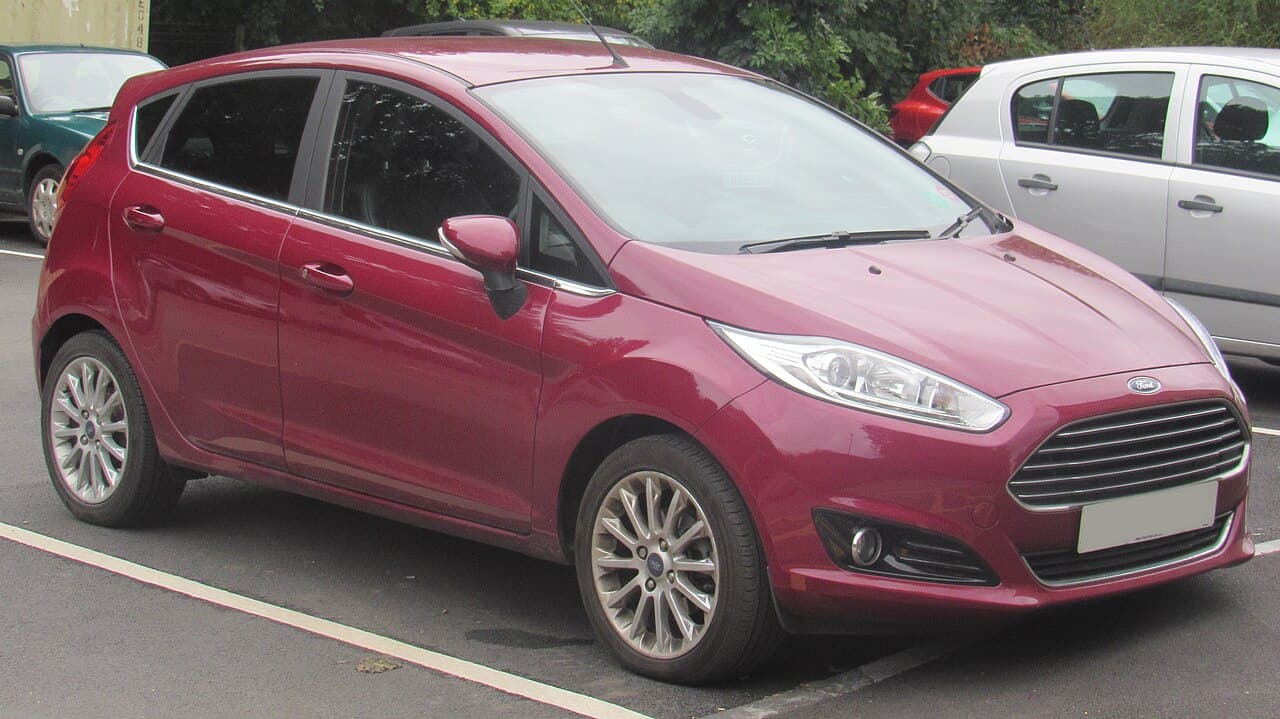
Which Fords have the wet belt?
The 1.0 EcoBoost petrol from its 2012 launch until Ford moved the engine to a timing chain during 2018 and 2019.
Production of the 1.0 EcoBoost began in April 2012. Until the revised engine arrived, every one drove its camshafts with a belt that runs inside the engine, bathed in oil.
Models affected
Only the 1.0 EcoBoost petrol with the belt-driven camshafts. Later 1.0 engines, including every mild hybrid, use a timing chain, though a smaller belt in oil still drives their oil pump.
- Ford Fiesta2012–2017
Chain engine phased in from 2018. Check before assuming.
- Ford Focus2012–2018
Chain engine from mid-2018
- Ford EcoSport2014–2018
Chain engine phased in from 2018
- Ford C-Max2013–2018
Including Grand C-Max. Never moved to the chain engine.
- Ford B-Max2012–2017
Never moved to the chain engine
- Ford Mondeo2015–2018
1.0 versions only
- Ford Transit Connect2013–2018
1.0 petrol vans only. Later vans: check the engine.
- Ford Transit Courier2014–2018
1.0 petrol vans only. Later vans: check the engine.
| Model | Built | Notes |
|---|---|---|
| Ford Fiesta | 2012–2017 | Chain engine phased in from 2018. Check before assuming. |
| Ford Focus | 2012–2018 | Chain engine from mid-2018 |
| Ford EcoSport | 2014–2018 | Chain engine phased in from 2018 |
| Ford C-Max | 2013–2018 | Including Grand C-Max. Never moved to the chain engine. |
| Ford B-Max | 2012–2017 | Never moved to the chain engine |
| Ford Mondeo | 2015–2018 | 1.0 versions only |
| Ford Transit Connect | 2013–2018 | 1.0 petrol vans only. Later vans: check the engine. |
| Ford Transit Courier | 2014–2018 | 1.0 petrol vans only. Later vans: check the engine. |
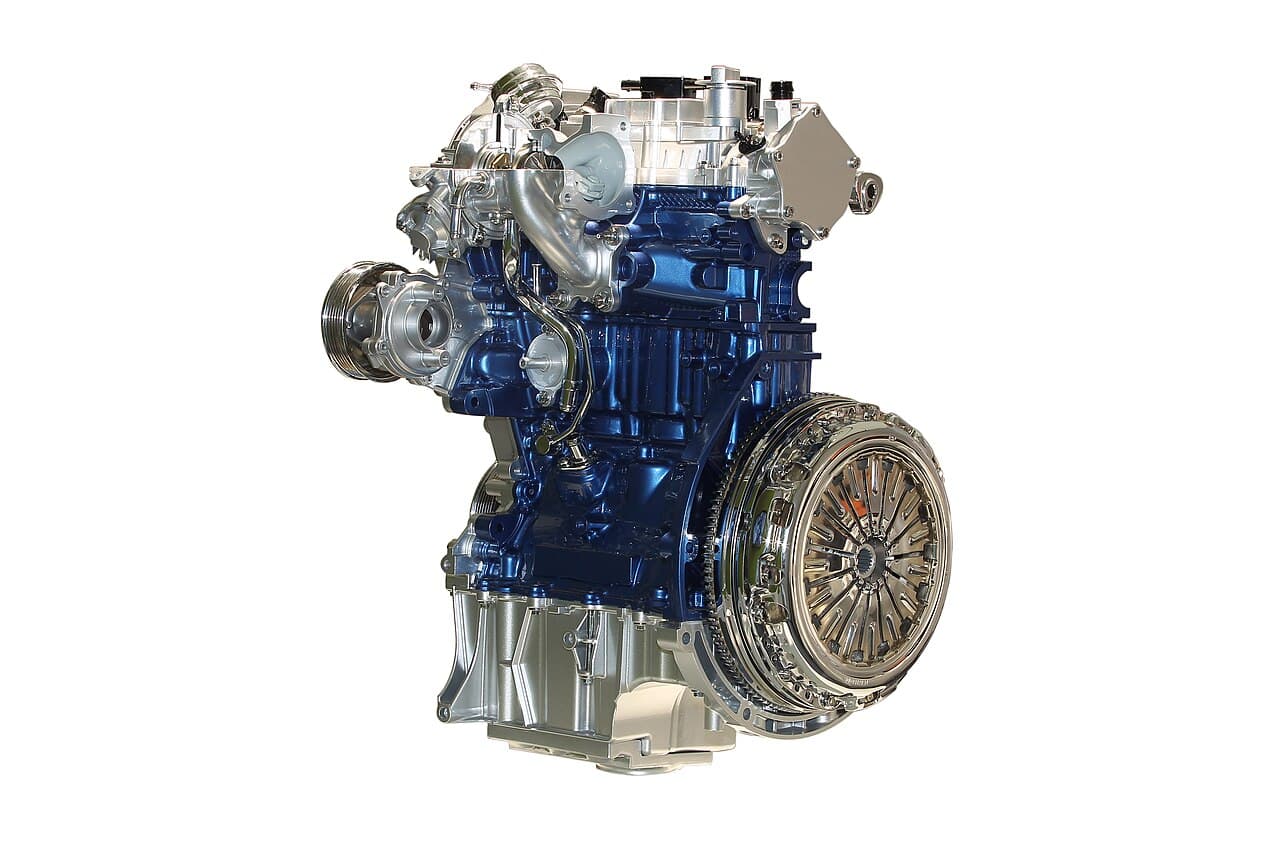
The engine
- Engine
- 1.0 EcoBoost, three-cylinder turbo petrol
- Power outputs
- 100, 125 and 140 PS
- Timing drive
- Belt running in engine oil (wet belt)
- Ford’s original belt interval
- 10 years or 150,000 miles
- Ford’s revised interval (2026)
- 6 years or 100,000 miles
- Oil specification
- 5W-20 to Ford WSS-M2C948-B
The change to a chain did not happen on one date, so a registration plate will not settle it. One specialist garage’s quick check is to open the bonnet. If the turbocharger sits at the front, nearest the radiator, it is the belt engine. If it sits at the back, nearest the windscreen, it is the chain engine. A Ford dealer can confirm from the registration.
What does a failing wet belt feel like?
Usually a low oil pressure warning, then a loss of power. Sometimes there is no warning at all.
The US safety regulator, NHTSA, reviewed 355 failure reports. Most drivers described the oil pressure light immediately before the engine lost power. Some said the engine seized with nothing beforehand.
- 1
A low oil pressure warning on the dashboard, sometimes with the engine management light.
- 2
Power falls away while you are driving.
- 3
Loud mechanical noise from the engine.
- 4
The engine seizes. The pump that powers the brake assistance stops with it, so the pedal turns heavy.
Caught here: a new belt, about £950 to £1,100 at an independent garage
Left to here: a replacement engine, £3,000 to £5,400 in published cases
Why does the belt break up?
The belt’s material degrades in the oil. The debris blocks the mesh screen that feeds the oil pump.
Running the belt in oil was meant to cut friction and noise. The trouble is what happens when the belt starts to shed. NHTSA found the fragments collect on the oil pump’s pick-up screen. Oil pressure falls, and the engine runs short of lubrication.
That screen cannot be inspected or cleaned without taking the engine out, so nobody can see it filling up. In the US data the average failure came at about 70,000 miles, and 98% happened before the 150,000-mile replacement point. NHTSA also found failures in engines with evidence of proper, routine oil changes.
Oil still matters. Garages that do this work specify 5W-20 oil to Ford’s WSS-M2C948-B standard, and an engineer in one Ombudsman case called servicing to schedule “critical” for the belt.
How much does it cost to fix?
About £950 to £1,100 for a new belt at an independent garage. Engine replacements in published cases ran from £3,000 to about £5,400.
WhoCanFixMyCar puts the average Ford wet belt replacement at £981, with the Fiesta at £938 and the Focus at £968. Two specialist garages advertise £950 and £1,100. One of them says main dealers commonly charge £1,800 or more.
Once the engine has been starved of oil, the bill changes. One owner on BBC Watchdog faced £3,000. Another was left with £2,700 after Ford’s contribution. A dealership invoice in an Ombudsman decision came to £5,364.
What has Ford said?
Ford has offered goodwill help with conditions, and in 2026 shortened the belt interval. It has not recalled the belt in the UK.
Ford’s schedule said the belt would last ten years or 150,000 miles. When BBC Watchdog covered the failures in February 2024, Ford said it was aware of the issue and would help with premature timing belt failure on cars “with a full service history and up to seven years old”. The same report said Ford declined one owner because an independent garage had done the servicing.
On 2 June 2026 Ford told NHTSA about a customer satisfaction programme for vehicles worldwide with this belt. It cuts the interval to six years or 100,000 miles and offers reimbursement to eligible owners who have already paid for a belt-related engine repair or replacement. We have not seen Ford’s UK terms, so ask Ford customer relations whether your car qualifies.
The recall you may have read about is American. In December 2023 Ford recalled 139,730 Focus and EcoSport cars in the US to replace the oil pump drive belt and its tensioner. It covered automatics only. The DVSA register shows no equivalent for the UK.
Who pays for a wet belt failure?
Ford may contribute, on its own terms. The dealer who sold the car, or the finance company, is where your rights sit.
Ford
Told BBC Watchdog in 2024 it would help with early belt failure on cars up to seven years old with a full service history. In June 2026 it told the US safety regulator of a worldwide programme: a shorter belt interval and reimbursement for eligible owners who had already paid. There is no UK safety recall for the belt.
The dealer who sold it
Answerable under the Consumer Rights Act 2015 for the car being of satisfactory quality when sold. That includes how long an engine part should reasonably last, whatever Ford decides to do.
The finance company
On hire purchase or PCP the lender supplied the car and carries the same responsibility as a dealer. Every Ombudsman decision described below was against a lender.
Your warranty
Read what the policy says about timing belts and about damage that follows one failing. Expect questions about service stamps and oil grade. A refusal there leaves the dealer’s responsibility untouched.
Goodwill from the manufacturer and your rights against the seller are separate. Asking for one does not give up the other.
Is a wet belt covered under warranty?
Only if the policy says so, and usually with conditions. Either way, a warranty decision is not the dealer’s answer.
Ford’s goodwill has hinged on service history, and one trade report says Ford tests which oil was used before approving a warranty repair. Third-party used-car warranties set their own terms, so check the wording on belts and on consequential engine damage.
A warranty is a separate contract. Whatever it decides, the dealer’s duties under the Act stay where they are.
Can you hand the car back?
That depends on how long ago you took delivery. The Act sets three windows.
First 30 days
Short-term right to reject
Your strongest right. Reject outright and demand a full refund with no deduction. The dealer cannot insist on repairing it first, and the refund is due within 14 days.
30 days – 6 months
One repair, then reject
Allow one repair or replacement. If it fails (or they refuse), you gain the final right to reject. The fault is presumed present at purchase, so the burden is on the dealer.
6 months – 6 years
Rights continue — you prove it
You must show the fault was present or developing at sale, usually via an independent inspection. Claims run up to 6 years in England & Wales (5 in Scotland).

Find out your exact deadline. Free, in 2 minutes.
- Enter your reg
- Get your verdict
- Reject your faulty car
Free · No card · About 2 minutes
What has the Ombudsman decided?
Complaints have gone both ways. Service history decided most of them.
The Financial Ombudsman Service does not name the make in its published decisions. These three each concern a wet timing belt with a ten-year manufacturer interval that broke up early.
DRN-5863106 (Santander Consumer, upheld). The belt failed at about 36,000 miles on a five-year-old car, two years and four months after supply. The lender argued about the oil grade used at a service. The ombudsman found the car was not durable and ordered the £5,364 repair bill refunded, with the monthly payments for the months off the road and £200.
DRN-3362634 (Moneybarn, upheld, 2022). The belt failed six months and twelve days after supply, at around 102,000 miles. The car had gone 27 months and 41,000 miles without a service before it was sold. The ombudsman tied the failure to that gap and let the buyer reject the car.
DRN-4588119 (Advantage Finance, not upheld, 2024). The belt failed at 47,000 miles, more than two years after supply. The car had not been serviced to schedule and had not been sold as fully serviced. The ombudsman held the lender had acted reasonably.
What should you do now?
Stop driving on an oil pressure warning, then build the paper trail: service history, diagnosis and dates.
- Switch off if the oil pressure warning shows. Every mile on low pressure moves the bill from a belt towards an engine.
- Gather the full service history, including invoices that show the oil grade used. It decided most of the cases above.
- Get the diagnosis in writing with the date and mileage. Ask the garage to state what it found in the sump and on the oil pick-up, and to keep the old belt. An independent inspection carries more weight.
- Ask Ford customer relations in writing whether the car qualifies for a contribution or reimbursement. Keep the reply.
- Put the fault to the dealer in writing. If the car is on finance, write to the finance company too.
Questions people ask
No. We checked the DVSA register for each affected model on 4 October 2026 and found no recall for the timing belt or the oil pump belt. The December 2023 recall often quoted was in the United States and covered automatic cars only.
Ford’s original schedule was ten years or 150,000 miles. In 2026 it told the US regulator it was cutting that to six years or 100,000 miles. A belt that breaks up well inside either figure has not lasted as Ford itself said it would, and durability is part of satisfactory quality under the Consumer Rights Act 2015.
Not necessarily. In one Ombudsman decision the lender raised the oil grade used at a service, and the ombudsman said an owner cannot be expected to check which oil a professional garage puts in. Missed services are harder to answer, so gather every invoice you have.
Not for the camshafts. Those engines use a timing chain. A smaller belt running in oil still drives the oil pump, so the correct oil and regular changes matter on them too.
Sources
- NHTSA (US safety regulator): Engineering Analysis EA26004, timing belt failure, opened 31 July 2026
- NHTSA: Ford’s Part 573 safety recall report 23V-905, oil pump drive belt and tensioner (US)
- DVSA: recall register for the Ford Fiesta, checked 4 October 2026
- Financial Ombudsman Service, decision DRN-5863106
- Financial Ombudsman Service, decision DRN-3362634
- Financial Ombudsman Service, decision DRN-4588119
- Garage Wire: BBC Watchdog shines light on Ford EcoBoost wet belt problem
- WhoCanFixMyCar: how much does a Ford wet belt replacement cost?
- TGPP Autocare: when did Ford 1.0 EcoBoost engines stop using wet belts?
- Timing Chain Gatwick: Ford 1.0 EcoBoost wet belt replacement
Last checked 4th October 2026. Nothing here is legal advice.