
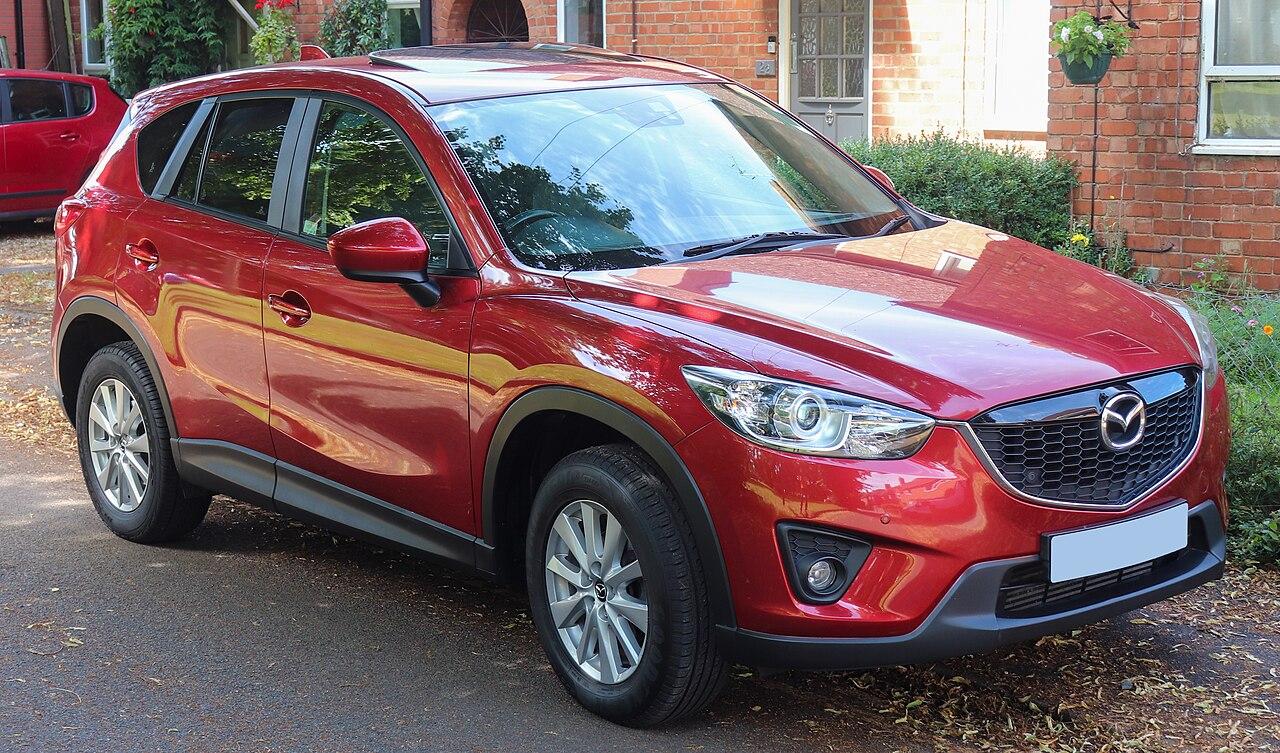
Which Mazdas have the 2.2 diesel oil problem?
Every CX-5, Mazda6 and Mazda3 with the 2.2 Skyactiv-D diesel built from 26 January 2012 to 30 June 2018 is on the UK soot recall; those built to 21 January 2016 are on the injector recall too.
Mazda started building this engine on 26 January 2012 and it went into the CX-5 that spring, the Mazda6 in January 2013 and the Mazda3 in January 2014.
Models affected
Only the 2.2 Skyactiv-D diesel. The 2.0 and 2.5 petrols and the 1.5 diesel in the Mazda2 and CX-3 are outside it. The DVSA files each recall against the three models together, with one vehicle count per campaign.
- Mazda CX-52012–2018
First generation, and the first year of the second. Both recalls.
- Mazda Mazda62013–2018
Saloon and Tourer. Both recalls.
- Mazda Mazda32014–2018
Hatchback and Fastback, 150 PS only. Cars built after 21 January 2016 are on the soot recall but not the injector recall.
| Model | Built | Notes |
|---|---|---|
| Mazda CX-5 | 2012–2018 | First generation, and the first year of the second. Both recalls. |
| Mazda Mazda6 | 2013–2018 | Saloon and Tourer. Both recalls. |
| Mazda Mazda3 | 2014–2018 | Hatchback and Fastback, 150 PS only. Cars built after 21 January 2016 are on the soot recall but not the injector recall. |
The engine
- Engine
- 2.2 Skyactiv-D, four-cylinder diesel, codes SH-VPTS and SH-VPTR
- Turbocharging
- Two turbos in sequence: a small one alone at low speed, both under load
- Power outputs
- 150 PS (380 Nm) and 175 PS (420 Nm)
- Compression ratio
- 14.0:1, the lowest of any production diesel when it launched
- Build dates on the UK recalls
- 26 January 2012 to 21 January 2016 (injector nuts); to 30 June 2018 (intake soot)
- Mazda’s oil rule
- Oil above the X mark on the dipstick is to be replaced, not left
The 2.2 was the only diesel in these cars until 2018, so a diesel CX-5 or Mazda6 of these years has it. The Mazda3 also came with a 1.5 diesel from 2014; the 2.2 is the 150 PS car. The V5C shows the capacity, and a Mazda dealer can tell you from the VIN whether both recalls have been done.
What does the fault look like from the driver’s seat?
A dipstick reading that creeps up, then rough running, then the oil pressure light. The recall wording ends with a stall and no warning.
The DVSA entry says the oil pressure light appears with the engine malfunction light and that the engine may stall without warning. Before that there is often a quieter sign: the RAC’s advice to buyers is to look for an oil level that has risen and oil that smells of fuel.
- 1
The oil level on the dipstick goes up between services, and the oil smells of diesel.
- 2
Rough idling, knocking or smoke, or a power loss with the engine light on, as soot gathers at the intake.
- 3
The oil pressure light comes on together with the engine malfunction light.
- 4
The engine stalls without warning, or seizes because the strainer is blocked and the oil cannot reach it.
Caught here: new injector seals and an intake clean, a few hundred pounds at an independent garage
Left to here: a reconditioned engine, from about £3,500 fitted
Why does the oil get contaminated?
Loose injector nuts let combustion gas into the oil, which carbonises and chokes the strainer. Separately, fuel from particulate filter regeneration thins the oil, and soot gathers at the intake.
Mazda’s own account, filed with the Japanese regulator in February 2017, is the clearest. The nut holding each injector was not tightened enough, so the gasket under it lost its sealing pressure. Combustion gas blew into the cylinder head and carbonised the oil. The carbonised oil then choked the strainer, oil pressure fell, the warning light came on and, with continued use, the engine could seize.
The UK remedy goes further than some other markets’: the dealer checks the engine for contamination and repairs or replaces it if necessary, as well as re-tightening the nuts.
The rising oil level is a second mechanism. On short trips the particulate filter never finishes regenerating, and the extra fuel injected for it ends up in the sump. Mazda told CarsGuide in Australia in 2013 that it had recalibrated the fuel injection used to purge the filter and later fitted a new dipstick; its handbook for the CX-5 says that if the oil passes the X mark it is to be replaced. Thinner oil in an engine whose strainer is already clogging is the combination to avoid.
The soot recall of July 2019 is the third strand. The DVSA entry says soot may accumulate around the intake shutter valve on the inlet side, and the fix is to clean or replace it and update the software.
What does the DPF light mean on a CX-5 or Mazda6 diesel?
A steady DPF light means the filter can no longer clear its soot by itself, and Mazda’s remedy is a 15 to 20 minute drive on a warm engine. A flashing light, or “DPF malfunction” on the display, means power is cut back and Mazda wants the car inspected straight away.
The filter traps soot and burns it off as you drive. Mazda’s handbook for the 2.2 diesel lists what stops that: long stretches at 9 mph or less, repeated trips of ten minutes or less, a cold engine and long idling. For a steady light, or “Soot Accumulation in DPF too high” on the display, it says to let the coolant reach 80 °C and then drive at 12 mph or more for 15 to 20 minutes. Ignore it and the light starts flashing, or the message becomes “DPF malfunction”: output is restricted, the handbook says to have the car inspected immediately, and it warns the engine may malfunction if driven on. The Mazda6 handbook words it the same way.
The DPF light is not a recall symptom; the recall’s warning is the oil pressure light with the engine light. The link is the oil. The RAC and WhoCanFixMyCar both tie short-run use, where the filter struggles to finish regenerating, to fuel in the sump, and Mazda named the filter’s purging as the cause of the rising level in Australia. A DPF light that keeps returning is a reason to check the dipstick against the X mark. The spanner light is something else: in Mazda’s 2017 CX-5 handbook it means an oil change is due, and when it flashes, water has collected in the diesel fuel filter.
How much does it cost to fix?
A few hundred pounds for seals and an intake clean if caught early. Once the strainer has blocked, the bill is an engine.
WhoCanFixMyCar puts an oil and filter change on a CX-5 at about £128 and says new injector seals run into the hundreds of pounds; it prices an intake soot clean with the software update at £150 to £400. ClickMechanic’s average for a fuel injector repair, which may include seals and injectors, is £2,055 on a CX-5, £1,790 on a Mazda3 and £2,620 on a Mazda6.
After oil starvation the numbers change. One UK specialist advertises a reconditioned engine with new timing chains and both turbos rebuilt from £3,500 including transport, and a parts finder quotes £2,800 to £3,500 for the unit alone. One owner on PistonHeads described an £8,000 bill after seal failure, a blocked strainer and a seizure. Done under the recalls, the check and any repair cost nothing.
What has Mazda said?
It has recalled the engine twice in the UK and told owners how to read the dipstick. It has published nothing else for the UK.
Mazda’s statements on this engine have been made to regulators. In February 2017 it told the Japanese ministry it would recall 172,095 cars at home, and the worldwide figure reported at the time was about 460,000. The UK recalls followed: 17 September 2018 for the injector nuts, oil contamination and strainer, with 11,021 UK vehicles listed, and 25 July 2019 for the intake shutter valve soot, with 70,435.
On the oil level, Mazda’s position is in its handbook: replace the oil if it passes the X mark, at an expert repairer. In Australia it went further in 2013, with revised filter software and a new dipstick under warranty. We found no Mazda UK press statement, no UK extended cover and no UK goodwill scheme.
Who pays for a Mazda 2.2 diesel oil contamination failure?
Mazda pays for the recall work, and nothing beyond it is published for the UK. The dealer who sold the car, or the finance company, is where your rights sit, with the clock already running on cars this age.
Mazda
Recalled the CX-5, Mazda6 and Mazda3 in September 2018 to check the engine for contamination, repair or replace it where needed and re-tighten the injectors, and again in July 2019 to clean or replace the intake shutter valve. Both are free at a Mazda dealer. Its handbook says oil above the X mark must be replaced. No UK statement, extended cover or goodwill scheme has been published; help beyond the recalls is case by case.
The dealer who sold it
Answerable under the Consumer Rights Act 2015 for the car being of satisfactory quality when sold, which includes how long an engine should last. Inside six months the fault is presumed to have been there; after that you show it was present or developing, and a recall notice, the dipstick history and a written diagnosis are how you do it.
The finance company
On hire purchase or PCP the lender supplied the car and carries the dealer’s responsibility. The one published Ombudsman decision on a Mazda engine that ran dry turned on that six-month line, not on the make.
Your warranty
A used-car warranty will ask whether the oil was changed when the level rose and whether the recalls were done. Read its wording on injectors, on oil contamination and on consequential engine damage. Its answer does not change the dealer’s.
Goodwill from the manufacturer and your rights against the seller are separate. Asking for one does not give up the other.
Is it covered under warranty?
The recalls are free whatever the car’s age. Beyond them, a warranty decides on its own wording, and that decision is not the dealer’s answer.
Inside Mazda’s three-year warranty an engine failure of this kind is a warranty repair. Most of these cars are well past it. A used-car warranty will ask two questions: was the oil changed when the level rose, and were the recalls done. Read its lines on injectors, on contaminated oil and on the engine damage that follows, because a policy can cover the seal and exclude the engine.
None of that touches the dealer who sold you the car. Under the Consumer Rights Act 2015 the dealer is responsible for the car’s quality on the day you took it, and durability is part of quality. A warranty refusal is the start of that conversation, not the end of it.
Can you hand the car back?
It depends on how long ago you bought it, and with cars this age that is the hard part. Inside six months the fault is presumed; after it you show the fault was there or developing; after six years, five in Scotland, the Act’s route has usually closed.
First 30 days
Short-term right to reject
Your strongest right. Reject outright and demand a full refund with no deduction. The dealer cannot insist on repairing it first, and the refund is due within 14 days.
30 days – 6 months
One repair, then reject
Allow one repair or replacement. If it fails (or they refuse), you gain the final right to reject. The fault is presumed present at purchase, so the burden is on the dealer.
6 months – 6 years
Rights continue — you prove it
You must show the fault was present or developing at sale, usually via an independent inspection. Claims run up to 6 years in England & Wales (5 in Scotland).

Find out your exact deadline. Free, in 2 minutes.
- Enter your reg
- Get your verdict
- Reject your faulty car
Free · No card · About 2 minutes
What has the Ombudsman decided?
Only one published decision concerns a Mazda engine that ran dry, and it turned on the six-month line rather than the fault.
Searches of the published decisions for the CX-5, Skyactiv and the oil strainer return nothing. One decision is close enough to be useful.
DRN-3833895 (BMW Financial Services trading as ALPHERA, not upheld, 2023). A six-year-old Mazda with 60,000 miles was supplied on hire purchase. A little over six months and almost 6,000 miles later the engine management light came on. Mazda inspected it and found several faults, including a turbo boost problem; the independent engineer could not start the car because there was no oil in it. The ombudsman said that after six months the onus was on the buyer to show the faults were present or developing at supply, that the Mazda report did not say when they developed, and that an MOT at supply would have shown them. The engine is not named.
The lesson is the one that runs through this guide. On a car past six months, a recall notice alone does not carry the case; a dated diagnosis that speaks to when the contamination began does.
What should you do now?
Stop on an oil pressure light, get both recalls checked, and build a dated record of the oil level, the diagnosis and the service history.
- If the oil pressure light comes on, switch off and do not restart. A blocked strainer starves the engine a little more with every mile.
- Ask a Mazda dealer, in writing, whether R/2018/289 and R/2019/187 have been completed on your VIN and on what dates. Have any outstanding one done.
- Check the dipstick now and photograph it with the mileage. If the oil is above the X mark, have it changed and keep the invoice. A record of the level over time is evidence that the engine was contaminating its oil before you bought it.
- If the engine has failed, get the diagnosis in writing with the date and mileage, and ask the garage to keep the strainer and a sample of the oil. An independent inspection that gives an opinion on when the contamination started is what the Ombudsman case above lacked.
- Count the months since you bought the car, not since it was registered, and put the fault to the dealer in writing inside the right window. If the car is on finance, write to the finance company too. Ask Mazda UK for a contribution in the same week, with the full service history attached, and keep the reply.
Questions people ask
Two. R/2018/289, launched 17 September 2018, covers injector mounting nuts that may be too loose, letting combustion gas into the oil and blocking the oil strainer; the dealer checks the engine for contamination, repairs or replaces it if needed and re-tightens the injectors. R/2019/187, launched 25 July 2019, covers soot at the intake shutter valve. Both are on the DVSA register for the CX-5, Mazda6 and Mazda3.
Not the recall fault, but it is connected. Mazda’s own handbook says that if the level passes the X mark on the dipstick the oil is to be replaced, and Mazda told the Australian press in 2013 that the particulate filter’s regeneration was putting fuel into the oil. Diluted oil is thinner oil, and an engine whose strainer is already clogging has less margin. Change it, keep the invoice, and note the mileage.
The recall checked for contamination on the day and re-torqued the nuts. It did not fit new seals or change the engine, so wear afterwards is possible, which is why the RAC reports Mazda calling for new injector seals at the 75,000-mile service. A recall completed in 2019 does not prove the engine was sound when you bought it in 2024, and a dealer cannot use it to prove that either.
Not in itself. A steady light means the particulate filter has more soot than it can burn off, usually after short trips, slow traffic or long idling, and Mazda’s handbook says to drive for 15 to 20 minutes at 12 mph or more once the engine is fully warm. A flashing light, or “DPF malfunction”, means the engine is running on reduced power and Mazda says to have it inspected immediately. The link to this guide is the oil: regeneration that keeps getting cut short is tied to fuel in the sump on this engine, so check the dipstick against the X mark whenever the light has been on.
There is no published scheme to ask under. Owners report both refusals over service records and a 50% contribution on a dealer-serviced car, so it is worth a written request with the full history attached. Whatever Mazda says, the dealer who sold you the car answers separately under the Act.
Sources
- DVSA vehicle recalls data: R/2018/289 (injector mounting nuts, oil contamination, oil strainer) and R/2019/187 (intake shutter valve soot), Mazda CX-5, Mazda3 and Mazda6
- DVSA: recall register for the Mazda CX-5, checked 27 October 2026
- DVSA: recall register for the Mazda6, checked 27 October 2026
- Japanese Ministry of Land, Infrastructure, Transport and Tourism: Mazda recall campaign 3997, 23 February 2017, the injector nut and oil strainer defect in Mazda’s words (PDF)
- Mazda owner’s manual, CX-5 (Europe): the diesel particulate filter light on the Skyactiv-D 2.2
- Mazda owner’s manual, CX-5: engine oil level and the X mark (Skyactiv-D 2.2)
- Mazda newsroom, 26 January 2012: production of the Skyactiv-D 2.2 begins
- RAC: Mazda CX-5 (2012–2017) used car review, diesel reliability
- CarsGuide (Australia): Mazda’s 2013 and 2016 answers on the CX-5 diesel oil level
- Financial Ombudsman Service, decision DRN-3833895
Last checked 28th October 2026. Nothing here is legal advice.
Have a question this didn’t answer?
Ask it in Faulty Car Advice UK, our Facebook group for drivers dealing with a faulty car.