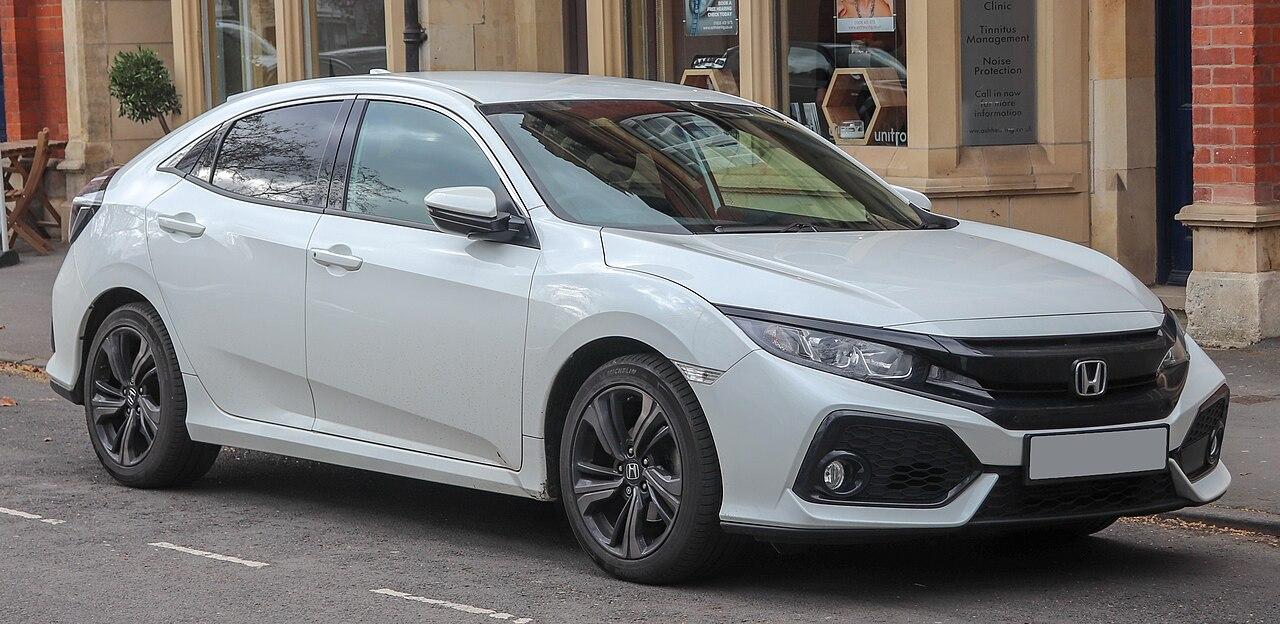
Which Civics have the wet belt?
Every Civic with the 1.0 VTEC Turbo petrol: the hatchback from 2017 to 2022 and the saloon from 2018 to 2020.
The tenth-generation Civic reached the UK in April 2017 with two turbo petrols, a 1.0 three-cylinder and a 1.5 four-cylinder. The 1.0 is the one with the belts in oil.
Models affected
Only Civics with the 1.0 turbo petrol, shown as 988cc on the V5C. The 1.5 turbo petrol, the 1.6 diesel and the Type R are not covered here, and specialists say the 1.5 has a chain. No other UK Honda used this engine.
- Honda Civic2017–2022
Tenth-generation five-door hatchback. Auto Express lists SE, SR, EX and EX Sport Line as 1.0-only trims, and Sport as 1.5-only.
- Honda Civic Saloon2018–2020
Four-door, on sale from September 2018. 1.0 petrol versions only.
| Model | Built | Notes |
|---|---|---|
| Honda Civic | 2017–2022 | Tenth-generation five-door hatchback. Auto Express lists SE, SR, EX and EX Sport Line as 1.0-only trims, and Sport as 1.5-only. |
| Honda Civic Saloon | 2018–2020 | Four-door, on sale from September 2018. 1.0 petrol versions only. |
The engine
- Engine
- 1.0 VTEC Turbo (P10A2), three-cylinder turbo petrol, 988cc
- Power outputs
- 129 PS at launch, 126 PS on later cars
- Timing drive
- Two belts in the engine oil: one turns the camshafts, one the oil pump
- Gearboxes
- Six-speed manual or CVT automatic
- Belt change interval
- 6 years or 75,000 miles, as a Honda dealer quotes it. Your service book is the final word.
Your V5C settles it. Honda gives the 1.0’s capacity as 988cc. The badge helps too: Auto Express lists the SE, SR, EX and EX Sport Line as 1.0-only trims, and the Sport as 1.5-only.
You may have read that every engine in this Civic is chain-driven. One well-known buyer’s guide says so. Honda’s own engineers say otherwise. Their 2017 paper on the engine describes a belt for the camshafts and another for the oil pump, both “located inside the engine”, made from materials developed for “the oil system environment”.
What are the signs of a failing belt?
Debris in the oil, a ticking noise and warning lights tend to come first. Turbo failure and engine damage come last.
Some of these signs have other causes, so ask whoever looks at the car to check the oil filter and the sump for belt material.
- 1
Black specks of belt material in the oil or the oil filter at a service.
- 2
A ticking or rattling noise, clearest on a cold start.
- 3
The engine management light comes on, with rough running, misfires or an uneven idle.
- 4
The turbo is slow to build boost, or the oil pressure warning lights up.
- 5
The turbo fails, or the belt jumps or breaks and damages the engine.
Caught here: a planned belt change, about £950 to £1,600
Left to here: a replacement engine, £3,500 to £8,000 or more at one specialist’s prices
Why does it fail?
The belt wears in the oil and sheds fibres. They travel with the oil, clog the filter and can cut the turbo’s supply.
Honda put the belts in oil to make the engine quieter and more efficient. Its engineers measured 1.8% less friction than with a conventional timing chain. The price of that design is that anything the belt sheds goes round the engine with the oil.
Parkers describes the belt gradually disintegrating and the swarf clogging the turbo, which it says makes the 1.0 the Civic most prone to turbo failure. In What Car?’s owner survey, 1.0 owners “raised serious alarms” about particles in the oil and costly turbocharger failures.
Honda has since changed a part. A Honda parts retailer’s description of the current genuine belt kit says roughness on the original cam drive pulley could wear the belt early, releasing fibres that may clog the oil filter. The revised pulley has a smoother surface. The kit also includes the second belt, which drives the oil pump, because it runs in oil too.
How much does it cost to fix?
About £950 to £1,600 to change the belts before they fail. After a failure, the bill can include a turbo or a whole engine.
Swansway Bolton Honda, a Honda dealer, advertises the 1.0 Civic belt change at £999 for a limited time. Honest John gives £1,600 as the Honda dealer price. An independent specialist in Stevenage charges from £950, which includes both belts, an oil flush and a clean of the oil strainer. Honda’s belt kit sells for about £140 to £165 as parts alone.
A failure costs more. The same specialist puts a turbo at £800 to £1,200 on top of the belt work, and a replacement engine at £3,500 to £8,000 or more.
What has Honda said?
Nothing in public that we could find. It has paid towards some repairs, and a specialist reports a free update on certain cars.
We found no statement from Honda UK about the belt. Parkers says Honda “has paid for some repairs, seemingly ignored others”, and advises buyers to look for an excellent service history and to change the belt sooner than the schedule says.
A specialist garage reports a Honda product update, coded 6NK, that replaced the belt and pulley on certain Civics with revised parts, free of charge. It is not a safety recall. We searched the DVSA’s full recall file on 27 October 2026 and found no Civic recall for the belt, its tensioner, the pulley or the turbo. We have not seen Honda’s own notice, so ask a Honda dealer to check your car’s VIN for 6NK.
Who pays for a failed Civic wet belt?
Any help from Honda is goodwill, and your legal rights are against the dealer who sold the car or the finance company.
Honda
No public statement and no UK safety recall. Parkers reports that Honda has paid for some repairs and not others. A specialist garage says Honda’s 6NK product update replaced the belt and pulley free of charge on certain cars.
The dealer who sold it
Answerable under the Consumer Rights Act 2015 for the car’s quality on the day you bought it, and durability is part of that. A goodwill offer from Honda, or the lack of one, does not change it.
The finance company
On hire purchase or PCP the lender supplied the car and carries the same responsibility as a dealer. Both Ombudsman decisions below were brought against Honda’s own finance company.
Your warranty
Expect any policy to treat the belt as a service item and to ask when it was last changed. Honda’s own extended-warranty terms exclude belt failures where the belt was not replaced to schedule. A refusal there leaves the dealer’s duty where it was.
Goodwill from the manufacturer and your rights against the seller are separate. Asking for one does not give up the other.
Is it covered under warranty?
Honda’s new-car warranty lasted three years, so most of these cars are past it. Other warranties tend to treat the belt as a service item.
Honda’s standard warranty runs for 36 months from registration. Its newer warranty, which extends a year at a time up to eight years with dealer servicing, applies only to cars registered from June 2026, so no 1.0 Civic qualifies.
Used-car warranties set their own terms. Honda’s extended-warranty terms exclude timing belt failures where the belt was not replaced to the maker’s specification, and a third-party policy is likely to ask the same question. Whatever a warranty decides, the dealer’s duties under the Act are untouched.
Can you hand the car back?
It depends on when you took delivery. The Act gives you three windows, each with its own remedy.
First 30 days
Short-term right to reject
Your strongest right. Reject outright and demand a full refund with no deduction. The dealer cannot insist on repairing it first, and the refund is due within 14 days.
30 days – 6 months
One repair, then reject
Allow one repair or replacement. If it fails (or they refuse), you gain the final right to reject. The fault is presumed present at purchase, so the burden is on the dealer.
6 months – 6 years
Rights continue — you prove it
You must show the fault was present or developing at sale, usually via an independent inspection. Claims run up to 6 years in England & Wales (5 in Scotland).

Find out your exact deadline. Free, in 2 minutes.
- Enter your reg
- Get your verdict
- Reject your faulty car
Free · No card · About 2 minutes
What has the Ombudsman decided?
No published decision names a Civic. Two against Honda’s own finance company show where the line falls.
The Financial Ombudsman Service does not name the make or model in its decisions, so neither of these can be tied to a Civic for certain.
DRN-4652737 (Honda Finance, not upheld, 2024). The car was just over three years old with about 33,500 miles when it was supplied in late 2022. At its first service the owner learnt the wet belt was due at five years or 90,000 miles, at about £1,500. The ombudsman said a belt change due on schedule is maintenance, not a fault. A dealer need not run through every part’s interval, though it should answer if asked.
DRN-3196409 (Honda Finance, upheld, 2021). The car was five months old when supplied in 2017. In 2021, at about 42,000 miles, the timing belt tensioner failed and wrecked the engine. The maker paid for a new engine, worth about £14,000, as goodwill, but not the labour. The car had been serviced to schedule and nobody stripped the engine to rule out a defect, so the ombudsman ordered the lender to refund the £2,337.55 balance with interest. The decision does not say whether the belt ran in oil.
What should you do now?
Stop on an oil pressure warning, then gather proof of the belt’s history and of what the garage found.
- If the oil pressure light comes on, switch off and have the car recovered rather than driving it to a garage.
- Find out when the belts were last changed. Check the service book and invoices against the interval, and ask a Honda dealer to look up the VIN for the 6NK update.
- Ask the garage to write down what it found in the sump, the oil filter and the oil strainer, and to keep the old belts and pulley. An independent inspection carries more weight than the selling dealer’s view.
- Write to Honda UK customer relations asking for a contribution, with the service history attached. Keep the reply.
- Put the fault to the dealer in writing, with dates and mileages. If the car is on finance, write to the finance company as well.
Questions people ask
Only the 1.0 VTEC Turbo petrol of 2017–2022. Honda’s own engineers describe its camshaft and oil pump belts as running inside the engine, in the oil. Specialists say the 1.5 turbo petrol in the same Civic has a chain. If your V5C gives the engine as 988cc, your Civic has the wet belt. One used-car guide says every engine in this Civic is chain-driven, but Honda’s paper shows that is wrong for the 1.0.
Of the Hondas sold new in the UK, we found one: the 1.0 VTEC Turbo, fitted to the Civic hatchback and saloon. Auto Express says every engine in the Jazz from 2020 is chain-driven, and a specialist garage says the 1.5 VTEC Turbo used in the Civic and HR-V has a chain.
Swansway Bolton Honda advertises the job at £999 for a limited time. Honest John gives £1,600 as the Honda dealer price and suggests an independent specialist should be cheaper. One in Stevenage charges from £950 for both belts, an oil flush and a strainer clean. Honda’s belt kit costs about £140 to £165 as parts. Those prices are for a planned change. After a failure the bill can include a turbo or an engine.
A Honda dealer and Honest John both give six years or 75,000 miles, whichever comes first. Other figures are in circulation: in one Ombudsman decision about a car financed by Honda, the maker’s figure was five years or 90,000 miles. Follow the schedule in your own service book, and ask a Honda dealer to confirm it from your VIN if the book is unclear.
Not a safety recall. We searched the DVSA’s full recall file on 27 October 2026. The Civic recalls for these years deal with side airbags, emissions software, fuel pumps and missing wheel bushes, and none touches the belt. A specialist garage says Honda ran a product update, coded 6NK, that replaced the belt and pulley on certain cars free of charge. A Honda dealer can check your VIN for it.
Sources
- Honda R&D Technical Review, April 2017: Development of new 1.0 L I3 gasoline direct injection turbocharged downsizing engine
- DVSA: the full vehicle recall file, searched 27 October 2026
- Financial Ombudsman Service, decision DRN-4652737
- Financial Ombudsman Service, decision DRN-3196409
- Parkers: used Honda Civic hatchback (2017–2022) review
- What Car?: used Honda Civic (2017–2022) reliability
- Swansway Bolton Honda: Honda Civic 1.0 cambelt change
- Honest John: how much should it cost to replace the timing belt? (archived)
- TGPP Autocare: Honda 1.0 VTEC Turbo wet belt replacement
- Cox Motor Parts: genuine Honda Civic 1.0 timing belt kit
Last checked 18th November 2026. Nothing here is legal advice.
Have a question this didn’t answer?
Ask it in Faulty Car Advice UK, our Facebook group for drivers dealing with a faulty car.