Which cars have the ICCU problem?
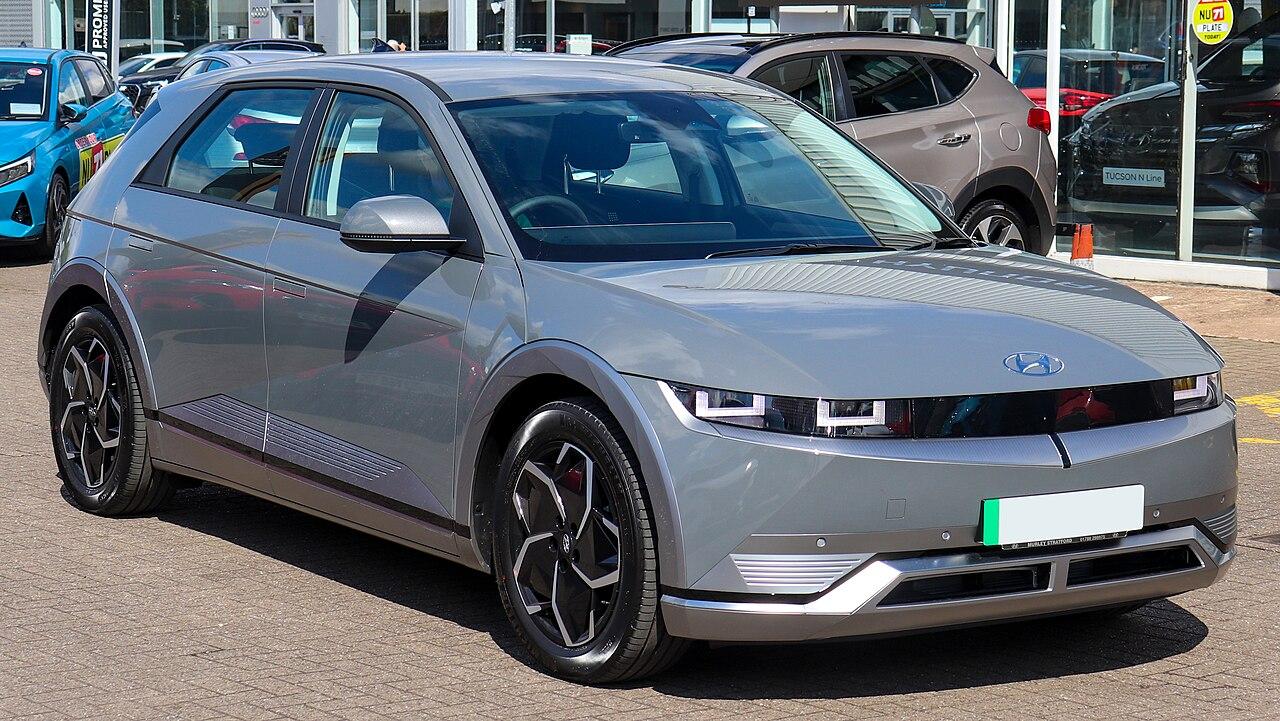
The Hyundai Ioniq 5, Ioniq 6 and Kia EV6 built up to the end of February 2024, and the Genesis GV60, GV70 and G80 electric cars. The UK recalls cover about 38,000 vehicles.
All of them share one platform and one type of charging unit, supplied by Hyundai Mobis. The DVSA file lists 16,297 Ioniq 5s, 2,538 Ioniq 6s, 16,611 EV6s and 2,372 Genesis cars, every entry a safety recall.
Models affected
The three models with a UK safety recall for the ICCU, with the DVSA build dates. Genesis GV60, Electrified GV70 and Electrified G80 cars are on a separate recall. The Kia EV9 and later-built Ioniq and EV6 cars are not on any UK ICCU recall.
- Hyundai Ioniq 52021–2024
16,297 UK cars built to 29 February 2024, recall R/2024/164
- Kia EV62021–2024
16,611 UK cars built to 28 February 2024, recall R/2024/197. Pre-facelift cars.
- Hyundai Ioniq 62022–2024
2,538 UK cars built to 4 March 2024, on the same recall as the Ioniq 5
| Model | Built | Notes |
|---|---|---|
| Hyundai Ioniq 5 | 2021–2024 | 16,297 UK cars built to 29 February 2024, recall R/2024/164 |
| Kia EV6 | 2021–2024 | 16,611 UK cars built to 28 February 2024, recall R/2024/197. Pre-facelift cars. |
| Hyundai Ioniq 6 | 2022–2024 | 2,538 UK cars built to 4 March 2024, on the same recall as the Ioniq 5 |
The part
- What it is
- The Integrated Charging Control Unit, which converts the 800V pack’s power to charge the 12V battery and run the low-voltage systems, and also handles AC charging and the vehicle-to-load sockets
- Where it sits
- On top of the battery pack, under the rear seats
- Platform
- Hyundai Motor Group’s E-GMP, shared by the Ioniq 5, Ioniq 6, Kia EV6 and Genesis GV60
- What fails
- A transistor in the low-voltage converter is damaged by voltage spikes and heat, and the ICCU fuse opens. The 12V battery is then no longer charged.
- The recall fix
- New ICCU software. A new ICCU and fuse where the fault code P1A9096 is stored.
- Drive time after the warning
- About 22 to 45 minutes in Hyundai’s own tests, less with the heating and lights on
The build date decides it, not the registration. Cars built after the revised software went into production are not on the recall. A dealer can read the build date from the VIN; the gov.uk recall checker works from the registration.
What are the symptoms of ICCU failure?
A chime, a string of warnings ending in ‘Stop vehicle and check power supply’, then a turtle light and falling power until the car stops.
Kia’s recall notice lists the sequence: audible chimes, the ‘Check electric vehicle system’ light, the master warning, the charging system light, the ‘Stop vehicle and check power supply’ message, the power-down turtle, and a reduction in drive power. Hyundai’s notice says the same in fewer words: the warnings tell the driver to stop, and power is cut in three stages.
- 1
A chime and a run of warnings on the cluster: ‘Check electric vehicle system’, the charging system light, then ‘Stop vehicle and check power supply’.
- 2
The 12V battery is no longer being charged, so it drains while you drive and anything that runs on it begins to misbehave.
- 3
A turtle symbol appears and the car will not accelerate past a certain speed. Power is cut in stages.
- 4
The car loses drive altogether, usually within an hour of the first warning, and has to go to the dealer on a recovery truck.
How long you have depends on what is switched on: Hyundai’s test drivers kept full power for 22 minutes and some movement for up to 45, and less with the heating and lights running. A US court filing from April 2026 describes one EV6 dropping into reduced power after a loud bang.
Why does the ICCU fail?
Voltage spikes at the start and end of charging, and heat, damage a transistor inside the unit. Its fuse blows, and the 12V battery is no longer fed.
An electric car still runs its locks, screens, lights, brakes and computers from a small 12V battery, and on these cars the ICCU keeps it topped up from the main pack. Hyundai’s filing to the US regulator says a MOSFET transistor in the ICCU’s low-voltage converter can fail under overvoltage at the start and end of charging and under thermal loading while charging or driving. When it fails it opens the ICCU fuse. From then on the 12V battery is running down, and the car is designed to drop into a fail-safe mode with warnings rather than stop dead.
Hyundai began examining heat-damaged transistors from warranty returns in October 2022. The remedy software adds a soft start to stop the spikes and runs the fan and water pump differently to keep the unit cooler. Where the fault code P1A9096 is already stored, the unit and its fuse are replaced.
How much does an ICCU cost to fix?
Nothing under the recall or the maker’s warranty, which is where most UK cars still are. No UK price for an ICCU outside warranty has been published. The real cost has been time off the road.
We could not find a sourced UK price for an ICCU out of warranty, so this guide does not give one. Dollar figures on US repair sites are not UK facts.
What the UK evidence does show is the wait. In the Ombudsman case below, the ICCU failed in November 2024, the replacement arrived at the end of January 2025, and the owner got his car back in April. In What Car?’s reliability survey, 42% of Ioniq 5 owners reported a fault, the 12-volt battery was the commonest at 20%, and 56% of the faulty cars were off the road for more than a week.
What have Hyundai and Kia said?
Both recalled the cars in May 2024 and have fixed them free. Abroad, both have had to recall twice and have extended ICCU cover to 15 years. Neither has published a UK statement on the extension.
Hyundai’s UK recall, logged 6 May 2024, says the ICCU may become defective and stop charging the 12-volt battery, putting the car into a failsafe driving mode; the remedy is to update the software and check and replace the ICCU and fuse if necessary. Kia’s, logged 20 May 2024, turns on the fault code P1A9096: software if it is absent, a new ICCU and fuse if it is present. Genesis followed on 22 July 2024.
The American record is fuller. Hyundai’s first US recall in March 2024 was followed by a second that November, covering 145,235 cars, after new reports of ICCU failure on vehicles already remedied under the first. The filing counts 57 US incidents in eight months and no crashes or injuries. Kia’s second recall of 62,872 EV6s came the same day.
In April 2026 Hyundai in Germany extended ICCU cover to 15 years or 300,000 km on Ioniq 5s built to April 2024 and Ioniq 6s built to September 2024, and Kia Germany matched it for pre-facelift EV6s built before 15 June 2024. In the US Hyundai announced 15 years or 180,000 miles. UK owners report Hyundai letters with the German terms; we could not open that letter or a Hyundai UK page, and Kia UK has published nothing. Ask in writing and keep the answer.
Who pays for an ICCU failure?
Hyundai and Kia, through a free recall and the maker’s warranty. Where the car fails again, or sits for months waiting for a part, the dealer who sold it, or the finance company, is where your rights sit.
Hyundai and Kia
Both issued UK safety recalls in May 2024: new software for every car, and a new ICCU and fuse where the fault code is found, free whatever the car’s age. In Germany and the United States both makers have since extended ICCU cover to 15 years. UK Hyundai owners report letters offering the same from April 2026; we could not open a Hyundai UK statement, and Kia UK has published nothing.
The dealer who sold it
Answerable under the Consumer Rights Act 2015 for the car being of satisfactory quality when sold, which includes how long a charging unit should last and how long a repair should take. A recall letter does not transfer that duty to the maker.
The finance company
On hire purchase, PCP or conditional sale the lender supplied the car and carries the dealer’s responsibility. The one published Ombudsman decision on an ICCU was against Kia Finance, and it ordered the car taken back.
Your warranty
Hyundai gives five years with no mileage limit, Kia seven years or 100,000 miles, both passing to later owners. The ICCU is a vehicle part under those terms. The 12V battery is different: both makers cover it for 24 months only, and Hyundai excludes a battery damaged by being left flat. A warranty refusal does not settle the dealer’s position.
Goodwill from the manufacturer and your rights against the seller are separate. Asking for one does not give up the other.
Is the ICCU covered under warranty?
Yes, as a vehicle part under Hyundai’s five-year or Kia’s seven-year warranty, and under the recall at any age. The 12V battery is covered for two years only.
Hyundai’s UK warranty runs five years with no mileage limit from first registration and passes to later owners. Kia’s runs seven years or 100,000 miles and also transfers. One condition matters here: Hyundai’s terms say that failing to comply with a safety recall invalidates the warranty for any incident relating to that recall, so have the recall done and keep the job sheet.
The 12V battery sits on different terms. Both makers cover it for 24 months, and Hyundai excludes damage caused by insufficient regular charging, wording that gets raised when a battery is found flat. If the dealer fits a new battery and sends you away, the question of why it went flat has not been answered.
None of this touches the dealer who sold you the car. The warranty is the maker’s contract; the Consumer Rights Act 2015 is yours with the seller, and a warranty refusal or a long parts delay is not an answer under it.
Can you hand the car back?
It depends on when you took delivery. The Act sets three windows, counted from that day.
First 30 days
Short-term right to reject
Your strongest right. Reject outright and demand a full refund with no deduction. The dealer cannot insist on repairing it first, and the refund is due within 14 days.
30 days – 6 months
One repair, then reject
Allow one repair or replacement. If it fails (or they refuse), you gain the final right to reject. The fault is presumed present at purchase, so the burden is on the dealer.
6 months – 6 years
Rights continue — you prove it
You must show the fault was present or developing at sale, usually via an independent inspection. Claims run up to 6 years in England & Wales (5 in Scotland).

Find out your exact deadline. Free, in 2 minutes.
- Enter your reg
- Get your verdict
- Reject your faulty car
Free · No card · About 2 minutes
What has the Ombudsman decided?
One published decision on an ICCU, and it went the owner’s way because of the wait. A 12V battery on its own did not.
Published decisions do not name the make, but the lender tells you a lot.
DRN-6171626 (Hyundai Capital UK trading as Kia Finance, upheld, 24 February 2026). A used electric car, a year old with 13,000 miles, supplied in February 2024 at £40,995. In July 2024 the dealer had it for the ICCU recall update and a wheel vibration. In November 2024 the ICCU failed completely; the replacement arrived in late January and the car came back in April, by then needing brakes from standing and a new 12V battery. The ombudsman held that the wheel repair had used up the one chance to repair, that five months without the car was not a reasonable time even with a courtesy car, and that the lender should have accepted the rejection in December 2024. The dealer argued the recall update was not a repair, only an update to prevent premature failure, although, in its own words, this update failed as the unit did go on to fail prematurely. Kia Finance had to end the agreement, collect the car and refund the £15,000 deposit, the £800 tow bar and 20% of the payments since November 2024, with interest and £300.
DRN-6493290 (Kia Finance, not upheld, 28 August 2026). A new car supplied in March 2024 lost electrical power at 13,377 miles in October 2025; the 12V battery was flat and the driver was briefly locked in. The dealer fitted a new battery under warranty and it had not recurred. Eighteen months after supply the owner had to show the car was faulty when supplied, had no expert evidence, and lost. Nothing says the ICCU was checked.
What should you do now?
Stop when the warning tells you to, get the car recovered, then get the diagnosis and the dates on paper.
- When ‘Stop vehicle and check power supply’ appears, find somewhere safe and stop. Both makers say to have the car recovered to a dealer rather than driven on. Photograph the cluster.
- Ask the dealer to put in writing which fault codes were stored, whether P1A9096 was present, the ICCU software version before and after, and whether the unit and fuse were replaced. ‘12V battery replaced’ is not a diagnosis.
- Check the registration on the gov.uk recall service and keep the recall job sheet. If the recall work was done before the failure, that paperwork shows the fault was known and the fix did not hold.
- Keep a dated log of every day the car is with the dealer, what you were told about the part, and what courtesy car you had. Time off the road decided the one ICCU case at the Ombudsman.
- Put the fault to the dealer in writing within the right window. If the car is on finance, write to the finance company as well; it has eight weeks to answer before the Ombudsman can look at it.
Questions people ask
Put the registration into the gov.uk recall checker. The Hyundai recall is R/2024/164 and covers Ioniq 5s built to 29 February 2024 and Ioniq 6s built to 4 March 2024. The Kia recall is R/2024/197 and covers EV6s built to 28 February 2024. Both were logged in May 2024 and the work is free whatever the car’s age or who owns it now.
Yes, in your favour. In the United States Hyundai had to issue a second recall in November 2024 after cars fixed under the first one failed again, and Hyundai’s own filing says so. In the one published Ombudsman decision on an ICCU, the dealer admitted the recall update had failed to prevent the unit failing, and the owner was allowed to hand the car back. Keep the recall paperwork: it shows the fault was known about before it stopped your car.
Not on its own. On these cars a flat 12V battery is the symptom; the question is why it went flat. Ask in writing whether the fault code P1A9096 was checked and what the ICCU software version was. Both makers cover the 12V battery for 24 months only, and the Ombudsman did not uphold a case where a new car’s 12V battery was replaced under warranty and nothing else was shown to be wrong, so the ICCU diagnosis matters.
Yes. Genesis Motor UK logged recall R/2024/165 on 22 July 2024 for 1,724 GV60s, 578 Electrified GV70s and 70 Electrified G80s, for the same ICCU defect with the same fix. Genesis cars sit outside the finder on this site, but the rights described here are the same.
Less than the five months one UK owner waited. The Ombudsman said in February 2026 that a five-month wait was not a reasonable time for a repair, even though a courtesy car was provided and the delay was the maker’s parts supply, and ordered Kia Finance to take the car back. If a dealer tells you there is a queue for the part, get that in writing with the date.
Sources
- DVSA vehicle recalls data: R/2024/164 (Hyundai Ioniq 5 and Ioniq 6), R/2024/197 (Kia EV6) and R/2024/165 (Genesis), Integrated Charging Control Unit
- DVSA: recall register for the Hyundai Ioniq 5, checked 27 October 2026
- DVSA: recall register for the Kia EV6, checked 27 October 2026
- NHTSA (US safety regulator): Hyundai’s Part 573 safety recall report 24V-868, ICCU, 18 November 2024
- NHTSA: Hyundai’s chronology for recall 24V-868, including failures on cars already remedied and the drive-time tests
- NHTSA: Kia’s dealer Q&A for EV6 safety recall SC327 (24V-867), with the warning messages drivers see
- Financial Ombudsman Service, decision DRN-6171626 (Kia Finance, ICCU failure, upheld)
- Financial Ombudsman Service, decision DRN-6493290 (Kia Finance, 12-volt battery, not upheld)
- Hyundai UK: five-year warranty terms and conditions (PDF)
- Kia UK: the seven-year warranty, including the 24-month term for 12V batteries
Last checked 27th October 2026. Nothing here is legal advice.
Have a question this didn’t answer?
Ask it in Faulty Car Advice UK, our Facebook group for drivers dealing with a faulty car.